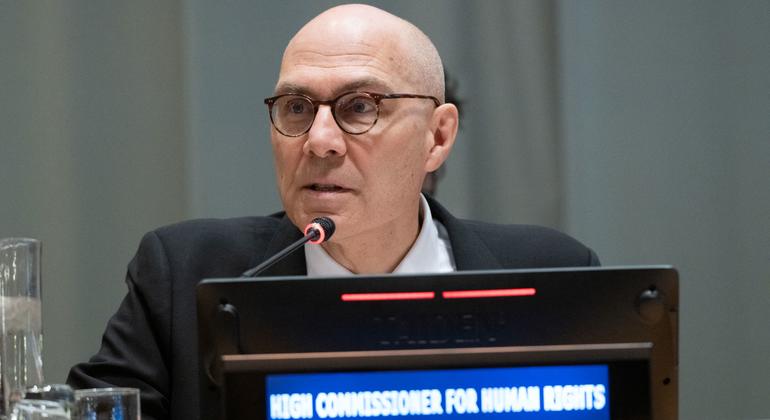
Volker Türk, the High Commissioner for Human Rights, delivered a sobering briefing during a General Assembly meeting on Wednesday, highlighting the alarming rise in the number of individuals who go missing each year. This informal gathering marked the first dedicated discussion on this pressing issue, shedding light on the thousands of people who disappear after being targeted.
Türk emphasized the urgent need for Member States to take more decisive action to address the unprecedented increase in disappearances, primarily driven by armed conflict and a growing disregard for international humanitarian law. He underscored the dangerous cycle of persistent impunity for violations of international humanitarian law, which only serves to fuel further abuses.
The scale of the crisis was described as enormous, with disappearances not only occurring in the context of armed conflict but also linked to state repression, counter-terrorism measures, migration, and the targeting of dissidents and human rights defenders. Türk emphasized the critical importance of accountability for these violations, stressing that accountability is crucial in ensuring justice for the victims and their families.
The meeting focused on missing persons in armed conflict, highlighting the fact that the circumstances of conflict, instability, and repression often create conditions where people are more likely to go missing. Türk urged Member States to prioritize accountability for these violations and to take concrete steps to address the issue.
President of the General Assembly, Philémon Yang, echoed Türk’s sentiments, emphasizing the moral responsibility of the international community to determine the fate of every missing person and to ensure that justice is served.
The Working Group on Enforced and Involuntary Disappearances has handled over 62,000 cases across 115 countries in the past 45 years. However, Türk noted that these staggering figures represent only the tip of a much larger iceberg, underscoring the scale of the problem.
Yang stressed the need for decisive action to alleviate the suffering and distress experienced by the victims of enforced disappearances. He called on Member States to take concrete steps to address the issue and to work towards finding solutions to prevent further disappearances from occurring.
Türk outlined three key areas for action, beginning with the need to strengthen and implement international human rights frameworks. He urged States to ratify and implement the International Convention for the Protection of All Persons from Enforced Disappearance, adopted in 2006, which guarantees the right to know the truth about the fate and whereabouts of disappeared persons.
Only 77 countries have ratified the Convention so far, highlighting the need for greater global commitment to addressing enforced disappearances. Türk emphasized the importance of pursuing justice and accountability for victims, pointing to impunity as a major obstacle to reparations for those affected.
For families of missing persons, accountability begins with knowing the truth about the fate of their loved ones, regardless of how they went missing. Türk called on States to conduct thorough investigations, prosecute perpetrators, and strengthen forensic, judicial, and law enforcement institutions to ensure proper identification and justice for the victims.
Placing victims at the center of efforts to address enforced disappearances was a key theme of Türk’s briefing. He underscored the importance of prioritizing the needs and rights of the victims and their families in the quest for justice and accountability.
Overall, the General Assembly meeting served as a critical platform for raising awareness about the alarming rise in enforced disappearances and mobilizing global action to address this pressing human rights issue. The international community must work together to ensure that those who have gone missing are located, justice is served, and measures are put in place to prevent future disappearances from occurring.