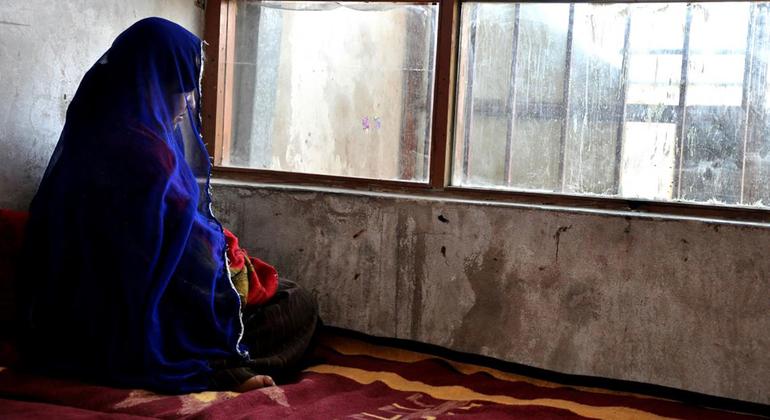
Georgette Gagnon, the UN Deputy Special Representative currently leading the UN mission, UNAMA, recently reflected on her visits across Afghanistan and highlighted the mounting hardships faced by communities in the country. Despite the apparent stability brought about by the de facto authorities consolidating territorial and administrative control, Gagnon warned that there are deeper risks lurking beneath the surface.
During her briefing to the Security Council, Gagnon emphasized that the increasing control by the de facto authorities lacks a clear end-state. She pointed out that demographic and economic pressures are major concerns, with nearly 5.9 million Afghans having returned since 2023 and up to 2.8 million more expected to return this year. This influx of returnees is occurring amidst limited opportunities and strained communities, making Afghanistan one of the world’s largest humanitarian crises, with 21.9 million people requiring assistance in 2026.
One of the most alarming issues highlighted by Gagnon is the severe and growing restrictions faced by women and girls in Afghanistan. She highlighted that an estimated 3.8 million girls aged seven to 18 are out of school, and approximately 250,000 more girls are permanently excluded from secondary education pathways each year. This situation has led to a lost generation of talent and potential, damaging the country’s economy and weakening crucial sectors like health and education. Gagnon reiterated calls for authorities to reverse restrictions affecting women, including the continued exclusion of Afghan female UN staff from UN premises.
Edem Wosornu, the Director of OCHA’s Crisis Response Division, also addressed the UN Security Council meeting on the situation in Afghanistan, emphasizing the deteriorating humanitarian conditions in the country. Wosornu highlighted that Afghanistan remains one of the world’s largest and most complex humanitarian crises, with nearly half the country in need of assistance. She reported that renewed fighting along the Afghanistan–Pakistan border earlier this year displaced over 100,000 people and left vulnerable communities cut off from assistance for weeks.
Hunger is a growing concern across Afghanistan, with 4.7 million people facing severe food insecurity, a 50% increase from the previous year. Additionally, 3.7 million children are suffering from acute malnutrition. Wosornu mentioned reports of families making desperate decisions to survive, including selling their own daughters. The ongoing restrictions on women in Afghanistan continue to undermine humanitarian operations, further exacerbating the crisis.
The situation in Afghanistan is dire, with mounting hardships faced by communities, particularly women and girls. Despite the apparent stability brought about by the de facto authorities, deeper risks loom beneath the surface, including demographic and economic pressures. The humanitarian crisis in Afghanistan continues to worsen, with nearly half the country in need of assistance. It is crucial for the international community to come together to address these challenges and provide support to the people of Afghanistan during these trying times.