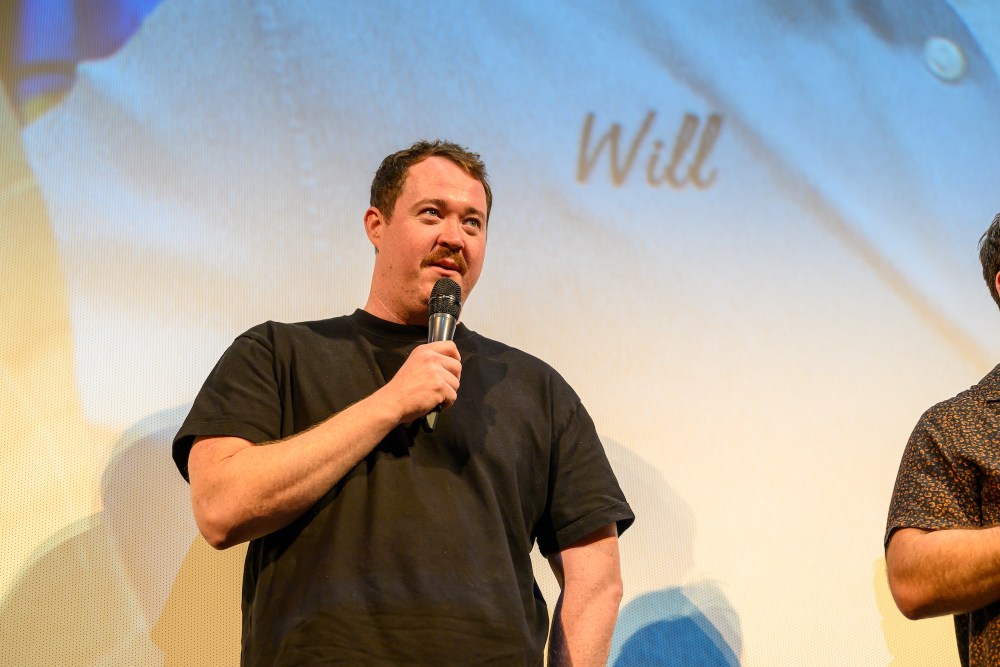
Shane Gillis Breaks Silence on Controversial SNL Monologue During Joe Rogan Podcast
Shane Gillis is finally addressing the controversy surrounding his Saturday Night Live monologue, telling Joe Rogan that the show’s producers did not pre-approve the jokes that caused an online firestorm. The 38-year-old comedian appeared on The Joe Rogan Experience on Friday, November 13, and explained what happened before he took the live stage in October.
“Not to defend SNL — they don’t approve it,” Gillis said. “I mean, they could shut it down.” He went on to say that he warned the show what to expect, telling them, “I’m giving you a solid C minus of a monologue, but I promise there’s no controversy.”
The monologue in question aired during Gillis’s October 10 hosting gig and immediately drew criticism. During his opening set, Gillis said he had been away from the gym for so long that he was shocked by what women wear to work out. “I haven’t been to the gym in so long, I didn’t know women just dress like whores now?” he said. “Look, I’m sorry, there’s no other way to describe [it].” He then went into detail about the shorts, describing them as neon and “artificial bait-colored,” with “the wrinkles go around the cheeks and all combine at the butthole.” He added, “And don’t look! You’re not allowed to look.”
The remarks did not sit well with many viewers, and the backlash was swift. Among those who spoke out was Schitt’s Creek star Dan Levy, who posted an Instagram video on October 11. “Women wearing short shorts to the gym does not make them whores,” Levy said. “It makes the men calling them whores misogynists. There’s a difference there.”
Levy went on to say that he had “seen more men’s nipples at the gym than I’ve ever seen women showing their bodies off.” He also said he was “speechless that something like that can exist on live national television.” Levy argued that the joke was not just a bad gag but part of a larger cultural problem. “More men need to be standing up in opposition to it because it’s complacency that has created the environment [in] which women are sexually assaulted,” he said.
Levy continued, “This is not a women’s issue. This is an everybody issue, because the more that men objectify women in the media, the more that other men see them as objects and treat them as objects. They are not objects. They are superior human beings to men, OK? And I’m sorry if this gets me in trouble with the internet, but f***.”
The controversy came at a particularly sensitive moment. The backlash to Gillis’s monologue unfolded in the wake of the Jane Doe Cornell gang rape allegations, which had already prompted widespread conversations about sexual violence and how women are perceived. Levy’s video connected those dots directly, arguing that objectifying women in comedy contributes to an environment where they are treated as less than human.
Not everyone saw it that way. Dana Carvey, David Spade, and Jimmy Carr were among the comedians who defended Gillis. On an October episode of the Fly on the Wall podcast, Carvey said he did not understand why the joke had caused such an uproar. “I just didn’t understand the kerfuffle only because, to me, I just saw it as what we call it — I’ll just say it — a joke,” Carvey said. “Like, when you say jokes, you’re not literally saying women are whores. You are literally joking. Isn’t that kind of the idea? No? Did I just get canceled?”
Spade, his co-host, appeared to agree. Carr also voiced support for Gillis, though he did not release a lengthy statement. The split between critics and defenders highlighted the familiar debate over where the line should be drawn in comedy.
During his conversation with Rogan, Gillis acknowledged that the joke had not landed the way he expected. “[It] obviously had a lot to do with the climate,” he said. He also revealed that he handled this controversy differently from the one that ended his first SNL tenure. “The first time I got fired, I kept social media. This time, I just deleted everything immediately,” he said.
That reference to being fired took many listeners back to 2019, when Gillis was hired as an SNL cast member and then let go after just four days. The firing came after past racist and homophobic comments from his podcast resurfaced online. SNL said at the time that it had not been aware of the “offensive” remarks. Gillis released a statement but did not apologize for the comments.
Despite that history, Gillis was eventually invited back to host SNL, which made his October monologue even more scrutinized. SNL creator Lorne Michaels later addressed the backlash and called the original casting controversy an “overreaction.” In an interview with The Hollywood Reporter, Michaels defended the decision to bring Gillis back and suggested that the show had learned from the experience.
On the Rogan podcast, Gillis was careful not to put the blame on SNL. He made it clear that the show had not approved his monologue, but he also said the network could have stopped it if they had wanted to. His description of the set as a “solid C minus” seemed intended to signal that he was not aiming for anything groundbreaking. He also said he did not expect the material to generate controversy. That prediction, of course, proved to be wildly off the mark.
The episode has become a flashpoint in the ongoing conversation about comedy and cancel culture. Supporters of Gillis argue that jokes are not meant to be taken literally and that comedians need the freedom to explore taboo subjects. Critics say that when a joke reinforces harmful stereotypes about women, especially on a platform as large as SNL, it has real consequences. Levy’s response captured that frustration, and his call for more men to speak up resonated with many who saw the monologue as part of a larger pattern.
Gillis, for his part, did not offer a direct apology on Rogan’s show. He acknowledged the backlash and the role of the cultural climate, but he also appeared to stand by the intent of the bit. His decision to delete his social media accounts may have been an attempt to escape the immediate firestorm, but it did little to stop the conversation. Clips of the monologue continued to circulate, and commentators from across the spectrum weighed in on whether Gillis had gone too far.
The Joe Rogan Experience interview gave Gillis a friendly platform to tell his side of the story. Rogan, a longtime advocate for unfiltered comedy, has frequently argued that comedians should be allowed to say provocative things without being “canceled.” Gillis’s appearance fit that narrative, even as his critics remained unpersuaded.
As the dust settles, the monologue stands as another defining moment in Gillis’s career. It also raises questions about SNL’s oversight of live broadcasts. If Gillis is accurate in his description, the show gives hosts significant creative freedom during the monologue. “They don’t approve it,” he said. “I mean, they could shut it down.” That approach allows for spontaneity and risk, but it also means that controversial material can air without any institutional filter.
Whether Gillis will face lasting consequences remains unclear. He survived his 2019 firing, returned to host SNL, and continued to build a successful career in stand-up comedy. The October monologue may not derail him, but it has added yet another layer to his public persona. For now, Gillis appears ready to move on. As he told Rogan, he expected to deliver a C-minus monologue with no controversy. What he delivered instead was a moment that people will be talking about for a long time.