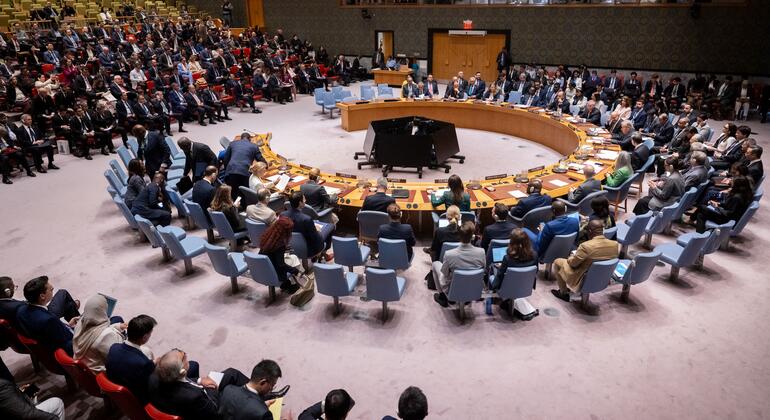
The United Nations Security Council is currently convening for a high-level debate on the topic of strengthening the UN-centered international system. This meeting comes at a pivotal moment in global affairs, with mounting pressure on multilateralism and deepening geopolitical divisions posing significant challenges to the existing world order. The discussions taking place within the Security Council are expected to center around key issues such as defending the UN Charter, reforming global governance structures, and restoring confidence in the Council’s ability to effectively respond to international crises.
The Security Council, as one of the principal organs of the United Nations, plays a crucial role in maintaining international peace and security. Comprised of 15 member states, including five permanent members with veto power (the United States, Russia, China, France, and the United Kingdom), the Council has the authority to impose sanctions, authorize military action, and issue resolutions binding on all UN member states. However, in recent years, the Council has faced criticism for its perceived ineffectiveness in addressing global challenges and its inability to adapt to a rapidly changing geopolitical landscape.
One of the key themes of the Security Council’s high-level debate is the defense of the UN Charter, the foundational document of the United Nations. The Charter, adopted in 1945 in the aftermath of World War II, enshrines principles such as sovereign equality, territorial integrity, and the peaceful resolution of disputes. It also establishes the organs of the United Nations, including the Security Council, and outlines the Council’s responsibilities in maintaining international peace and security. In light of growing challenges to the rule-based international order, defending the principles of the UN Charter has become an urgent priority for the Security Council and the broader UN system.
Another important topic of discussion at the Security Council’s high-level debate is the reform of global governance structures. The current international system, established in the aftermath of World War II, is facing increasing pressure from new and emerging powers, as well as non-state actors such as terrorist organizations and transnational criminal networks. The Security Council, as a key player in the global governance architecture, has a responsibility to adapt to these changing dynamics and ensure that the UN remains relevant and effective in addressing contemporary challenges.
In recent years, there have been calls for reforming the Security Council itself, particularly in terms of its composition and decision-making processes. Some member states have argued for expanding the Council’s membership to better reflect the current distribution of power in the international system, while others have called for limiting or abolishing the veto power of the five permanent members. These proposals raise complex questions about the balance of power within the Council and the need to ensure that all member states have a voice in its decision-making processes.
Restoring confidence in the Security Council’s ability to respond to international crises is another key objective of the high-level debate. The Council has been criticized in the past for its slow and ineffective response to conflicts and humanitarian emergencies, such as the ongoing civil war in Syria and the Rohingya refugee crisis in Myanmar. In order to regain the trust of the international community, the Council must demonstrate its capacity to act decisively and effectively in addressing these and other pressing issues.
The Security Council’s high-level debate on strengthening the UN-centered international system comes at a critical juncture for the United Nations and the broader international community. In an era of increasing global challenges, from climate change to terrorism to pandemics, the need for a strong and effective multilateral system has never been greater. By engaging in open and constructive dialogue on key issues such as defending the UN Charter, reforming global governance structures, and restoring confidence in the Security Council’s ability to respond to international crises, member states can work together to build a more peaceful, prosperous, and sustainable world for future generations.