Saudi Air Defenses Intercept Ballistic Missile Over Riyadh as Houthi Offensive Intensifies
RIYADH, Saudi Arabia – The Saudi-led military coalition announced on Saturday that its air defense forces successfully intercepted and destroyed a ballistic missile launched by Yemen’s Iran-backed Houthi militants toward the Saudi capital, Riyadh. The pre-dawn attack, which came just hours after a fire broke out near the city’s main international airport, marked a significant escalation in the four-month-old conflict that has once again thrust the Arabian Peninsula to the brink of a wider regional war.
The coalition’s official spokesman, Brigadier General Turki al-Malki, confirmed in a statement posted on the social media platform X that the missile was shot down at approximately 2:30 a.m. local time. “The Saudi Royal Air Defense Forces successfully intercepted and destroyed a ballistic missile launched by the Houthi terrorist militia towards the city of Riyadh at dawn on Saturday,” al-Malki wrote. He further detailed that the Houthis had also attempted to target civilian and infrastructure sites in the southern cities of Bisha, Taif, Farasan, and Yanbu, adding that all attacks were “thwarted by the Kingdom’s air defense systems.”
The announcement came following a night of heightened tension in the capital. Earlier, Saudi authorities had issued an overnight air raid alert, prompting residents to seek shelter. Hours after the warning, multiple witnesses reported hearing a series of loud detonations echoing across the city, followed by the distant thud of interceptor missiles engaging their target. A plume of smoke was observed rising from the vicinity of King Khalid International Airport, although officials were quick to clarify that the smoke was the result of a separate incident involving a fuel tank.
An Agence France-Presse journalist at the scene reported that firefighters had extinguished a blaze on a fuel tank bearing the logo of the Saudi state oil giant Aramco at a depot near the airport. Footage verified by AFP showed a column of black smoke briefly obscuring the skyline above the airport terminal buildings. The cause of the fuel tank fire was not immediately clear, though it occurred amidst the backdrop of the missile interception.
The Saturday attack represents the first time since the resumption of active hostilities that strikes have directly threatened the heart of Riyadh, piling immense pressure on a global economy already reeling from months of uncertainty. It also serves as a stark reminder of the Houthis’ expanding military capability, which now appears to include an arsenal of long-range ballistic missiles and explosive-laden drones capable of penetrating deep into Saudi territory.
A Lightning Offensive on the Ground
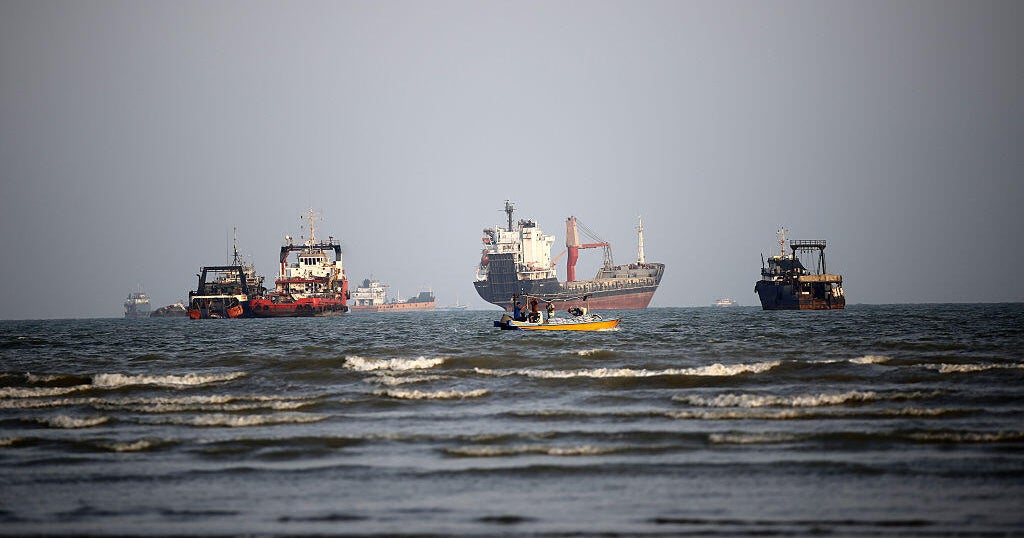
The missile attack on the capital comes amid a devastating and rapid ground offensive by the Houthi movement, which has seized vast swathes of territory in northern and central Yemen in recent weeks. The militia, which controls the capital Sanaa and much of the country’s north, has launched a determined push toward the strategic Red Sea coast, aiming to take full control of the vital Bab al-Mandab Strait, a crucial shipping lane through which a significant portion of the world’s maritime trade passes.
The internationally recognized Yemeni government, which Riyadh supports, has been scrambling to mount a cohesive defense. However, despite a series of coalition airstrikes targeting Houthi positions, the militia’s advance has been relentless. The fall of key cities and military bases has forced the Yemeni government to retreat, leaving the Houthis on the verge of achieving their most significant territorial gains since the war began nearly a decade ago.
Houthi military spokesman Yahya Saree claimed responsibility for the Saturday strikes in a statement circulated on the Telegram messaging platform. Saree asserted that the group had carried out “two successful military operations using a large number of ballistic and cruise missiles and drones” against what he described as “sensitive sites” in Riyadh and “Aramco facilities” in the western city of Yanbu. He framed the attacks as a direct retaliation for recent intensified Saudi airstrikes on Houthi-held territory.
Airport Disruption and Civilian Risk
The immediate impact of the attack was most acutely felt at Riyadh’s King Khalid International Airport, a critical nexus for domestic and international travel. Tracking website FlightRadar24 reported “major problems” at the facility, listing it for a brief period under its maximum disruption index. Dozens of incoming flights were held at their origins or diverted to alternate airports in the region, while outbound flights were significantly delayed. Normal traffic patterns began to resume only hours later, as the coalition confirmed the threat had been neutralized.
For the residents of Riyadh, a city often perceived as a bastion of stability in a volatile region, the overnight explosions served as a jarring reminder of the conflict’s proximity. Some residents, speaking to AFP on condition of anonymity due to state media restrictions, described seeing “long streaks of light” in the sky as the Patriot missile defense batteries activated. “We heard a large explosion and the windows shook,” said one resident in the eastern suburbs of the city. “It is a sobering feeling. We thought they could not reach us, but they did.”
The coalition has consistently emphasized its efforts to avoid civilian casualties, but the Houthi tactic of launching indiscriminate ballistic missiles at civilian infrastructure—including airports and oil facilities—raises serious humanitarian concerns. While the interceptors proved effective on Saturday, the risk of debris falling on populated areas remains a constant danger.
Regional and Economic Ramifications
The strike on Riyadh carries profound economic implications. The attack on the airport corridor and the proximity of the fire to an Aramco fuel depot—reminiscent of the devastating 2019 attacks on Saudi oil facilities—sent ripples of anxiety through global energy markets. While oil prices saw only a marginal spike in early trading following the news, the psychological impact of the attack could have a lasting effect on risk assessments for shipping and insurance companies operating in the region.
The closing or disruption of the Bab al-Mandab Strait is a paramount concern. The Houthis’ push for full control of the Red Sea coast would put them in an unprecedentedly powerful position to threaten this vital waterway. Previous Houthi attacks on commercial vessels during periods of heightened tension have caused significant disruption to global shipping routes, leading to increased transit times and costs for companies.
Furthermore, this escalation threatens to draw the Islamic Republic of Iran and its adversaries into a more direct confrontation. Riyadh has long accused Tehran of arming, funding, and training the Houthis, a charge Iran denies but which has been substantiated by numerous UN reports and weapons seizures by the coalition. The sophisticated nature of the missiles used in the recent attacks indicates a continued and advanced level of support.
The Stalemate Deepens
Despite nearly a decade of military intervention by the Saudi-led coalition, there appears to be no end in sight to the conflict. The coalition’s air superiority has allowed it to strike targets across Yemen with near impunity, yet it has failed to dislodge the Houthis from the population centers they hold. Conversely, the Houthis, though economically and diplomatically isolated, have proven to be a resilient and deadly adversary, capable of striking at the very heart of the Kingdom.
The return of ballistic missile fire over Riyadh marks a dangerous new chapter in the conflict. It signals that the Houthis have not only the will but also the capability to carry the war to their opponent’s capital, a reality that will likely force Riyadh to recalibrate its military strategy.
The international community, distracted by other global crises, has thus far been unable to broker any meaningful ceasefire. UN special envoys have repeatedly attempted to bring both sides to the negotiating table, but these efforts have consistently collapsed, often due to the discord between Riyadh’s demands for the Houthis to disarm and the group’s insistence on maintaining its political and military power.
Saturday’s attack serves as a grim milestone, indicating that the conflict in Yemen is not merely a civil war, but a geostrategic struggle with the power to destabilize the entire Gulf region. As the smoke cleared over Riyadh, the capital’s residents and global observers alike were left to confront the reality that peace in Yemen—and by extension, security in Saudi Arabia—remains as elusive as ever.