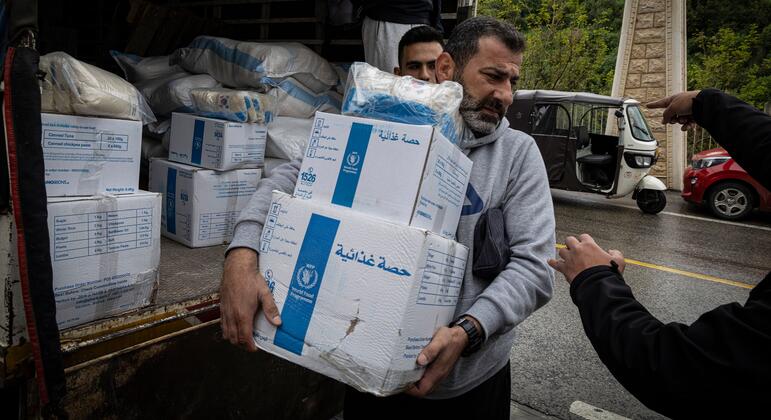
The UN Humanitarian Coordinator in Lebanon, Imran Riza, is calling for urgent funding as humanitarian needs continue to rise amidst ongoing conflict in the country. Despite a ceasefire announcement, violence has persisted, causing widespread devastation through airstrikes, drone attacks, and shelling.
Riza, speaking from Beirut, expressed his shock at the destruction he has witnessed, including hospitals and clinics being hit, government buildings destroyed, agricultural land scorched, water stations demolished, and schools turned into displacement sites. The impact of the latest escalation of violence has been severe, with over 3,500 people killed, more than 10,000 injured, and nearly one million displaced from their homes.
Health workers and first responders are facing dangerous conditions, with entire neighborhoods reduced to rubble. Riza highlighted the deep and lasting trauma faced by families due to repeated displacement, lack of adequate shelter, and uncertainty about returning home. Providing critical aid assistance in such conditions is challenging and requires urgent support for the most vulnerable.
Displacement orders are constant, making it difficult to track the whereabouts of affected people. Essential services are under increasing strain, and affected individuals are rapidly exhausting their coping capacities. The UN Office for the Coordination of Humanitarian Affairs (OCHA) emphasized the urgent need for support in their latest update.
The heightened dangers for women and girls in conflict-affected areas are of particular concern. Overcrowded shelters lack privacy, sanitation, and protection measures, putting over 600,000 women and girls at risk of gender-based violence. Additionally, approximately 1,800 women are expected to give birth each month in Lebanon, but attacks on healthcare facilities have made it challenging for them to access maternal health services.
Andrew Saberton, Deputy Executive Director for the UN Population Fund (UNFPA), highlighted the challenges faced by women and girls in conflict zones. He shared how a UNFPA-supported healthcare center and safe space for women and girls in south Lebanon, previously damaged in airstrikes, suffered further destruction, limiting essential services in the area.
The protracted displacement crisis in southern Lebanon is a growing concern, with many communities beyond Israel’s military line facing uncertainty and insecurity. The urgent need for funding and support to address the escalating humanitarian crisis in Lebanon cannot be understated.
As the conflict continues to take a toll on civilians, the international community must come together to ensure the protection and assistance of those most affected. The call for funding and support from UN agencies and humanitarian organizations is crucial in providing relief and aid to those impacted by the ongoing violence in Lebanon.