California High-Speed Rail Keeps Missing Train-Buying Deadlines Even After Losing Billions in Federal Funding
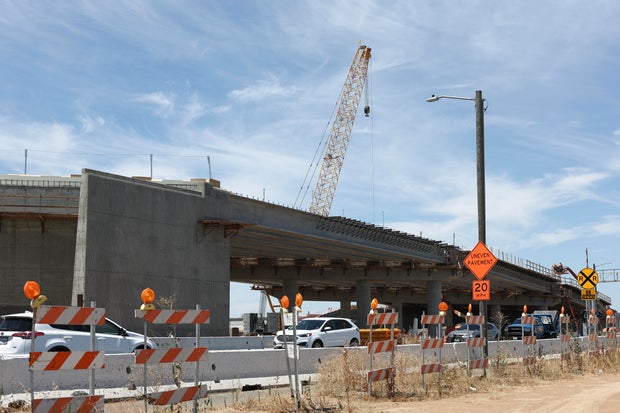
When California voters approved a high-speed rail system in 2008, the promise was simple: electric trains traveling at up to 220 mph would connect San Francisco and Los Angeles in under three hours. More than 15 years later, there is still no direct rail line between the state’s two largest cities, and the trip by conventional train takes anywhere from 10.5 to 12 hours. The project has been scaled back dramatically, with current construction focused on a flat, 171-mile stretch between Merced and Bakersfield in the Central Valley—a segment chosen partly because it required no tunnels. Even that reduced vision has been plagued by delays.
One of the most basic pieces of the project—actually buying the trains—has become a symbol of everything going wrong. Federal grant documents required the California High-Speed Rail Authority to execute a trainset contract by December 31, 2024. The state missed that deadline. Then, in sworn court filings, the authority promised a federal judge it would sign a contract by December 1, 2025. The state missed that deadline too, quietly canceling the board meeting where the contract was expected to be approved. Weeks later, it dropped its lawsuit against the federal government without explanation.
The consequences have been severe. In July 2025, the Trump administration pulled $4 billion in federal funding for the project, citing the state’s failure to lay a single mile of high-speed track after spending roughly $15 billion over 16 years. Transportation Secretary Sean Duffy said at the time, “Federal dollars are not a blank check—they come with a promise to deliver results.” Federal officials concluded there was “no viable path” to completing the Central Valley segment on time and noted that California had promised to connect major metropolitan cities but could now only offer a reduced system that “may connect two random endpoints.”
Governor Gavin Newsom called the funding withdrawal a “political stunt to punish California,” and Attorney General Rob Bonta quickly sued to stop what he described as a politically motivated attack. But the legal challenge collapsed within months. On December 23, 2025, the authority dismissed the lawsuit, saying only that it had concluded this administration was “not a reliable partner.” A CBS California investigation found the opposite: it was the rail authority that had repeatedly missed its own commitments, then dropped its lawsuit shortly after blowing past the new deadline it had promised in court.
The timeline of failures is lengthy. The original federal grant agreement, signed under the Biden administration, insisted on a trainset contract by the end of 2024. That date came and went. When the federal government moved to terminate funding in 2025, officials pointed to that missed deadline as evidence the state could not be trusted to deliver the project on schedule. The authority did not dispute the missed deadline, nor did it provide an explanation. Instead, it pointed to public records that did not acknowledge the delay.
More trouble followed. In court, the authority assured a judge that executing a train contract by December 1, 2025 would keep the project on schedule. But the authority missed that date as well, canceling the board meeting where the contract was expected to be approved. Multiple sources familiar with the procurement and litigation said the second failure undermined California’s legal argument that it could be trusted to meet future deadlines. The state had, in effect, proven the federal government’s point: the project was not on track.
The lawsuit was dismissed two days before Christmas, with no press release and no explanation for taxpayers. The only mention was buried in federal grant documents posted on the authority’s website. Newsom, Bonta, and the authority have never publicly explained why the train procurement deadlines were missed.
At his final State of the State address in January 2026, Newsom boasted that California was “finally laying the tracks of the nation’s first high-speed rail system.” But that was not true. No high-speed rail track had been laid. What existed was a railhead—a logistics depot meant to receive, store, and stage rail material for future installation. Weeks later, the authority announced the facility would allow California to begin receiving and staging materials needed to install high-speed rail track. Inspector General Ben Belnap put it plainly: “There’s been a railyard created that has track on it, but it is not high-speed rail track. High-speed rail track, as it’s defined, has not been laid yet.”
By June 2026, six months after the governor’s claim, the state still had not started laying high-speed rail. The authority said it expected to begin laying track by the end of the year. It also approved a team to build the track and released its 2026 business plan, which continued to project passenger service by 2033. Yet the plan’s section on trainset procurement status was left blank. Belnap said repeatedly missing that milestone raises accountability concerns because train sets are critical to the testing required on track and systems. Manufacturing trains takes time, he said, so every delay in signing a contract pushes the schedule further into jeopardy.
The procurement process itself has been troubled. When the authority’s board approved the trainset procurement in August 2023, the board memo said contracting a manufacturer in 2024 was “critical” to meeting federal grant timelines and the overall project schedule. The original plan called for two prototype trains to be delivered in 2028 for testing, with four more by the end of 2030 for passenger service. That procurement window has long since passed.
Sources inside the rail authority told CBS California Investigates that CEO Ian Choudri decided to change the trainset specifications shortly after taking over in 2024. Board members raised concerns at a meeting less than two months before the federal deadline, warning that the change could force the authority to cancel the procurement and start over. One board member, Ernest Camacho, cautioned that bidders might need to rethink their proposals and that the authority might have to rewrite specifications. The authority’s legal counsel interrupted, saying procurement could not be discussed in an open meeting. Weeks later, the deadline passed with no contract. Choudri declined repeated interview requests.
The math is now deeply troubling. Using the roughly four-year timeline from the original procurement schedule, a contract executed in 2026 would put initial train delivery around 2030. That would leave only about two years for testing and certification before the projected 2032–2033 opening—half the time originally planned. A 2025 supplemental report to the Legislature listed the trainset procurement with an estimated execution date of December 1, 2025. That date passed. The authority’s own statements confirm initial train deliveries were expected in early 2030, with roughly two years of testing required. There is little margin left for any further delay.
The Federal Railroad Administration flagged this risk before pulling the funding. Its June 2025 compliance review cited a pattern of “unrealistic assumptions,” including the schedule for trainset procurement and safety testing. The missed trainset procurement was one of nine key findings leading to the conclusion that there was “no viable path” to completing the Central Valley segment by 2033. Later, a U.S. Senate Commerce Committee investigation accused California leaders of wasting federal funds and gross mismanagement, citing the missed deadlines.
CBS California Investigates sent the authority twenty questions about the procurement delays. It asked why the authority failed to execute a trainset contract by either deadline and whether the project remains on schedule. The authority did not answer those questions. Instead, it defended the project and pointed to a 2024 Federal Railroad Administration review, conducted under the Biden administration, that found no fraud, waste, abuse, or compliance issues affecting completion. But that review predated both missed deadlines. The authority also claimed losing federal funding created “a new opportunity” because federal requirements had increased costs and slowed delivery. It did not explain why the deadlines were missed and directed reporters to a procurement webpage where the award date is listed as “TBD.”
Lawmakers have struggled to explain the situation. Assembly Transportation Committee Chair Lori Wilson said she was concerned when presented with the findings. Senate counterpart Dave Cortese called it a concern and said his committee would look into it. Republican Vice Chair Tony Strickland was blunter: “We wasted billions of dollars. We need to push for more oversight.” Wilson acknowledged that Californians deserve an answer. None of them could provide one.
Days after the investigation was published, the authority issued its first public acknowledgment that the train procurement had changed. An August 6, 2026 notice confirmed that no contract had been executed with any party. The order had been cut from six trainsets to three, with options for nineteen more that carried no guarantee. The revised terms required trains to be delivered for testing no later than February 2030. The authority also said it was considering a lease-purchase financing structure, meaning the state may not buy the trains outright. Most strikingly, the notice removed federal “Buy America” requirements, which generally require trains to be assembled in the United States from American-made components, including U.S.-produced steel and iron. The authority said the change was needed because federal funding had been withdrawn and the requirement had created schedule risk. It did not answer whether the trains would still be built in America.
The project’s inspector general has also warned that time is running out. A July 31, 2026 review found the authority would exhaust its current funding resources as soon as December 2027 if it did not secure new financing—a $9.5 billion gap over five years. Borrowing could add $3.6 billion to $6.6 billion in interest costs not included in the project’s official cost estimate. The review also found the business plan did not clearly disclose that the schedule window had slipped from 2032–2033 to as late as September 2034. The inspector general concluded that the authority had obscured basic facts about the project. The authority disputed the findings, saying they reflected differences in interpretation. But the inspector general’s office stood by its report.
For a project once hailed as the future of American transportation, the reality is sobering. California has spent billions, missed deadline after deadline, and still cannot say when it will buy the trains that were supposed to define the system. The contract award date remains “TBD.” The clock is running out.