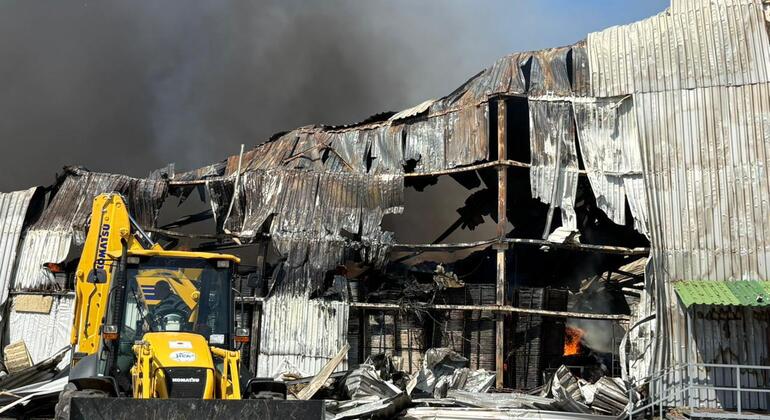
Bernadette Castel-Hollingsworth, a representative of the United Nations High Commissioner for Refugees (UNHCR), reported a devastating attack in Dnipro, Ukraine, where at least two civilians lost their lives and many others were injured. The attack also targeted a UNHCR-contracted warehouse, resulting in the destruction of significant amounts of aid and shelter materials.
The warehouse was hit by a ballistic missile, causing a fire that destroyed approximately 900 pallets of aid items, including blankets and hygiene kits valued at over $1 million. These supplies were intended for distribution to evacuees, people in collective and transit sites, and individuals whose homes were damaged. Castel-Hollingsworth expressed outrage at the repeated targeting of humanitarian premises and aid items in air strikes, as well as the deliberate attacks on humanitarian workers delivering aid to those in need.
In addition to the tragic events in Ukraine, weather and climate experts issued a warning about below-average rainfall in the northern Greater Horn of Africa during the crucial rainy season from June to September. The World Meteorological Organization (WMO) and the East Africa-based IGAD Climate Prediction and Applications Centre (ICPAC) highlighted the potential impacts on agriculture, water availability, livestock systems, hydropower generation, food security, and public health due to the forecasted drier conditions.
The June to September rains contribute significantly to the annual rainfall in the northern and western parts of the Greater Horn of Africa, with more than 50% in some areas and over 80% in Sudan. The forecast indicates below-normal rainfall probabilities in countries like South Sudan, Uganda, Ethiopia, Djibouti, Eritrea, Sudan, and parts of Kenya, with the highest likelihood of below-normal rainfall in specific regions of Ethiopia, Sudan, and Uganda.
On the other hand, some areas in Sudan, Ethiopia, and Somalia are expected to receive enhanced rainfall, while regions in Kenya, Sudan, and Somalia are forecasted to have near-normal rainfall. These predictions raise concerns about the potential impact on food security, water resources, and overall livelihoods in the affected areas.
Meanwhile, in Bangladesh, a different humanitarian crisis is unfolding in Rohingya refugee camps in Cox’s Bazar. Children are seen walking between shelters in the overcrowded camps, highlighting the ongoing challenges faced by refugees in accessing basic necessities and services. The situation in the camps remains precarious, with limited resources and support for the vulnerable Rohingya population.
The combination of humanitarian crises in different parts of the world underscores the urgent need for international cooperation and support to address the complex challenges faced by displaced populations, vulnerable communities, and countries affected by natural disasters and conflicts. The UNHCR and other humanitarian organizations continue to work tirelessly to provide assistance and protection to those in need, but more support is required to ensure the safety and well-being of all affected individuals.