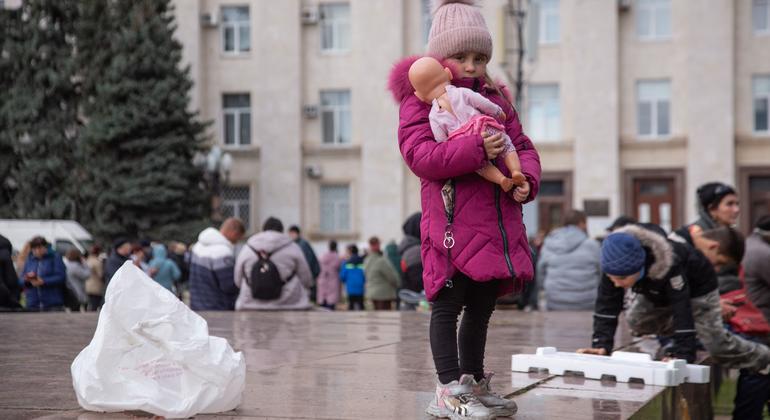
Substations, power plants, and oil depots in Chernihiv, Kharkiv, Odesa, and Donetsk were recently damaged, causing temporary power outages for hundreds of thousands of homes and businesses in those regions. This destructive act not only disrupted the daily lives of countless individuals but also highlighted the vulnerability of critical infrastructure in times of conflict. The impact of these attacks on essential services like electricity has deepened the humanitarian crisis in Ukraine, particularly as colder weather approaches.
António Guterres’ spokesperson, Mr. Dujarric, expressed concern over the escalating situation, emphasizing the urgent need for continued support to address the growing challenges faced by the Ukrainian population. Despite the ongoing conflict and its devastating consequences, humanitarian organizations, including the United Nations and its partners, are working tirelessly to provide essential care to those in need. In the first half of the year, UN agencies assisted nearly one million people, offering food and livelihood programs to over 1.1 million displaced and vulnerable families across the country.
The recent attacks on critical infrastructure have brought to light the pressing need for immediate action to restore essential services and ensure the safety and well-being of the affected population. In response to the crisis, efforts are underway to restore off-site power to Ukraine’s Zaporizhzhya Nuclear Power Plant (ZNPP). Rafael Mariano Grossi, the Director of the International Atomic Energy Agency (IAEA), announced that a process has been initiated in collaboration with the Russian Federation to reconnect external electricity to the plant.
The ZNPP suffered a loss of grid connection for the tenth time since the start of Russia’s invasion of Ukraine in February 2022, attributing the damage to military activities on both sides. The reliance on emergency diesel generators to power the cooling pumps at the plant has exacerbated the already precarious nuclear safety and security situation. Mr. Grossi has been engaging with all parties involved to develop concrete proposals that would enable the plant to receive the necessary off-site power to cool its reactors and spent fuel.
While the process of restoring grid connection to the ZNPP will take some time, the collaborative efforts of all parties involved have set a positive precedent for nuclear safety and security in the region. The IAEA team on-site has been monitoring the situation closely and has confirmed that there has been no increase in temperature within the coolant in the reactors or spent fuel pools. This ongoing monitoring and coordination are crucial to prevent any further deterioration of the nuclear facilities and ensure the safety of the surrounding areas.
In a separate humanitarian development, the International Organization for Migration (IOM) facilitated the voluntary return of 152 vulnerable Syrians from Libya to Damascus. This marks the first voluntary humanitarian return flight for Syrian migrants in Libya organized by IOM in 2025. Othman Belbeisi, the Director of the Regional Office for the Middle East and North Africa, emphasized IOM’s commitment to supporting Syria’s recovery and facilitating dignified and sustainable returns for displaced Syrians.
The flight from Tripoli to Damascus was arranged in response to a request from Syria’s Ministry of Foreign Affairs, underscoring the importance of international cooperation in addressing displacement and migration challenges. As conflict and instability continue to affect populations across the region, initiatives like voluntary humanitarian return flights play a crucial role in providing assistance and support to vulnerable individuals seeking to rebuild their lives in their home countries.
The return of Syrian migrants from Libya to Syria reflects the ongoing efforts of humanitarian organizations to address the complex needs of displaced populations and promote stability and recovery in conflict-affected regions. By providing essential services, facilitating voluntary returns, and supporting recovery efforts, organizations like the UN and IOM are working to alleviate the suffering of those affected by conflict and displacement, offering hope for a better future for all those impacted by crises around the world.