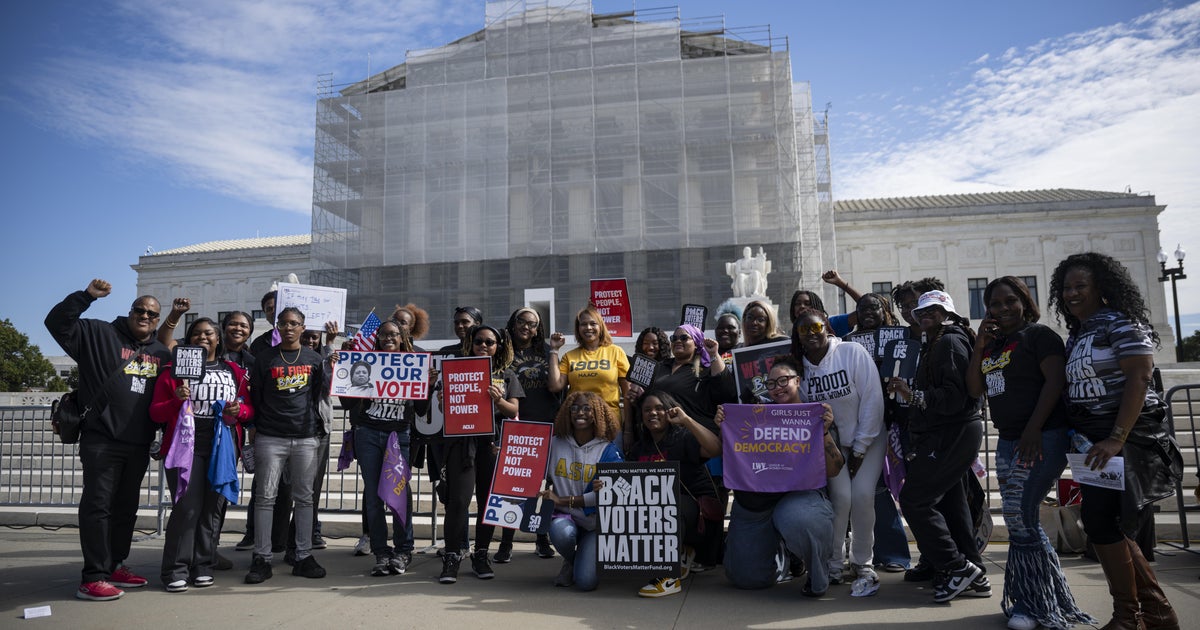
The Supreme Court decision on Monday to allow Alabama to implement a new House map ahead of the 2026 midterm elections has sparked controversy and debate. The ruling, which overturned lower court decisions blocking the state from using a GOP-drawn map, has implications for the representation of Black voters in the state.
The new House map, drawn in 2023, includes one majority-Black district out of seven House districts. This map was adopted by Alabama lawmakers following a Supreme Court ruling earlier that year that deemed a redistricting plan enacted in 2021 to likely violate the Voting Rights Act. The state’s current map, used in the 2024 elections, was selected by a three-judge district court panel and includes two majority-Black districts.
The Supreme Court’s decision to set aside the lower court rulings and allow Alabama to use the 2023 map has raised concerns among some justices. Justices Sonia Sotomayor, Elena Kagan, and Ketanji Brown Jackson dissented, with Sotomayor arguing that the move will only cause confusion for voters as the elections approach.
Alabama’s congressional delegation currently consists of five Republicans and two Democrats. The state has asked the Supreme Court to expedite the appeals process in light of a recent ruling that weakened Section 2 of the Voting Rights Act. This decision has prompted Republicans in some Southern states to reconsider their congressional maps and districts held by Democrats.
Governor Kay Ivey signed a measure into law authorizing a special election for congressional districts that would be affected by the change to the 2023 map. Democratic Representative Shomari Figures, who represents one of the predominantly Black districts, expressed disappointment in the Supreme Court’s decision, calling it “incredibly unfortunate” and warning that it could set back Black political representation in the state.
The legal battle over Alabama’s congressional map has been ongoing for years, with multiple trips to the Supreme Court for review. The state’s Republican-controlled Legislature adopted new House district lines in 2021, leading to a series of legal challenges and court rulings that have shaped the state’s political landscape.
The Supreme Court’s decision in this case reflects broader debates about voting rights, redistricting, and political representation in America. The implications of this ruling extend beyond Alabama and could have a lasting impact on how electoral maps are drawn and how diverse communities are represented in government.
As the 2026 midterm elections approach, the outcome of this legal battle will be closely watched by both political parties and advocacy groups. The Supreme Court’s role in shaping the future of voting rights and representation in America is a critical issue that continues to be a source of contention and debate.