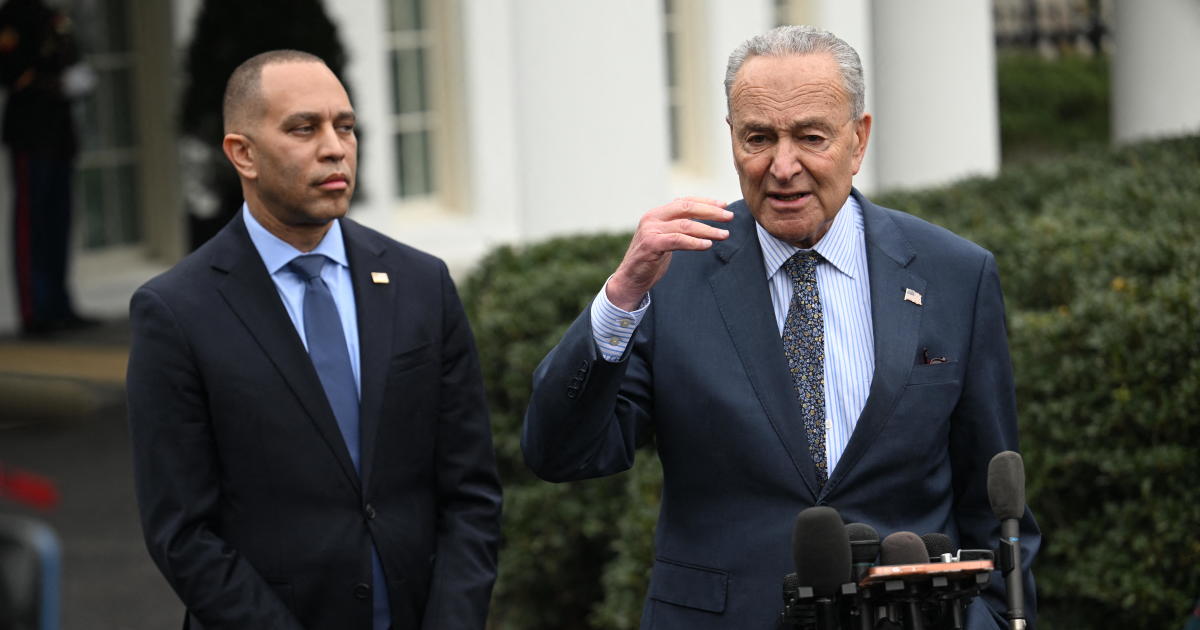
Senate Majority Leader Chuck Schumer recently described a tense exchange during a White House meeting with President Biden over the approval of more aid for Ukraine as one of the most intense scenes he had ever witnessed in the Oval Office. The White House has been urging Congress to pass a supplemental funding bill that would provide billions of dollars in aid to U.S. allies and partners, including $60 billion for Ukraine, $14.1 billion for Israel, and $9.2 billion for humanitarian assistance in Gaza. The Senate passed the legislation on a bipartisan basis, but House Speaker Mike Johnson has so far blocked its path forward in the House, facing pressure from both Democrats and Republicans to pass another round of military assistance.
During the meeting, Schumer, President Biden, Vice President Kamala Harris, Senate Minority Leader Mitch McConnell, and House Minority Leader Hakeem Jeffries emphasized the importance of the aid to help Ukraine in its war with Russia. Schumer highlighted the critical nature of the situation, stating that without more ammunition and supplies for Ukraine, the war could be lost, NATO could be fractured, and allies could turn away from the United States. Schumer’s comments followed his recent trip to Ukraine, where he was deeply moved by the strength of President Volodymyr Zelenskyy and the Ukrainian people.
Schumer noted that the intensity of the discussion in the meeting was surprising to him, particularly as it also touched on the upcoming deadline to fund the government. The leaders emphasized the historical significance of the moment and urged Johnson to “do the right thing” for Ukraine. Johnson, in response, expressed his desire to address U.S. border security concerns, a topic that House Republicans have been pushing for alongside additional foreign aid to Ukraine. Despite this, GOP lawmakers rejected a bipartisan Senate-negotiated agreement on border security earlier in the month.
In the meeting, Schumer pointed out that Johnson had been unable to come up with a border security plan that could garner Democratic support, despite efforts over the past six months. Johnson, however, stated that the House is actively exploring all avenues for supplemental funding, indicating a willingness to consider various approaches to address the situation. The discussions underscored the complex interplay between foreign aid, border security, and political dynamics within Congress.
The push for additional aid to Ukraine reflects the broader geopolitical tensions and security challenges facing the region. The U.S. and its allies are grappling with how best to support Ukraine in its conflict with Russia while also addressing domestic priorities and concerns. The intense negotiations and debates within Congress highlight the complexities of foreign policy decision-making and the competing interests at play. As the situation continues to evolve, the need for bipartisan cooperation and strategic leadership remains paramount in navigating these challenging times.