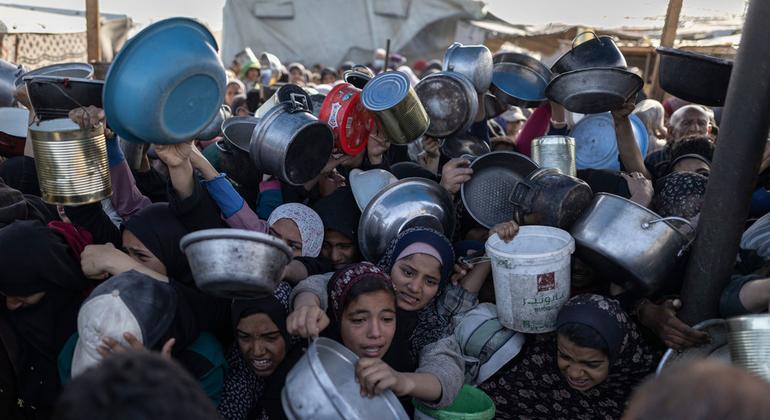
The humanitarian crisis in Gaza and the West Bank continues to worsen, with shortages of essential supplies such as fuel, oxygen, and electricity generators affecting the ability of first responders and healthcare facilities to operate effectively. Stéphane Dujarric, spokesperson for the United Nations, highlighted the gravity of the situation during a regular news briefing in New York.
According to Dujarric, the Office for the Coordination of Humanitarian Affairs (OCHA) has identified a critical need for oxygen supplies and electricity generators to maintain life-saving operations at hospitals in Gaza. Additionally, at least two dozen additional generators are required for health centers, as the existing ones are in need of maintenance and spare parts.
The shortage of fuel in Gaza is also causing significant challenges, impacting the movement of vehicles and slowing down the response of first responders. This issue is exacerbating the already dire situation in the region, making it difficult to access essential services and support.
In addition to the lack of fuel, rising food prices are further straining the population in Gaza and the West Bank. The World Food Programme (WFP) has food stocks that are sufficient to support active kitchens and bakeries for up to one month, as well as ready-to-eat food parcels to assist 550,000 people for two weeks. However, to stretch supplies, the agency is reducing the quantity of food parcels provided to families, a measure that was implemented before the ceasefire.
The closure of border crossings has led to a sharp increase in food prices, particularly for staples such as flour and sugar. This rise in prices is making it challenging for the population to access essential food items, further exacerbating the humanitarian crisis in the region.
The situation in the West Bank is also deteriorating, with a surge in settler violence causing casualties, property damage, and placing communities at high risk of displacement. OCHA has reported an increase in the demolition of Palestinian-owned structures in the West Bank, with the number of demolitions during the first 10 days of Ramadan already surpassing the total for all of Ramadan in 2024.
Operations in Jenin city have intensified, with over 500 people displaced from three neighborhoods in the eastern part of the city since Monday. The escalating violence and displacement in the region are creating a dire situation for the population, with urgent action needed to address the growing humanitarian crisis.
WFP is providing support to over 190,000 people with monthly cash vouchers and has offered one-off assistance to thousands of individuals in urgent need. However, the agency requires $265 million in funding over the next six months to sustain operations that assist 1.4 million people in Gaza and the West Bank. Without adequate funding, the agency will struggle to meet the growing needs of the population and provide essential support to those affected by the crisis.
Overall, the situation in Gaza and the West Bank remains critical, with shortages of essential supplies, rising food prices, and increasing violence leading to a worsening humanitarian crisis. Urgent action is needed to address the immediate needs of the population and prevent further suffering in the region.