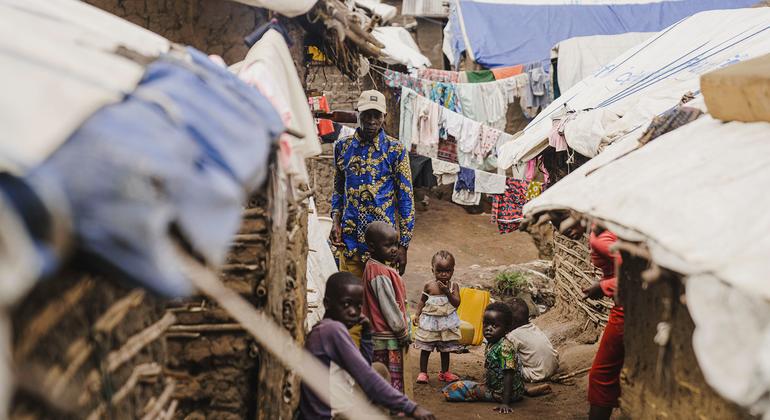
The latest offensive by the Alliance Fleuve Congo/Mouvement du 23 mars (AFC/M23) has sparked a new wave of large-scale hostilities in South Kivu, reigniting the conflict just days after international agreements were signed to de-escalate the situation. This resurgence of fighting has resulted in civilian casualties, the destruction of infrastructure, and the displacement of hundreds of thousands of people from their homes, as reported by United Nations officials and humanitarian organizations.
The United Nations and the Security Council have consistently labeled the majority-Tutsi M23 militia as being backed by Rwanda, an accusation that Rwanda has vehemently denied. US Ambassador Mike Waltz expressed disappointment with Kigali’s recent actions in support of the M23 rebels, despite having recently signed a peace agreement in Washington with the Democratic Republic of Congo (DRC). He emphasized that Rwanda’s backing of the M23 rebels undermines the peace process and jeopardizes the progress made towards de-escalation.
Jean-Pierre Lacroix, the head of UN Peace Operations, issued a warning about the offensive, stating that it has raised concerns about the potential for a regional conflict with far-reaching consequences. The territorial expansion of the AFC/M23 and the weakening of the DRC Government’s authority in eastern regions pose a threat to national unity, sovereignty, and territorial integrity. While recent diplomatic breakthroughs, such as the Washington Accords and the Doha Framework Agreement, had given hope for peace, the resumption of fighting and ceasefire violations now jeopardize that progress.
Lacroix emphasized the importance of bridging the gap between political commitments and their implementation on the ground to maintain the credibility of peace processes and prevent further harm to civilians. The failure to uphold these commitments erodes trust in the peace efforts and exacerbates the sense of abandonment felt by civilians caught in the conflict.
As violence escalates, the United Nations peacekeeping mission in the Democratic Republic of Congo, MONUSCO, plays a crucial role in providing civilian protection in the volatile eastern regions. With the Security Council soon to decide on the renewal of its mandate, MONUSCO remains a central pillar of support for displaced populations in North Kivu and Ituri, where armed groups operate in close proximity to vulnerable communities.
Lacroix highlighted that MONUSCO continues to protect around 100,000 displaced people near its bases through daily patrols, early-warning systems, and community engagement efforts. The mission has shifted towards a more preventive approach, focusing on deterrence, rapid response, and maintaining a visible presence in areas where armed groups pose a threat to civilians.
Despite its critical role, MONUSCO faces increasing constraints on its operations due to restrictions imposed by the AFC/M23 on freedom of movement and access to essential supplies like fuel. These limitations hinder the mission’s ability to effectively carry out its mandate and protect civilians in conflict-affected areas.
The ongoing conflict in the Democratic Republic of Congo underscores the fragility of peace efforts in the region and the urgent need for all parties to honor their commitments to de-escalation and dialogue. The international community must continue to support diplomatic initiatives and peacekeeping efforts to prevent further violence and protect the lives of civilians caught in the crossfire of this protracted conflict.