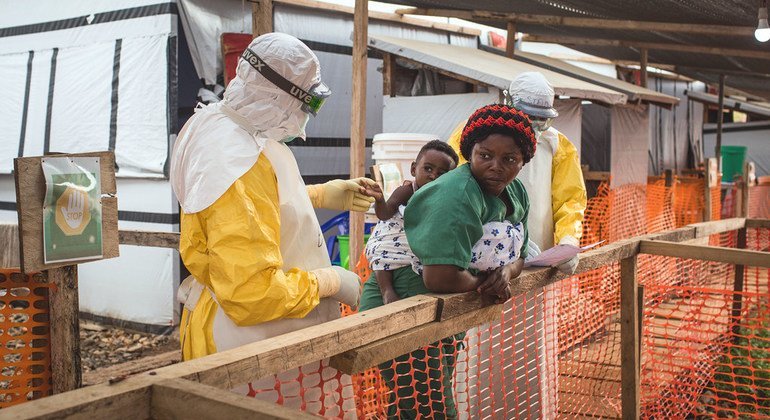
The World Health Organization (WHO) has recently declared an epidemic of Ebola disease in the Democratic Republic of the Congo (DRC) and Uganda as a public health emergency of international concern. This decision was announced by WHO Director-General Tedros Ghebreyesus on Sunday, following reports of confirmed and suspected infections linked to the Bundibugyo strain of the virus.
The situation is indeed serious, with health authorities in Ituri Province in eastern DRC recording eight laboratory-confirmed cases, 246 suspected cases, and 80 suspected deaths as of 16 May. The virus has also spread to the capital, Kinshasa, and across the border into Uganda, where two infected individuals who traveled from DRC are currently in intensive care.
Despite these alarming figures, the outbreak does not meet the criteria for a pandemic emergency under the WHO’s International Health Regulations. However, WHO warns that the outbreak is likely larger than currently detected, citing clusters of unexplained deaths, a high positivity rate among tested samples, and limited understanding of transmission patterns. Additionally, at least four deaths among healthcare workers have raised concerns over infection prevention measures in health facilities.
The agency emphasizes that the outbreak poses a risk to neighboring countries due to high population mobility, trade links, and ongoing humanitarian challenges in affected regions. As a result, WHO is urging countries to strengthen surveillance, preparedness, and community engagement, while ensuring accurate public information.
Despite the risks, WHO does not recommend restrictions on international travel or trade at this time. Instead, authorities in DRC and Uganda have been advised to activate emergency response mechanisms, enhance contact tracing and laboratory testing, improve infection prevention measures, and scale up treatment capacity. Community engagement, including working with local and religious leaders, is also considered critical to controlling the outbreak.
It is important to note that there are currently no approved vaccines or specific treatments for the Bundibugyo strain of Ebola. This underscores the importance of accelerating research and clinical trials to develop effective interventions.
In response to the escalating situation, an Emergency Committee will be convened to provide further recommendations as global health authorities ramp up efforts to contain the outbreak and prevent wider spread.
The outbreak of Ebola in DRC and Uganda highlights the ongoing challenges and complexities of managing infectious diseases in vulnerable populations. It underscores the need for coordinated international efforts to address public health emergencies and strengthen health systems in affected regions.
As the situation continues to evolve, it is crucial for governments, health authorities, and international organizations to work together to deploy resources, expertise, and support to contain the outbreak and protect the health and well-being of communities at risk.