Mohamed Alnwairan, a former businessman turned farmer, is standing proudly in front of a verdant citrus tree in Al Ahsa, Saudi Arabia. In just four months, this tree will bear his first harvest of limes, marking a new chapter in his agricultural journey. For the past 15 years, Mr. Alnwairan has been cultivating land in the eastern deserts of Saudi Arabia, but now, faced with the challenges of climate change and dwindling water supplies, he is embracing new technology and a new crop.
“We are very proud of our limes in this part of Saudi Arabia. You can feel the citrus oil on your hands when you touch them,” he shared with UN News. “They remind us of our childhood, and now I have the chance to grow them commercially.”
Mr. Alnwairan’s farm is located in an oasis near the city of Hofuf and spans approximately a thousand square meters. The sandy soil is dotted with 120 two-meter-high lime trees that have been growing for almost four years. As he looks across his small farm, Mr. Alnwairan reflects on the journey that led him to this point.
Smart irrigation is a key component of Mr. Alnwairan’s farming practices. He points out the difference between the trees irrigated using innovative techniques and those that he has been hand-watering using traditional methods. The irrigated trees are noticeably healthier, with vibrant color, robust health, and sturdiness. This difference is attributed to the resource-efficient approach of smart irrigation, which is being promoted in the region by the UN’s Food and Agriculture Organization (FAO).
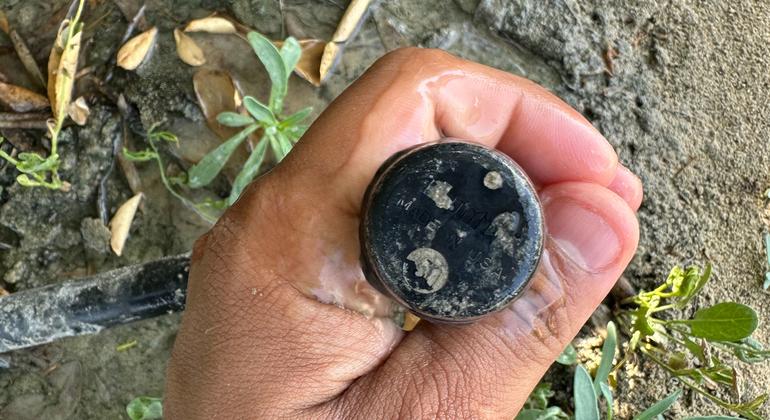
Through an app on his smartphone, Mr. Alnwairan can monitor the soil conditions and deliver the precise amount of water needed for his lime trees to flourish. Sensors on the trees detect rainfall and automatically adjust water provisions accordingly. This remote monitoring and control system allow for efficient water usage and healthier crop growth.
Mahmoud Abdelnabby, an irrigation expert with FAO, emphasizes the importance of smart irrigation in addressing water stress in agricultural regions. Reduced rainfall, coupled with the cultivation of water-intensive crops like rice, has led to a decline in the water table in the oasis farmland. Mr. Alnwairan had to cease rice farming on another plot when the water level in his well dropped to 300 meters below ground.
Smart irrigation has the potential to reduce water consumption by 70% while promoting environmental sustainability. While farmers currently do not pay for water, the adoption of automation technology can lead to cost savings by reducing the need for manual labor in watering trees. Despite the initial financial investment required, the returns in higher yields and lower operational costs make it a worthwhile investment for farmers.
The technology for smart irrigation is readily available in the local market, making it accessible to farmers like Mr. Alnwairan. The expertise of organizations like FAO and irrigation extension experts like Mr. Abdelnabby play a crucial role in promoting and implementing these sustainable farming practices. By harnessing technology and innovation, farmers in arid regions can adapt to the challenges posed by climate change and water scarcity while ensuring the continued productivity of their land.
In Al Ahsa, Saudi Arabia, Mohamed Alnwairan’s journey from businessman to farmer is a testament to the resilience and ingenuity of agricultural communities facing environmental challenges. Through the adoption of smart irrigation and the cultivation of new crops like limes, farmers like Mr. Alnwairan are not just adapting to change but thriving in the face of adversity. As the first harvest of limes approaches, Mr. Alnwairan’s farm stands as a symbol of hope and progress in a changing climate.