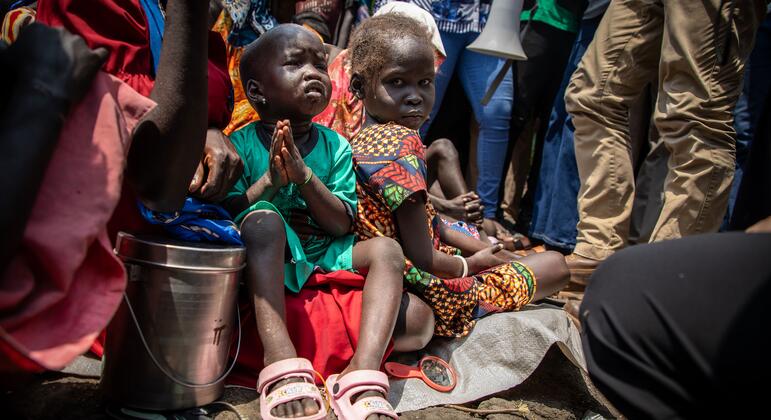
The conflict in South Sudan continues to escalate, with fighting between the national army and the opposing Sudan People’s Liberation Movement militia intensifying, particularly in Jonglei’s Akobo County. Civilians are bearing the brunt of the violence, with around 140,000 people displaced in Akobo County alone. Across Jonglei and neighboring states, more than 300,000 people have been uprooted since December of the previous year, adding to the nearly two million internally displaced individuals in the country.
In addition to the internal displacement, approximately 100,000 people have fled to neighboring Ethiopia in search of safety. The population movements remain fluid, with thousands of individuals returning home in recent weeks. Many families who are returning to their homes are finding them destroyed or looted, forcing them to seek shelter in unfinished buildings or makeshift shelters made from sticks and plastic sheeting.
The constrained humanitarian access in several locations has cut off the most vulnerable populations from critical aid, further deepening the crisis. As South Sudan enters its rainy season, the country is likely to face flooding, adding another layer of hardship to a nation that has already experienced repeated waves of conflict, displacement, and climate shocks since gaining independence in 2011.
The global supply of animal-based food products has seen a significant increase over the past six decades, according to a new study by the UN Food and Agriculture Organization (FAO). The report highlights a rise in the production of eggs, poultry, and pork, with poultry meat showing the most pronounced growth, nearly five-fold. In 2022, global meat production reached 361 million tonnes, up from around 71 million tonnes in 1961, while milk production increased from 342 million tonnes to 930 million tonnes.
Despite the increase in global meat production, disparities in per capita land animal product supply persist, with Northern America leading in this category. In Asia, which is the leading producer of meat, access to meat products remains relatively challenging. Sub-Saharan Africa has seen limited gains in per capita supply, with some countries experiencing increases in milk and poultry production.
Food loss and waste exacerbate these disparities and pose a growing sustainability challenge. An estimated one-third of all food produced globally never reaches the plate, including approximately 14 percent of animal food products. Losses are often linked to inadequate cold chain infrastructure and poor temperature control.
The escalating crisis in the Middle East continues to have ripple effects, pushing millions of the world’s poorest further into hunger. The UN World Food Programme (WFP) has warned that the fallout from the conflict is already impacting vulnerable populations, exacerbating food insecurity and hunger. Three months after the initial warning, the situation continues to deteriorate, with millions of people at risk of facing severe hunger and malnutrition.
The ongoing conflicts and crises in various regions of the world highlight the urgent need for global cooperation and humanitarian assistance. As populations continue to be displaced, food insecurity persists, and climate-related challenges intensify, it is crucial for international organizations, governments, and communities to work together to address these complex issues and provide support to those in need.