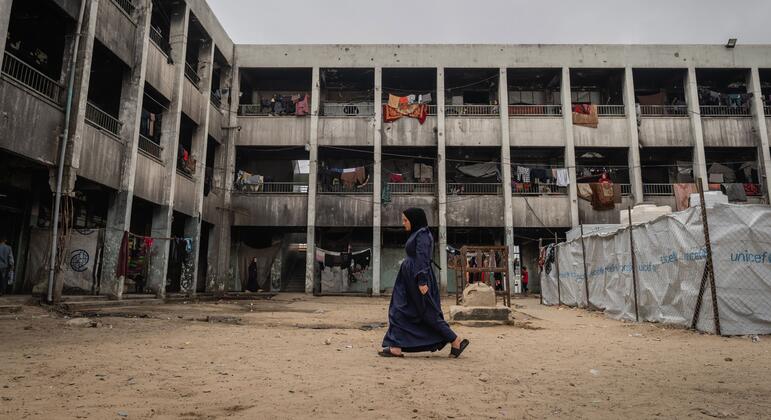
The Security Council convened in a crucial meeting to address the ongoing crisis in Gaza, where a fragile ceasefire is barely holding on. The deteriorating conditions in the West Bank, marked by continued civilian casualties and escalating humanitarian needs, have added urgency to the discussions.
The primary focus of the meeting is expected to be on the governance of Gaza, a contentious issue that has plagued the region for years. With no disarmament efforts in sight and mounting frustrations among the civilian population, finding a viable solution to the governance question is imperative for the restoration of peace and stability.
The situation in Gaza has been precarious for months, with sporadic outbreaks of violence threatening to derail any progress made towards peace. The recent ceasefire, brokered by international mediators, has provided a brief respite from the bloodshed, but the underlying tensions and grievances remain unaddressed.
The Security Council members are grappling with the complexities of the situation in Gaza, where multiple factions vie for control and influence. The absence of a unified governing body has created a power vacuum that has been exploited by extremist elements, further complicating efforts to achieve lasting peace.
Meanwhile, the humanitarian situation in Gaza and the West Bank continues to deteriorate, with basic services in short supply and essential resources scarce. The ongoing violence and instability have made it increasingly difficult for aid organizations to reach those in need, exacerbating an already dire situation.
Civilian casualties have been mounting in both Gaza and the West Bank, with innocent men, women, and children paying the ultimate price for the political stalemate. The indiscriminate targeting of civilian populations by armed groups has been condemned by the international community, but efforts to hold the perpetrators accountable have been stymied by the lack of a functioning justice system.
As the Security Council deliberates on the way forward, there is a growing recognition that a comprehensive approach is needed to address the root causes of the conflict. This includes addressing the grievances of the Palestinian people, promoting good governance and accountability, and fostering economic development to create opportunities for all.
Efforts to support recovery in Gaza and the West Bank will also be on the agenda, with a focus on rebuilding infrastructure, restoring essential services, and providing humanitarian assistance to those in need. The international community has a vital role to play in supporting these efforts and ensuring that the people of Gaza and the West Bank can rebuild their lives in safety and security.
Ultimately, the fate of Gaza and the West Bank rests in the hands of the international community, which must act decisively to address the underlying issues that have fueled the conflict. The Security Council’s discussions are a critical step towards finding a sustainable solution that will bring lasting peace and stability to the region.