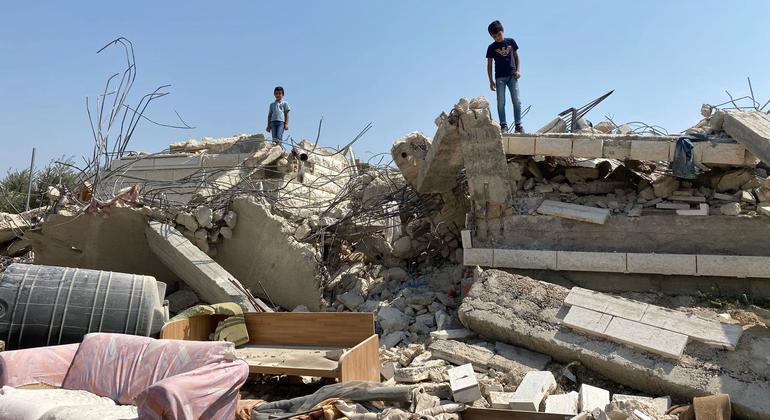
The situation in the West Bank and Gaza continues to deteriorate, with children bearing the brunt of the violence and conflict. According to the UN Children’s Fund (UNICEF), attacks on children in the region have become increasingly coordinated, resulting in a disturbing number of deaths and injuries.
UNICEF spokesperson James Elder recently spoke to reporters in Geneva, highlighting the alarming trend of children being targeted in violent incidents. He described incidents where children have been shot, stabbed, beaten, and pepper-sprayed, painting a grim picture of the situation on the ground.
Since January 2025, at least 70 children have been killed in the West Bank, with a further 850 injured, most of them by live ammunition. These numbers represent a tragic reality for Palestinian children living in a volatile and dangerous environment.
Mr. Elder also pointed out the rise in settler attacks, noting that March 2026 saw the highest number of Palestinians injured by settler violence in the past two decades. The escalation of violence has created a climate of fear and uncertainty for children and their families in the region.
During a recent visit to the West Bank, Mr. Elder recounted meeting an eight-year-old boy who had been bludgeoned with a piece of wood in a settler attack. The boy’s mother suffered multiple injuries while trying to protect her infant from the attacker’s club, illustrating the brutal and indiscriminate nature of the violence.
Education-related attacks have also become increasingly common, with students facing the threat of injury, detention, and even death. Schools, which should be safe spaces for children, have become targets of violence and instability, further complicating the daily lives of Palestinian students.
Mr. Elder shared his experience of walking with schoolchildren in the West Bank, noting that they no longer walk in a straight line out of fear of potential attacks. The simple act of going to school has become a harrowing journey through a landscape of danger and uncertainty, highlighting the profound impact of violence on the lives of Palestinian children.
The spokesperson also addressed the alarming increase in the arrest and detention of Palestinian children by Israeli authorities. He reported that 347 children from the occupied territory are currently held in Israeli military detention, the highest number in eight years. Of these children, 180 are held under administrative detention, without access to legal counsel or the right to challenge their detention.
In Gaza, the situation is no less dire, with hundreds of children killed and injured since the October 2025 ceasefire. The UN has documented at least 229 children killed and 260 injured in the region, with many more living with life-changing injuries that have a lasting impact on their physical and emotional well-being.
Dr. Reinhilde Van de Weerdt, the UN World Health Organization’s representative in the Occupied Palestinian Territories, highlighted the severe shortage of prosthetics for those who have sustained limb injuries in Gaza. Despite the high number of amputations, less than 25% of those affected have been fitted with permanent prosthetics, leaving many with limited mobility and reduced quality of life.
Overall, an estimated 43,000 people in Gaza have sustained life-changing injuries since October 2023, with almost 2,500 more injured since the ceasefire in October 2025. The long-term consequences of these injuries are staggering, with many individuals facing a future of disability and limited opportunities for recovery and rehabilitation.
The ongoing violence and conflict in the West Bank and Gaza have created a humanitarian crisis that disproportionately affects children, who are innocent victims caught in the crossfire of political tensions and territorial disputes. The international community must urgently address the root causes of the violence and work towards a peaceful resolution that ensures the safety and well-being of all children in the region. Only through collective action and a commitment to human rights and justice can we hope to bring an end to the suffering and insecurity that plague the lives of Palestinian children in the West Bank and Gaza.