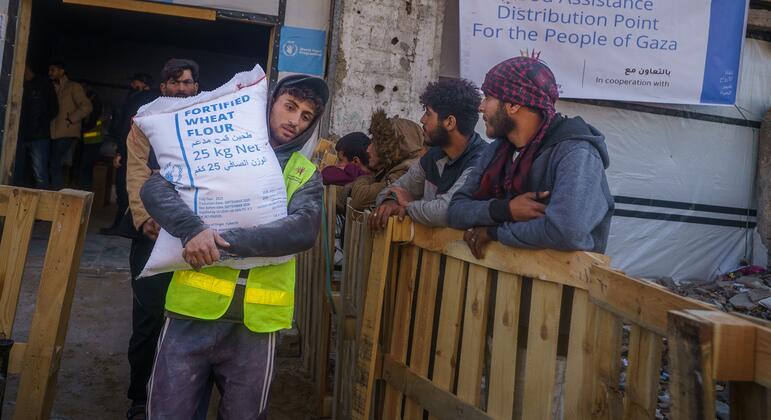
The humanitarian crisis in Palestine continues to worsen, with the response struggling to keep up with the growing needs. The UN aid coordination office, OCHA, reported that ongoing restrictions imposed by Israeli authorities have hindered the delivery of essential supplies, such as materials needed for sewage network maintenance and repair.
Efforts are being made to improve water purification capacity in Gaza, with specialized equipment being transferred to the Al Bassa desalination plant in Deir Al-Balah. Additionally, the installation of the Al Manshia desalination plant in Gaza City has commenced, aiming to address the urgent water needs in the region.
In the West Bank, violence and displacement remain major concerns. Ongoing operations by Israeli forces and settler violence continue to endanger Palestinians and deepen humanitarian needs. Over the past two weeks, six Palestinians, including four children, were killed – five by Israeli forces and one by an Israeli settler. Three Israelis were also injured during the same period.
OCHA expressed deep concern over the increasing displacement in the West Bank, with more than 100 Palestinians forced to leave their homes due to demolitions. One notable incident involved the demolition of a four-story building in the Silwan neighborhood, displacing 50 individuals, including 21 children. Palestinian residents face challenges in obtaining Israeli-issued building permits, making it nearly impossible for them to legalize their constructions.
The situation in Syria remains dire, with millions of people in need of humanitarian assistance. OCHA reported that 16.5 million Syrians, nearly two-thirds of the population, require aid to meet their basic needs. The country is undergoing a political transition following the overthrow of the Assad regime last December, presenting challenges and uncertainties for the population.
Explosive ordnance contamination continues to pose a significant threat in Syria, resulting in casualties, including children. Last month alone, 21 people were killed and more than 60 injured, highlighting the dangers faced by civilians. Additionally, 2.5 million children are out of school, and 40% of schools are non-operational, impacting access to education for Syrian youth.
Despite the challenges, the UN and humanitarian partners have been able to reach over three million people each month with vital assistance since January. OCHA and its partners are actively coordinating with authorities and monitoring developments in Aleppo City, where a ceasefire agreement was recently reached after hostilities threatened the region.
The recent fighting in Aleppo was linked to tensions surrounding the integration of the mostly Kurdish Syrian Democratic Forces (SDF) into the armed forces, leading to shelling in multiple neighborhoods and triggering new displacements. Health authorities reported two civilian deaths and several injuries as a result of the violence, underscoring the urgency of addressing the conflict in Syria.
In Burundi, lawyers are facing repercussions for cooperating with the UN and international committees. The government’s crackdown on legal professionals who engage with international bodies raises concerns about the protection of human rights and the rule of law in the country. The targeting of lawyers for their collaboration with external organizations highlights the challenges faced by individuals working to uphold justice and accountability in Burundi.
Overall, the humanitarian situation in Palestine, Syria, and other conflict-affected regions remains critical, necessitating sustained efforts to address the urgent needs of vulnerable populations. International cooperation and support are essential to alleviate the suffering and promote stability in these troubled areas.