Venezuelan DoorDash Driver Shot by ICE Officer Is Held in Detention With Bullet Near Spine, Lawyer Says
A Venezuelan man who was shot by an immigration officer while making a DoorDash delivery in Austin, Texas, has been transferred from a hospital to a detention center with a bullet still lodged in his back, his attorney said Monday, as a federal judge temporarily halted his deportation.
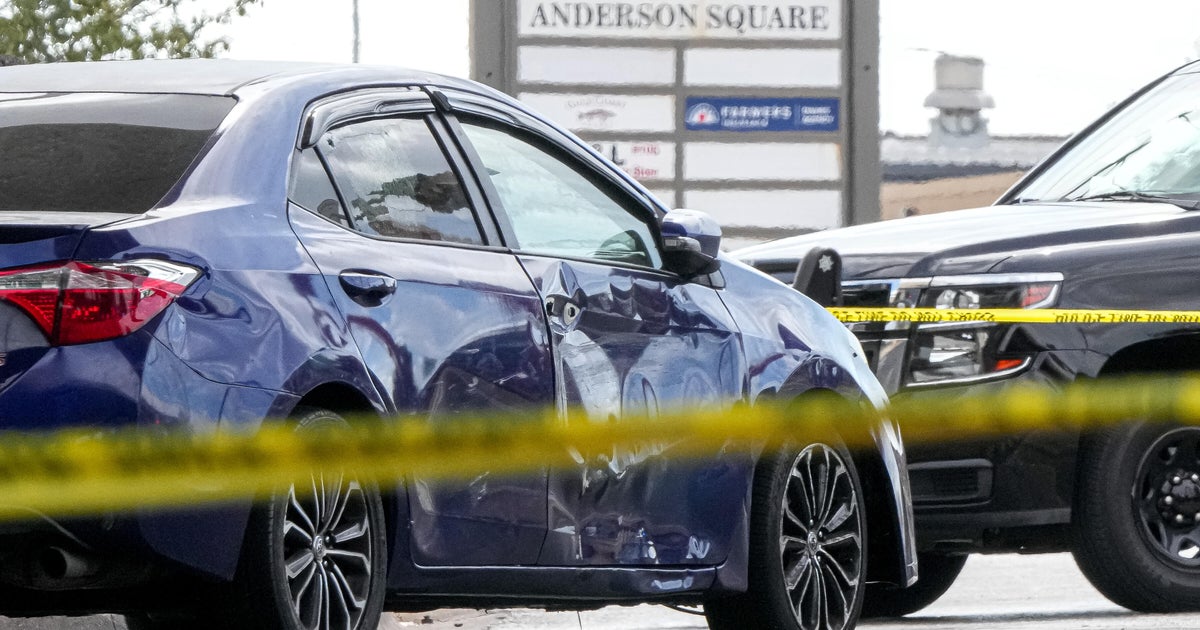
Wilber Rafael Garces Perez, 28, was shot in the back by an officer with U.S. Immigration and Customs Enforcement after the officer sideswiped his car early Sunday afternoon, according to attorney Kate Lincoln-Goldfinch. Speaking at a news conference, Lincoln-Goldfinch said her client was taken to a hospital for treatment, but his family was not notified until four hours later that he had been moved to the South Texas Processing Center in Pearsall, about a two-hour drive from Austin.
In an update on Tuesday, Lincoln-Goldfinch said a federal judge had granted an emergency order to stop Garces Perez’s deportation for now. The order provided a temporary reprieve from removal proceedings while his lawyers continue to press his case, though it did not resolve questions about his medical care or detention conditions.
Garces Perez spoke by phone during Monday’s news conference, describing himself in Spanish as being in significant pain. He said doctors did not remove the bullet because it was lodged close to his spine. “I am not doing well, and I am not receiving the medical attention that I require,” he said, adding that he was being held in a cold room with no bed. Lincoln-Goldfinch said her client had not been given access to pain medication at the detention center.
The Department of Homeland Security pushed back on Tuesday, saying Garces Perez was “receiving medical care around the clock, including pain medication,” and that he slept on a bed at the ICE detention center. The department did not deny that the bullet was still inside Garces Perez while he was at the facility, saying only that it would not have been ICE’s decision whether to leave the bullet in. “ICE does not and would not advise, nor be the authority on, a medical procedure,” DHS said.
The shooting has intensified scrutiny of ICE operations in Austin and across the country. Multiple law enforcement sources said the ICE officer who opened fire has been placed on administrative leave, a standard step for officers involved in pending investigations. A DHS spokesperson said late Sunday that Homeland Security Investigations, which is part of ICE, is leading the investigation into the shooting with assistance from the FBI. The spokesperson also said Garces Perez illegally entered the United States under the Biden administration and had a final order of removal. “This is a developing situation, and we will update the public when more information becomes available,” the spokesperson said.
Lincoln-Goldfinch offered a more detailed account of her client’s immigration history. She said Garces Perez entered the U.S. from Venezuela in 2024 using the Biden-era CBP One app, an online system that allowed more than 900,000 migrants seeking asylum to schedule appointments and enter at official ports along the southern border. Garces Perez had a work permit and was pursuing an asylum claim, but he received a deportation order in absentia after missing a court hearing. The lawyer said the notice for the hearing was sent to his old address.
DHS responded Tuesday that his work permit expired in 2025 and that “legal obligations do not end because someone’s address changed.” The agency also noted that it had terminated the parole status of those processed under the CBP One app last year and urged them to leave “immediately.” In April, a federal judge in Boston ordered the Trump administration to restore the legal status of those migrants, but DHS argued that the president has the authority “to determine who remains in this country.”
The case has drawn sharp criticism from local elected officials. U.S. Rep. Greg Casar, a Democrat who represents parts of Austin, said Garces Perez has no criminal record and condemned ICE’s presence in the city. Casar noted that immigration arrests of people without criminal records reached a record high in July, according to federal data. “The vast majority of people being pulled over have zero criminal records,” Casar said at Monday’s news conference. “ICE has not made us more safe by arresting 5-year-olds, by shooting delivery drivers, by raiding construction sites. We will all be more safe when ICE gets the hell out of Austin, Texas.”
Lincoln-Goldfinch, Casar and other local officials have called for transparency and demanded that ICE release any body camera footage of the incident. But sources familiar with the investigation said the ICE officer was not wearing a body camera at the time of the shooting on Sunday. Homeland Security Secretary Markwayne Mullin had said earlier this month that all ICE officers would be equipped with body cameras by the end of September.
The shooting of Garces Perez is not an isolated incident. In July, an ICE officer shot and killed 52-year-old Lorenzo Salgado Araujo of Houston after federal agents in unmarked vehicles pursued him while he was taking his construction crew to a job site. His son, Lorenzo Salgado Jr., said his father had lived in the U.S. for more than three decades. Also in July, Johan Sebastián Durán Guerrero, a 25-year-old Colombian man, was shot by an ICE officer in Maine. Independent Sen. Angus King of Maine said Secretary Mullin told him the man was not the target of the ICE operation.
And on Sunday, in Evanston, Illinois, federal immigration officers allegedly tried to arrest a man who turned out to be a U.S. citizen. The man reported injuries to his head, neck and teeth, according to local police.
The series of incidents has renewed questions about the tactics and accountability of federal immigration agents. DHS maintains that its officers are acting to enforce immigration law and protect public safety, while the agency has said it will provide updates as investigations develop. For Garces Perez, the immediate legal battle is about preventing his removal while he seeks medical care and challenges the conditions of his detention. His lawyer said the emergency order from the federal judge was a first step, but that much more is needed, including proper treatment for a gunshot wound that remains lodged near his spine.
The case has become another flashpoint in the broader debate over immigration enforcement under the Trump administration, which has pledged to carry out mass deportations and has expanded ICE operations in cities across the country. Austin has been a particular focus, with Casar and other officials clashing with federal authorities over their presence in the Texas capital.
As the investigation continues, Garces Perez remains at the South Texas Processing Center, a facility used by ICE to hold people awaiting immigration proceedings. His family has been left waiting for answers, including why an immigration officer fired at a delivery driver, why the bullet was not removed, and why he was moved to a detention center while still recovering from a gunshot wound.
No body camera footage has been released, and DHS has not said whether any dashboard or surveillance video exists. The agency has said it will update the public when more information becomes available. For now, the emergency court order offers a narrow shield against deportation, but it does not resolve the larger questions raised by the shooting.
This is a developing story and may be updated as more information becomes available.