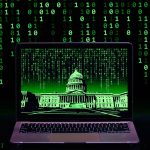
FBI and USDA Hacks Expose Federal Vulnerabilities as Trump Downplays Concerns
Federal law enforcement and agricultural systems suffered major cyber intrusions this week, with hackers breaching the FBI’s National Crime Information Center and the U.S. Department of Agriculture’s payment database. The attacks compound a week of high-profile outages across multiple sectors that have raised fresh questions about the security of critical government infrastructure and the ability of federal agencies to protect sensitive data.
The FBI breach, confirmed by President Donald Trump in an interview with Fox News, marks the second time in recent months that the bureau has been successfully targeted by hackers. This latest intrusion specifically struck the National Crime Information Center, known as NCIC, a centralized database that federal, state, and local law enforcement agencies rely on to share information including warrants, missing persons reports, stolen property records, and criminal histories. Because NCIC is used daily by officers across the country, the compromise of that system has the potential to affect nearly every facet of American law enforcement, from routine traffic stops to major federal investigations.
The USDA hack was first reported by NBC News on Friday and later confirmed by Reuters. According to Reuters, the intrusion affected the department’s payments database, which handles financial transactions related to a wide range of agricultural programs. While that database is currently believed to be the full extent of the breach, former officials familiar with the matter warned that the compromised system could provide hackers with a backdoor into more sensitive areas of the department’s operations, including food safety data and research on animal-borne illnesses. The warning underscores the potential for a seemingly isolated breach to cascade into a much larger national security and public health crisis.
The National Crime Information Center is operated by the FBI and serves as a vital tool for law enforcement agencies nationwide. It contains records on wanted persons, missing individuals, gang members, sex offenders, and stolen vehicles and firearms. Officers access the system millions of times each day, making it one of the most heavily used criminal justice databases in the United States. A breach of this system could allow malicious actors to view, alter, or delete critical records, potentially enabling criminals to evade detection or causing innocent individuals to be wrongly detained. The full extent of the damage remains unclear, but security experts have long warned that the aging IT infrastructure used by many federal agencies is vulnerable to sophisticated cyberattacks.
This is not the first time the FBI has been targeted in recent months. CNN noted in its reporting that this is the second such attack on the agency in a short period, raising concerns about whether the bureau has adequately addressed the vulnerabilities that allowed the previous intrusion to occur. The FBI has not released detailed information about the earlier attack, and it is unknown whether the two incidents are connected or carried out by the same group of hackers. What is clear is that the FBI, an agency responsible for investigating cybercrime and defending the nation against cyber threats, has itself become a recurring target for attackers.
President Trump, however, struck a notably different tone when asked about the FBI breach. Speaking with Fox News, he suggested that the intrusion might not be an entirely bad thing. “Maybe we’ll learn about the voter fraud, all the voter fraud that took place,” Trump said, adding, “Wouldn’t it be great to learn about Russia, Russia, Russia?” His comments appeared to reference long-running investigations into his campaign’s ties to Russia and unsubstantiated claims of widespread voter fraud in the 2020 election. The president’s suggestion that a criminal hack of a federal law enforcement database could yield useful political information drew sharp criticism from cybersecurity experts and elected officials, who argued that the breach should be treated as a grave national security incident rather than an opportunity to advance political narratives.
The USDA breach is also deeply concerning, given the department’s broad responsibilities. The U.S. Department of Agriculture oversees food safety inspection, agricultural research, rural development, nutrition assistance programs, and farm subsidies. Its payments database is used to distribute billions of dollars to farmers, ranchers, and participants in programs such as the Supplemental Nutrition Assistance Program. A compromise of that system could expose sensitive personal and financial information belonging to individuals and businesses across the country. It could also disrupt the flow of funds to farmers and rural communities that depend on federal assistance, causing economic harm far beyond the initial breach.
The Reuters report, citing former officials, warned that the payments database intrusion could serve as a gateway to more sensitive information held by the USDA. Food safety data, for example, is critical to protecting public health, and research on animal-borne illnesses is essential to preventing outbreaks that could devastate the agricultural industry and threaten human lives. If hackers were able to access or manipulate that information, the consequences could be severe. The former officials’ warnings highlight the interconnected nature of federal computer systems and the need for agencies to assume that any breach, no matter how limited in scope, could lead to much larger compromises.
The FBI and USDA hacks come at the end of a week marked by widespread technological disruptions. Major outages were reported at the Federal Aviation Administration, which temporarily halted flights, and at the National Security Agency, whose classified communications network reportedly went down. Microsoft’s Outlook service experienced significant outages, and several Apple services also suffered disruptions. The government has sought to reassure the public that these outages were not the result of cyberattacks, attributing them to technical issues and system failures. However, the timing of these incidents, combined with the confirmed breaches at the FBI and USDA, has intensified concerns about the resilience and security of the nation’s critical digital infrastructure.
Cybersecurity experts say the attacks reflect a broader trend of increasingly aggressive and sophisticated attempts by hackers to infiltrate government networks. Federal agencies hold vast amounts of sensitive data, making them attractive targets for foreign intelligence services, criminal organizations, and politically motivated actors. The fact that two major agencies were breached in the same week suggests that the threat landscape is more dangerous than many Americans realize. It also raises questions about whether the government is doing enough to protect its systems, particularly those that are responsible for law enforcement, public safety, and food security.
Lawmakers on both sides of the aisle are likely to demand briefings from FBI and USDA officials in the coming days. Congress has repeatedly called for greater investment in federal cybersecurity, but progress has been slow, and agencies continue to rely on outdated systems that are difficult to secure. The breach of the NCIC, in particular, is likely to prompt urgent oversight hearings, as the database is considered a cornerstone of the nation’s criminal justice infrastructure. Any compromise of its integrity could have lasting implications for criminal investigations and the safety of law enforcement officers.
For now, the full extent of the damage from either breach remains unknown. Federal investigators are reportedly working to determine how the hackers gained access, what data they may have stolen or altered, and whether the attacks are related. The public has been given few details, and it may take weeks or months before the complete picture emerges. In the meantime, the FBI and USDA are likely to face intense scrutiny over their cybersecurity practices and their handling of the intrusions.
The president’s comments have added another layer of controversy to an already troubling situation. Rather than focusing on the need to protect sensitive law enforcement data and hold the attackers accountable, Trump used the occasion to raise familiar political grievances. His remarks have been criticized as an attempt to downplay the seriousness of the hacks and to undermine confidence in federal institutions. At a time when the American public needs reassurance that the government can safeguard its most sensitive systems, the president’s response has instead raised further questions about priorities and judgment.
The attacks also highlight the growing threat of cybercrime to public institutions more broadly. Hospitals, schools, and local governments have been hit by ransomware attacks in recent years, forcing disruptions to critical services and costing taxpayers millions of dollars. The federal government is not immune to these threats, and the events of this week serve as a stark reminder that no system is entirely secure. The challenge for the incoming administration, and for Congress, will be to move beyond partisan disagreements and take concrete steps to strengthen the nation’s cyber defenses. That means investing in modern technology, improving information sharing between agencies, and ensuring that officials at every level understand the importance of treating cyber threats with the seriousness they deserve.
As the investigation into the FBI and USDA hacks continues, the American people are left to wait for answers. They deserve to know what information was exposed, what the hackers intended to accomplish, and what steps the government will take to prevent future intrusions. In the meantime, the attacks stand as a sobering reminder of the vulnerabilities that exist in the systems that underpin American law enforcement, agriculture, and national security. The immediate priority must be to contain the damage, protect the public, and ensure that those responsible are brought to justice. But the longer-term task is equally important: rebuilding trust in the ability of the federal government to keep its digital infrastructure safe from those who wish to do harm.