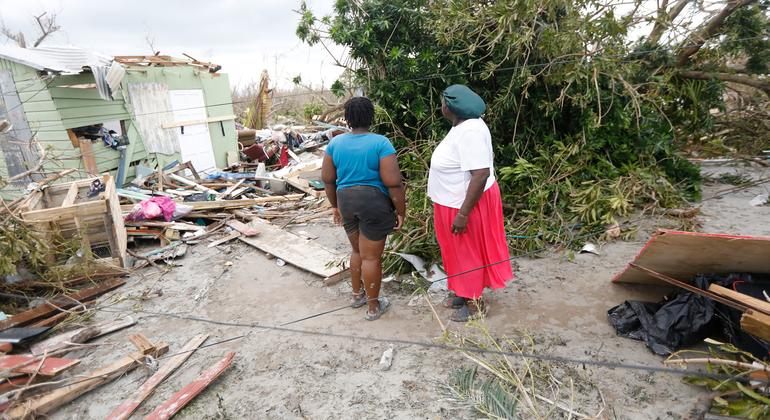
In late October 2025, Hurricane Melissa wreaked havoc on Jamaica, leaving a trail of destruction in its wake. Three women, Rose, Sharon, and Sonia, found their lives turned upside down by the powerful storm. The hurricane obliterated entire neighborhoods, with 36 percent of houses in the western part of the country either damaged or destroyed. Schools were transformed into makeshift shelters, offering refuge to those who lost everything in the disaster. Roads were submerged under water, power outages were widespread, and thousands of people were left isolated for days.
Rose, a mother of two, sought safety in a friend’s sturdy concrete home as the storm approached. When she returned the next day, all that remained of her own house was a piece of lumber. For nine years, Rose had called a small wooden home her own, but now, only the foundation stood. “I have a key to the house but no house,” she lamented. The air was thick with the stench of mud and decay, and everything she had worked for was gone in an instant.
Similarly, Sharon arrived at a shelter with her two young children after her home and her father’s house collapsed during the hurricane. Before the storm, she worked as a gas station supervisor, but now her workplace was closed indefinitely. Her children slept on desks in the sweltering heat, surrounded by other families who had also lost everything. Small acts of kindness and shared resources helped to create fragile connections among the displaced families.
Sonia, another survivor of the hurricane, fled her coastal home with her grandson, who had a heart condition. She recounted how she couldn’t swim, but she grabbed her grandson and ran to safety. More than 1,100 people were still housed in 88 shelters across Jamaica, with over 120,000 households in need of urgent repairs after the devastation caused by Hurricane Melissa. The International Organization for Migration (IOM) and other relief organizations worked tirelessly to provide support to those affected, distributing essential supplies such as tarpaulins, shelter repair materials, hygiene kits, and generators.
For women like Rose, Sharon, and Sonia, each day was a struggle of endurance and solidarity. Their homes were gone, but they found strength in the support of their community and the aid organizations on the ground. The future was uncertain, but they clung to hope and resilience as they began the arduous task of rebuilding their lives from the rubble left by Hurricane Melissa.
Despite the overwhelming challenges they faced, these women refused to be defined by the destruction wrought by the storm. They were determined to rise from the ashes, to rebuild not just their homes but also their sense of self and identity. Their stories were a testament to the human spirit’s capacity for resilience and renewal in the face of unimaginable adversity.
As they picked up the pieces of their shattered lives, Rose, Sharon, and Sonia found solace in the bonds forged with their fellow survivors. They drew strength from the kindness of strangers and the unwavering support of aid organizations. The road ahead was long and arduous, but they faced it with courage and determination, knowing that they were not alone in their struggle to overcome the devastation of Hurricane Melissa.
The rebuilding process would be slow and challenging, but these women were determined to reclaim their lives and their futures. They refused to be defined by the destruction around them, choosing instead to focus on the hope and resilience that burned bright within their hearts. As they looked towards the horizon, they knew that brighter days lay ahead, and that together, they would weather the storm and emerge stronger on the other side.