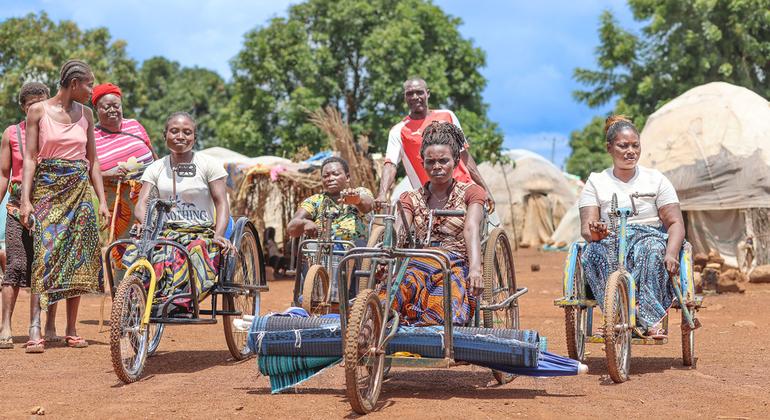
Shiminenge, a 32-year-old woman living in Gbajimba, north-central Nigeria, shared her struggles as a person with a disability in a camp for displaced people. She expressed how the world often feels like it is not made for people like her, navigating daily challenges in a camp that lacks space, safety, and accessibility for individuals living with disabilities. Despite the obstacles she faces, Shiminenge remains determined to make her presence known in a place that was never designed with her needs in mind.
The camp in Gbajimba is home to more than 480,000 people who have been displaced by intercommunal conflict in Benue State. Shiminenge herself fled her village in Guma in 2018, seeking safety in the camp with little more than hope. However, her journey as a person with a disability began long before displacement, as she was diagnosed with a mobility impairment at just nine months old. This early diagnosis shaped her life, requiring constant adjustments and a deep understanding of what it means to navigate the world without accessible support.
Life in the camp has added another layer of challenge for Shiminenge, with poor shelter conditions, inaccessible sanitation facilities, and a landscape that is difficult to navigate with a mobility impairment. Despite these difficulties, Shiminenge remains resilient and resourceful. She began selling mosquito repellent in the camp, not only earning a small income but also helping to protect other residents from malaria. Her advocacy efforts led to the formation of a disability association in Gbajimba, uniting 18 other individuals living with disabilities to advocate for better access to resources and more inclusive facilities.
The barriers to services and dignity faced by people with disabilities in displacement settings are significant. They often find themselves among the most marginalized within displaced populations, struggling to access essential services like shelter, healthcare, and sanitation. Inaccessible infrastructure and limited targeted support can exacerbate risks of neglect, exclusion, and abuse, further compromising the rights and dignity of individuals with disabilities.
Despite these challenges, Shiminenge’s determination and advocacy efforts have not gone unnoticed. She has worked tirelessly to push for mobility aids, fair access to resources, and more inclusive facilities within the camp. Her resilience serves as an inspiration to others in similar situations, demonstrating that it is possible to create positive change even in the face of adversity.
On the eve of the International Day of Persons with Disabilities, marked annually on December 3rd, Shiminenge’s story serves as a reminder of the importance of recognizing and supporting individuals with disabilities in all aspects of life. Her journey highlights the need for greater inclusivity, accessibility, and support for people living with disabilities, both in displacement settings and beyond.
As Shiminenge continues to navigate life in the camp, she remains a beacon of strength and resilience, challenging societal norms and advocating for a more inclusive world for all individuals, regardless of their abilities. Her story is a powerful reminder that every person deserves to be seen, heard, and supported, regardless of their physical limitations.