In recent months, President Donald Trump has consistently suggested the possibility of employing military force as a tool of foreign policy against nations like Cuba, drawing parallels to his administration’s actions in Venezuela and Iran. This stance seems to be emboldened following the U.S. military’s high-profile capture of Venezuelan leader Nicolás Maduro in January, alongside the assassination of Iranian Supreme Leader Ali Khamenei during airstrikes in February. Trump’s rhetoric has notably intensified, with statements hinting at aggressive strategies aimed at reshaping political landscapes within these countries.
During a press event held on January 3rd, which coincided with the announcement of Maduro’s capture, President Trump, flanked by Secretary of State Marco Rubio, conveyed strong messages targeting the Cuban government, suggesting that they should be wary of potential U.S. actions. This sentiment was echoed by Rubio, who emphasized the necessity of political and governmental reform within Cuba, arguing that the communist regime’s ineptitude in addressing the island’s economic woes could no longer be tolerated.
As February rolled around and news of Khamenei’s assassination broke, Trump’s dialogue about Cuba grew more assertive. In a statement made in the Oval Office on March 16, he expressed his ambition toward Cuba, saying, “Taking Cuba in some form, yeah. I mean, whether I free it, take it — I think I could do anything I want with it, if you want to know the truth.” He later reiterated, “Cuba’s going to be next,” signaling a clear intent to focus U.S. foreign policy efforts on the island nation.
Secretary Rubio has been particularly vocal, heralding his Cuban heritage as part of his drive to see a transformation in Cuba’s political landscape. He testified to Congress and made several media appearances stressing that Cuba’s leadership must undergo significant changes for the sake of its economic sustainability and for beneficial bilateral relations with the U.S.
However, experts and analysts familiar with the region have often tempered such presidential declarations as mere rhetoric. They argue that any actual military involvement in Cuba would require significantly more effort and entail greater complexities than operations in Venezuela due to Cuba’s staunch political infrastructure and historical resistance to external pressures.
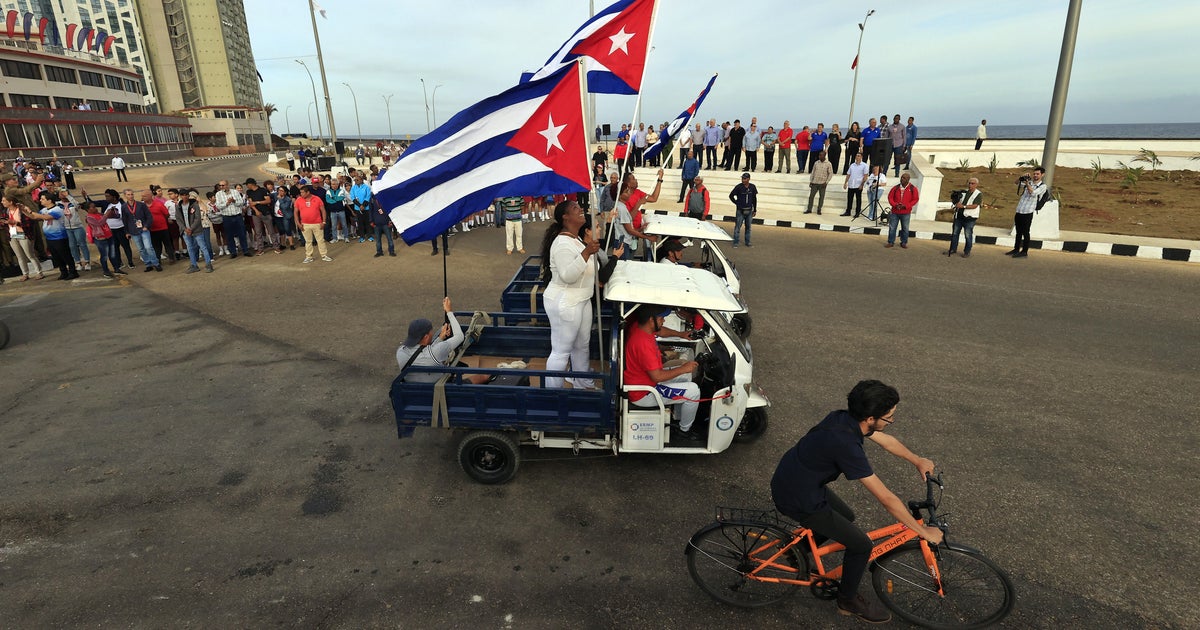
Amidst these tensions and proclamations, the Trump administration has ramped up economic sanctions aimed at stifling Cuba’s economy, hoping to precipitate a political collapse. An oil blockade has been particularly effective, plunging Cuba into its most severe economic crisis since the Soviet Union’s collapse, which had previously subsidized the island’s economy extensively. The Cuban Energy Minister confirmed in May that the nation was in a dire fuel shortage, resulting directly from these sanctions.
Diplomatic engagements have continued behind the scenes. In a notable development, CIA Director John Ratcliffe traveled to Havana for a rare meeting with senior Cuban officials. His visit was intended as a diplomatic gesture to communicate that the United States was ready to expand economic and security ties with Cuba, contingent on fundamental governance reforms by the Cuban administration. This was mirrored by a statement from Cuban Deputy Foreign Minister Carlos Fernández de Cossío, who acknowledged the military readiness of Cuba against potential U.S. aggressions while firmly dismissing any prospects of regime change dictated by foreign powers.
The discussion about what regime change or management might look like remains complex. Christopher Hernandez-Roy, Deputy Director of the Americas Program at the Center for Strategic and International Studies, opined that managing the existing regime could potentially be more viable than outright replacement. The entrenched power structures, adept in quelling dissent and maintaining control, pose significant challenges to any radical transformation initiated externally.
Further complicating the picture is the symbolic presidency of Miguel Díaz-Canel, who took over from Raúl Castro in 2018. While Díaz-Canel is officially the head of state, many believe that substantial power still resides with the Castro family, rendering any superficial governmental reshuffling minimally impactful in terms of true power redistribution.
Potential strategies discussed by U.S. officials and diplomats include positioning a cooperative figurehead who would align closely with U.S. directives, possibly paralleling scenarios observed in other U.S. foreign endeavors. This leader would initiate gradual economic openings, potentially paving the way for broader systemic reforms contingent on U.S. interests and supervision.
Reflecting a blend of economic motivations and geopolitical strategy, President Trump’s vision for Cuba appears to oscillate between overt calls for regime change and subtler forms of economic influence, designed to pry open Cuba for American businesses in sectors like shipping, construction, and tourism, exploiting Cuba as a “virgin territory” that has been economically dormant for six decades.
As tensions escalate and diplomatic efforts continue, the international community remains watchful of how U.S. policy towards Cuba will unfold, mindful of the profound implications it holds for the regional dynamics and the lives of the Cuban people. Meanwhile, the U.S. administration keeps leveraging both covert actions and vocal threats to reshape relationships within the Western Hemisphere, guided by a blend of economic interests and ideological confrontations.