Under the backdrop of a tense relationship between the United States and Venezuela, the Venezuelan government has accused the U.S. of unilaterally suspending its migrant repatriation flights. The South American nation alleges that the U.S. is seeking to undermine its sovereignty and control over its airspace. This accusation follows a controversial social media post by U.S. President Donald Trump, who insisted that Venezuela’s airspace should be considered “closed in its entirety.”
On Saturday, the Venezuelan administration released a statement in response to Trump’s earlier post. The Venezuelan government stated its demand for unrestricted respect for its airspace, terms which were outlined in international law. The statement declared that Trump’s comments were a hostile, unilateral, arbitrary act that was incompatible with the most basic principles of international law. The Venezuelan government further argued that Trump’s statement was part of a permanent policy of aggression against its country.
The heated exchange began when Trump posted on Truth Social, asserting that airlines, pilots, drug dealers, and human traffickers should consider Venezuela’s airspace as “closed in its entirety.” This statement applied to the airspace above and surrounding the South American nation, indicating a possible escalation in U.S. pressure on Venezuelan leader Nicolás Maduro.
Following Trump’s post, the White House did not respond to questions seeking clarification on whether this was the announcement of a new policy or simply reinforcement of existing messaging around his campaign against Maduro. Trump’s campaign against Maduro has involved multiple strikes in the Caribbean Sea and the eastern Pacific Ocean on small boats alleged to be ferrying drugs. The campaign has also seen a buildup of naval forces in the region. More than 80 people have been killed in these strikes since early September.
In another related development, international airlines began to cancel flights to Venezuela last week. This decision was taken after the Federal Aviation Administration (FAA) issued a warning to pilots to exercise caution when flying around the country due to heightened military activity. Three U.S. airlines that routinely fly over Venezuela’s airspace confirmed to CBS News earlier this month that they had stopped using the country’s airspace for some time.
The FAA’s jurisdiction is generally limited to the United States and its territories. However, the agency does issue routine warnings to pilots about the dangers of flying over areas with ongoing conflicts or military activity worldwide. Just like it did earlier this month with Venezuela, the FAA, in cooperation with other countries and the International Civil Aviation Organization (ICAO), urged civilian aircraft in Venezuelan airspace to “exercise caution” due to the “worsening security situation and heightened military activity in or around Venezuela.”
In its Saturday statement, the Venezuelan government reiterated that no authority outside its institutional framework has the power to interfere, block, or condition the use of its national airspace, citing ICAO rules. It also alleged that flights that were part of a plan to repatriate Venezuelan migrants had been “unilaterally suspended” as a result of U.S. actions. Requests for comment from the FAA and ICAO did not receive immediate responses.
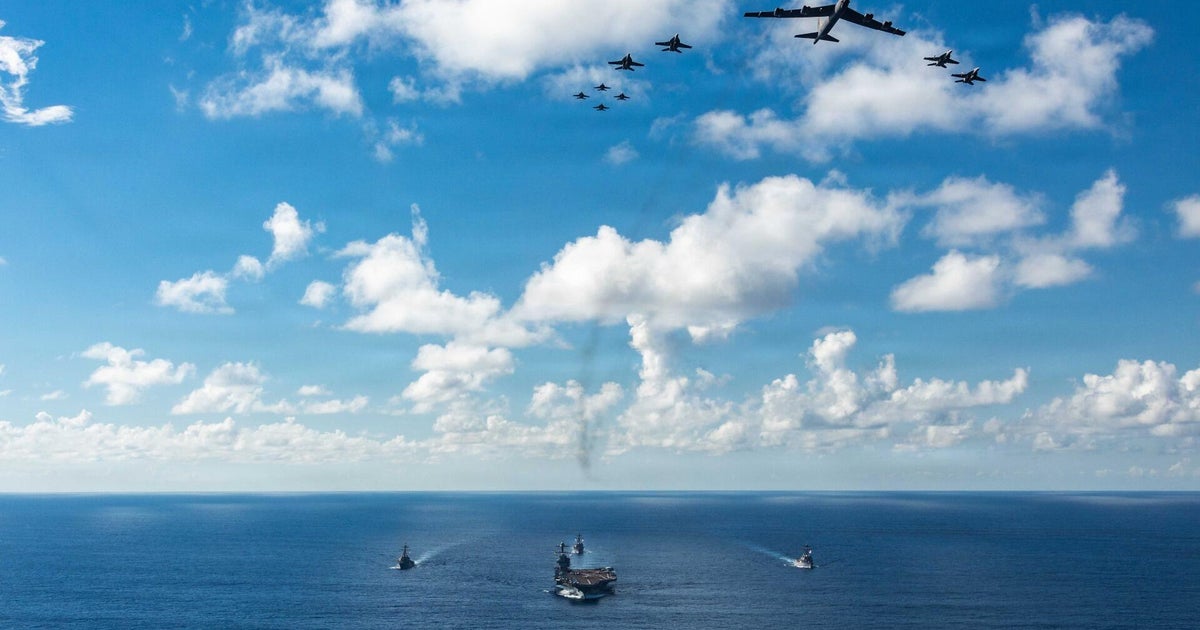
The Trump administration has been escalating pressure on Maduro. The U.S. government does not view Maduro as the legitimate leader of the oil-rich but increasingly impoverished South American nation, and he faces charges of narcoterrorism in the U.S. U.S. forces have conducted bomber flights near Venezuela, and the USS Gerald R. Ford, America’s most advanced aircraft carrier, was sent to the area. The Ford’s arrival in the region rounds off the largest buildup of U.S. firepower in generations. The “Operation Southern Spear” mission now includes nearly a dozen Navy ships and about 12,000 sailors and Marines.
Amid these developments, there are bipartisan calls for greater oversight of the U.S. strikes against vessels in the region. This follows a report by The Washington Post that Defense Secretary Pete Hegseth issued a verbal order for all crew members to be killed as part of the Sept. 2 attack on suspected drug smugglers. Republican Sen. Roger Wicker of Mississippi, chairman of the Senate Armed Services Committee, and its top Democrat, Rhode Island Sen. Jack Reed, said in a joint statement late Friday that the committee “will be conducting vigorous oversight to determine the facts related to these circumstances.”
In addition to military action, Trump’s team has also considered nonmilitary options with Venezuela, including covert action by the CIA authorized last month by the president. Trump has also publicly floated the idea of talking to Maduro. The New York Times reported Friday that Trump and Maduro had spoken, but the White House declined to answer questions about the conversation.
This report was contributed to by Kris Van Cleave and is part of a broader coverage on the ongoing tensions between the U.S. and Venezuela. The situation continues to evolve, with both countries maintaining their respective stands.