The United Nations Secretary-General, António Guterres, recently denounced the killing of Sharif Osman Bin Hadi, a key figure in the protests that took place the previous year, and urged authorities to hold those responsible accountable. Guterres emphasized the need for a prompt, impartial, thorough, and transparent investigation in accordance with international human rights standards. He also called for restraint as Bangladesh approaches parliamentary elections scheduled for February 2026, urging all parties to refrain from violence, reduce tensions, and exercise maximum restraint to maintain a peaceful electoral environment.
The tragic death of Sharif Osman Bin Hadi also raised concerns from the UN High Commissioner for Human Rights, Volker Türk, who expressed deep distress over the incident. Türk emphasized that retaliation and revenge would only deepen divisions and undermine the rights of all individuals. He echoed the calls for accountability for those responsible for Hadi’s death and urged for calm in the aftermath of the tragic event.
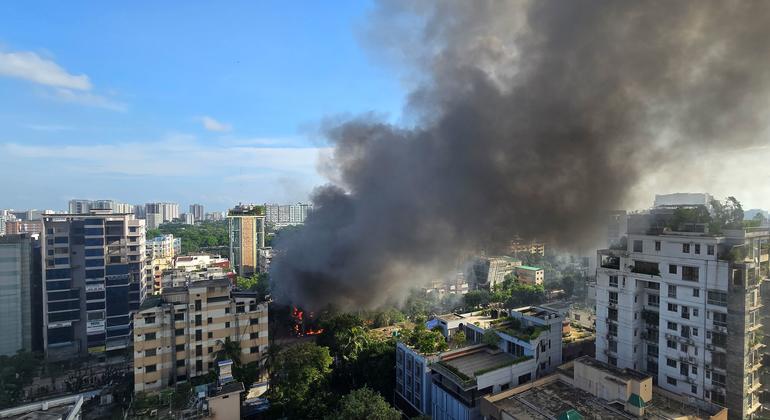
Hadi, a 32-year-old youth leader, was shot by masked attackers on December 12th as he was leaving a mosque in Dhaka. Reports indicated that he was airlifted to a hospital in Singapore for treatment but tragically succumbed to his injuries. Following the announcement of his death, protests erupted in various parts of Bangladesh, with thousands of demonstrators taking to the streets in the capital. Some buildings were torched or vandalized, and reports emerged of properties, including those housing major newspapers, being set on fire. Journalists were also reportedly assaulted during the unrest.
The recent unrest comes amidst a turbulent political climate in Bangladesh following significant events in the previous year. In July 2024, student-led protests initially calling for reforms to civil service job quotas faced a violent crackdown by security forces and pro-government groups. While the quota system was eventually withdrawn, the demonstrations evolved into a nationwide movement demanding the resignation of then-Prime Minister Sheikh Hasina and accountability for the violent suppression of protests.
By early August, Sheikh Hasina, who had governed Bangladesh since 2009 following a previous term from 1996 to 2001, fled the country amid mounting pressure. A UN-led investigation later revealed that up to 1,400 individuals, including many children, may have been killed during the unrest in July and August, with thousands more sustaining injuries.
Sharif Osman Bin Hadi emerged as a prominent youth leader during the protests and had reportedly planned to run for parliament in the upcoming elections. With campaigning expected to commence soon, the UN rights chief stressed the importance of creating an environment where all individuals can participate safely and peacefully in the electoral process.
As the international community grapples with the tragic loss of Hadi and the ensuing unrest in Bangladesh, there is a renewed focus on upholding fundamental freedoms, promoting accountability, and ensuring a peaceful transition towards the upcoming elections. The calls for a thorough investigation, restraint, and calm resonate not only within the UN but also among global human rights advocates and organizations striving to support democracy and justice in Bangladesh and beyond.