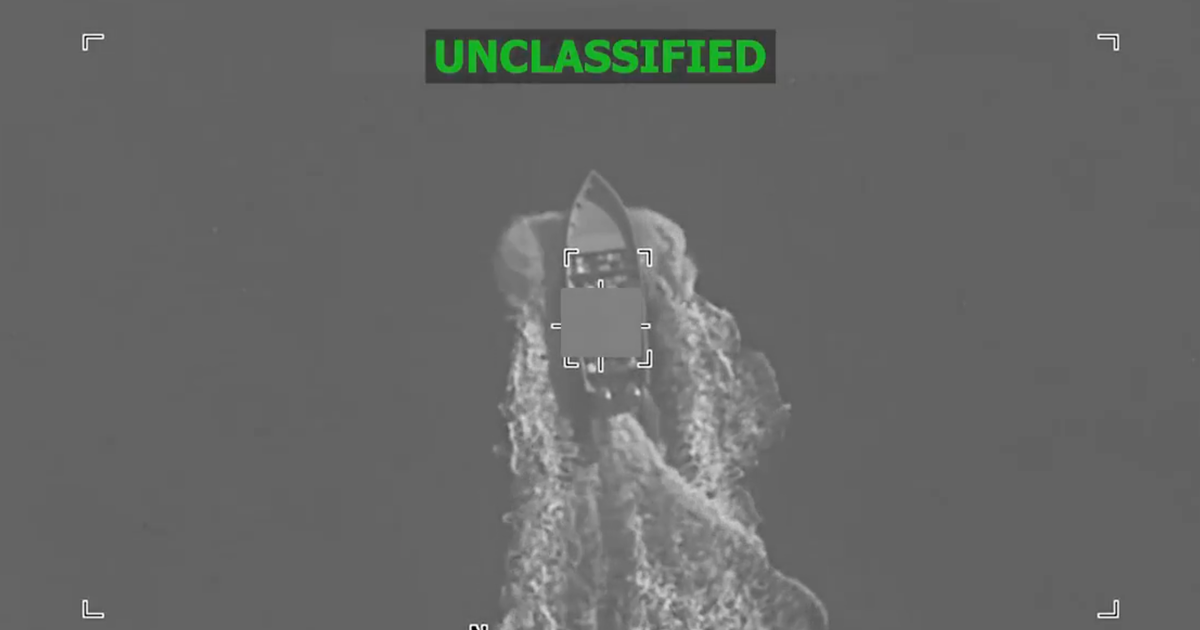
In recent events, the U.S. military has intensified its actions against alleged narcotic trafficking in the Eastern Pacific, marking a continuation of a controversial strategy initiated by the current administration. On a Monday recently, three additional boats suspected of carrying illegal drugs were targeted and destroyed by U.S. forces, heightening the discourse around the legality and morality of these military operations.
According to U.S. Southern Command, the military action which occurred this Monday resulted in the sinking of three boats in the Eastern Pacific, leading to the deaths of eight men identified by the authorities as “male narco-terrorists.” These individuals were reportedly navigating routes well-known for drug trafficking. This strategic military response was authorized by Defense Secretary Pete Hegseth and aimed to incapacitate what has been categorized under current government policies as narco-terrorism.
A brief 47-second footage released by the Southern Command encapsulates the grim reality of these strikes. Each segment of the video shows the targeted assaults on the suspected vessels, engulfed in flames post-strike, sinking in the isolated waters. This imagery underscores the lethal efficiency of the campaign but also brings to the surface the severe implications of such military decisions.
This aggressive stance against drug cartels initiated in early September under the directive of the Trump administration, which describes these interventions as part of a “non-international armed conflict.” The administration has labeled these drug cartels as terrorist organizations, thereby employing the military to engage in these direct actions as part of national security measures.
Despite the firm resolve of the administration to curb narcotic trafficking through these means, the campaign has attracted a barrage of criticism and controversy. Several Democratic lawmakers, along with a few from the Republican side, have raised significant concerns regarding the legality of such military actions. Critics argue that there is insufficient evidence to prove that the targeted boats were indeed carrying narcotics at the time of the strikes. Furthermore, doubts about the constitutional authority under which these acts are being carried out have been expressed, questioning the administration’s unilateral decision to engage militarily without robust legislative support or clear legal framing.
Among the multiple strikes carried out since the onset of this campaign, a particular incident from September 2 remains vividly contentious. Reports emerged that following the initial strike which heavily damaged a vessel, a subsequent strike intentionally aimed at the wreckage killed two survivors. This action has drawn severe criticism and raised ethical and legal questions regarding the treatment of shipwrecked individuals, with suggestions from some quarters that such acts could be tantamount to war crimes. The debate intensified after congressional briefings and public disclosures of the event, highlighting deep divisions on Capitol Hill about the strategy and its implementation.
Supporters of the campaign, predominantly from the incumbent administration, defend the need for such drastic measures to combat what they perceive as a direct threat from drug cartels, which they argue operate with increasing audacity and pose significant national security threats. They assert that the follow-on strikes are warranted as they prevent the possibility of these elements regrouping or continuing their illegal activities even after initial engagement.
The geographical focus on the Caribbean and the proximity to Latin American nations has led to a significant military buildup in the region. Several U.S. Naval assets, including the high-profile USS Gerald R. Ford among other military crafts, and squadrons of fighter jets have been redeployed to the area to maintain pressure not only on the narcotic operations but also on regimes in the vicinity, like those of Venezuela and Colombia. Both nations have been repeatedly accused by the current U.S. administration of either participating in or failing to adequately combat drug trafficking. The U.S. government’s discourse includes severe allegations against the Venezuelan President Nicolás Maduro, labeling his administration as collaborative with narcotic moguls and hinting at broader geopolitical strategies aimed at regime change.
The militarized approach to drug trafficking under this administration is a continuation and an intensification of a policy spectrum where the lines between armed conflict and law enforcement are increasingly blurred. As these operations proceed, the international and domestic legal frameworks are tested, alongside ethical boundaries concerning combatant and non-combatant distinctions in unconventional warfare scenarios.
In conclusion, as the U.S. persists with its campaign against narcotic trafficking by leveraging military might in international waters, the global community, legal experts, politicians, and public policy pundits watch closely. The outcomes of these strategies, both in terms of efficacy in curtailing drug flow and maintaining international law and order, will likely influence future national security decisions and international diplomatic relations in significant ways.
This expansive analysis delves deeply into the complex web of military action, legal controversies, international implications, and the overarching strategy of the U.S. against established narcotic networks as witnessed in recent times. As the scenario unfolds, further scrutiny and perhaps recalibration of these tactics in light of legal and ethical considerations will be inevitable.