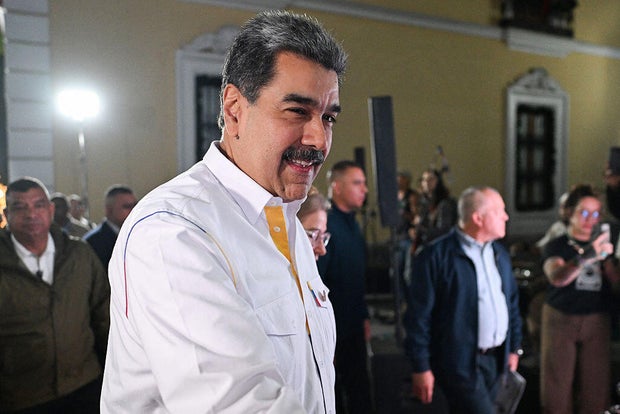
Under the administration of President Donald Trump, senior U.S. officials are contemplating a range of strategies designed to challenge the leadership of Venezuelan President Nicolás Maduro, and discussions recently entertained the idea of employing psychological warfare tactics. One proposed method involves disseminating U.S. informational leaflets over Caracas, the capital city, aiming to destabilize Maduro’s grip on power. This initiative was explored during talks amongst multiple officials familiar with the deliberations, which were also reported by CBS News.
The intention behind the leaflet drop is to exert psychological pressure on Maduro’s regime, potentially coinciding with the President’s 63rd birthday, which could symbolize a direct message of dissent on a personally significant day for Maduro. However, as of the discussions, this operation had not been officially authorized or slated for immediate execution.
In the broader context of U.S. strategy toward Venezuela, President Trump has progressively intensified measures to isolate and pressure Maduro’s administration. Notably, the U.S. military presence has been significantly augmented in areas proximate to Venezuela. This includes live fire exercises and targeted strikes against vessels in the Caribbean and Eastern Pacific that the U.S. alleges are involved in drug trafficking operations meant to fund Maduro’s government. According to Pentagon reports, these military initiatives have resulted in the neutralization of several targets, though corroborative evidence linking the destroyed vessels to narcotics has not been publicly disclosed.
Further exemplifying the heightened military posture near Venezuela, approximately 15,000 U.S. troops have been stationed in the region, supplemented by a formidable naval presence comprising the USS Gerald R. Ford—the most technologically advanced aircraft carrier in the world—along with other significant assets like guided missile destroyers and cruisers, amphibious assault ships, and transport dock ships. In addition to naval strength, the air force capabilities have been bolstered with additional U.S. fighter jets positioned in Puerto Rico.
When questioned about the possibility of an American military intervention in Venezuela, President Trump maintained a non-committal stance but underscored the necessity to “take care of Venezuela,” signaling that no options were off the table.
Contrasting with Trump’s aggressive posturing, President Maduro exhibited a semblance of openness towards diplomatic engagement. He expressed willingness for “face-to-face” talks with President Trump, a proposition that came amidst escalating military and political tensions.
Domestically, Maduro’s position has become notably precarious. He declared victory in the July 2024 presidential elections amidst international and domestic outcry over electoral legitimacy. The results indicated a substantial victory by the opposition, yet Maduro’s assertion of victory led to further questions of electoral transparency and fairness.
From an international perspective, the U.S., along with several other countries, has steadfastly refused to recognize Maduro as the legitimate leader of Venezuela. Trump’s administration has directly accused him of leading a narcotics trafficking network, further isolating his regime on the global stage. As part of its efforts to apprehend Maduro, the U.S. State Department has issued a substantial reward offer of up to $50 million for information leading to his capture, underscoring the high stakes involved in the geopolitical confrontation.
This complex tableau of military, diplomatic, and covert operations reflects the multifaceted approach the U.S. is employing to address the situation in Venezuela. Each tactic, whether it be psychological operations like leaflet drops or more direct military interventions, forms part of a broader strategy aimed at undermining Maduro’s authoritarian regime and supporting a transition towards governance that more accurately reflects the democratic will of the Venezuelan people.
Contributors to the evolving narrative around U.S. strategies towards Venezuela include seasoned reporters such as Eleanor Watson and Charlie D’Agata, who have followed the developments closely and provided in-depth analysis on the potential implications of the Trump administration’s policies in the Latin American region.
As the situation continues to unfold, the international community remains watchful of the potential for change in Venezuela, with the humanitarian, political, and socio-economic crises in the country serving as a poignant backdrop to the discussions and actions taken by global powers.