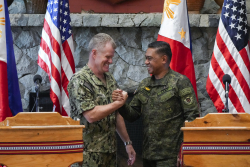
The United States has expressed readiness to take action in response to increasing acts of aggression in the South China Sea, a region that has been a source of tension due to competing territorial claims. The American forces have stated that they are prepared with a “range of options” to address these provocations if ordered to do so jointly. This statement comes amid escalating tensions in the area, with China asserting its claims over the disputed waters and engaging in activities that have raised concerns among neighboring countries and the international community.
The South China Sea is a strategically important region, with vast energy resources and key shipping lanes that are vital for global trade. Several countries, including China, Vietnam, the Philippines, and Malaysia, have overlapping claims to various parts of the sea, leading to territorial disputes and occasional confrontations. The United States has been a vocal advocate for freedom of navigation in the area and has conducted regular patrols to demonstrate its commitment to regional security and stability.
In recent years, China has been expanding its presence in the South China Sea through the construction of artificial islands, military installations, and the deployment of naval and coast guard vessels. These actions have raised concerns about Beijing’s intentions and its willingness to use force to assert its claims. The United States has criticized China’s behavior and has called for a peaceful resolution to the disputes through dialogue and adherence to international law.
The American forces’ readiness to respond to acts of aggression in the South China Sea reflects the United States’ commitment to upholding the rules-based order and ensuring freedom of navigation in the region. While the U.S. has expressed its willingness to work with allies and partners to address security challenges in the area, it has also emphasized the importance of diplomatic efforts to prevent tensions from escalating further. The situation in the South China Sea remains fluid, and it is essential for all parties involved to exercise restraint and engage in dialogue to reduce the risk of conflict and promote stability in the region.