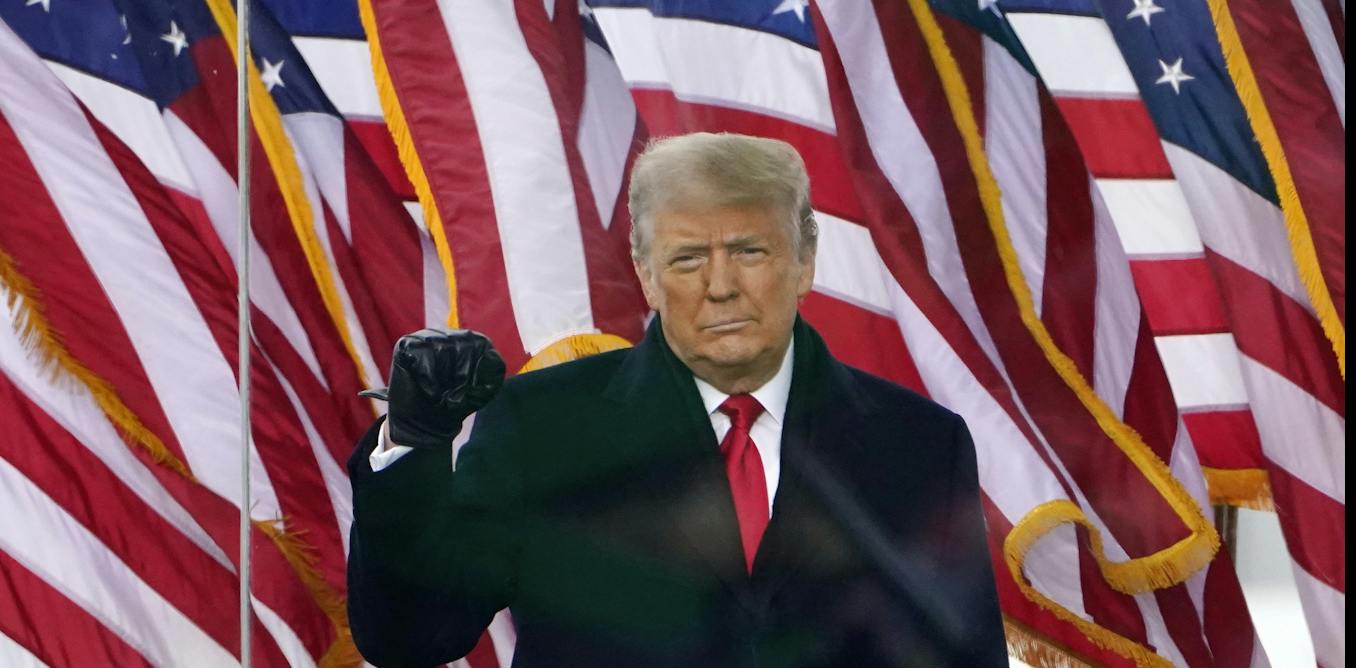
Former President Donald Trump is appealing a Colorado Supreme Court ruling that the 14th Amendment bars him from holding office due to his involvement in the insurrection on January 6, 2021. The Constitution’s definition of treason and Congress’ intent to prevent traitors from serving in government are at the center of this case. The 14th Amendment’s Section 3 states that individuals who have engaged in insurrection or rebellion against the United States are barred from holding office. Congress drew inspiration from the framers of the Constitution when drafting this language, substituting the phrase “engaged in insurrection or rebellion” for “levying war.” Treason has always been considered a serious offense, different from other crimes because it targets the government. There are no degrees of treason; a person either engages in treason or does not. The distinction between treason and aiding and comforting enemies of the United States lies in the person’s nationality, as U.S. citizens cannot be considered enemies. Trump’s supporters argue that his actions do not amount to insurrection and that he did not provide aid and comfort to the insurrectionists. However, the constitutional law of treason does not differentiate between supporting insurrectionists and being among them.
The distinction between treason and aiding and comforting enemies of the United States is important, and it is based on the person’s nationality. U.S. citizens cannot be considered enemies, only rebels or insurrectionists. Trump’s supporters claim that because he did not personally attack a police officer or aid a foreign nation, he did not offer aid and comfort to enemies of the United States. However, the insurrectionists he supported were American citizens, and therefore, constitutionally speaking, could not be enemies of the United States. They were considered insurrectionists, and the constitutional law of treason does not differentiate between supporting them and being among them.
In conclusion, the appeal of former President Donald Trump’s case revolves around the interpretation of the 14th Amendment and the definition of treason. Congress intended to prevent individuals who engaged in insurrection or rebellion from holding office, drawing inspiration from the framers of the Constitution. Treason has always been considered a serious offense, and there are no degrees of treason. The distinction between treason and aiding and comforting enemies lies in the person’s nationality, as U.S. citizens cannot be considered enemies. Trump’s supporters argue that his actions do not meet the criteria for insurrection or aiding and comforting enemies, but the constitutional law of treason does not differentiate between supporting insurrectionists and being among them.