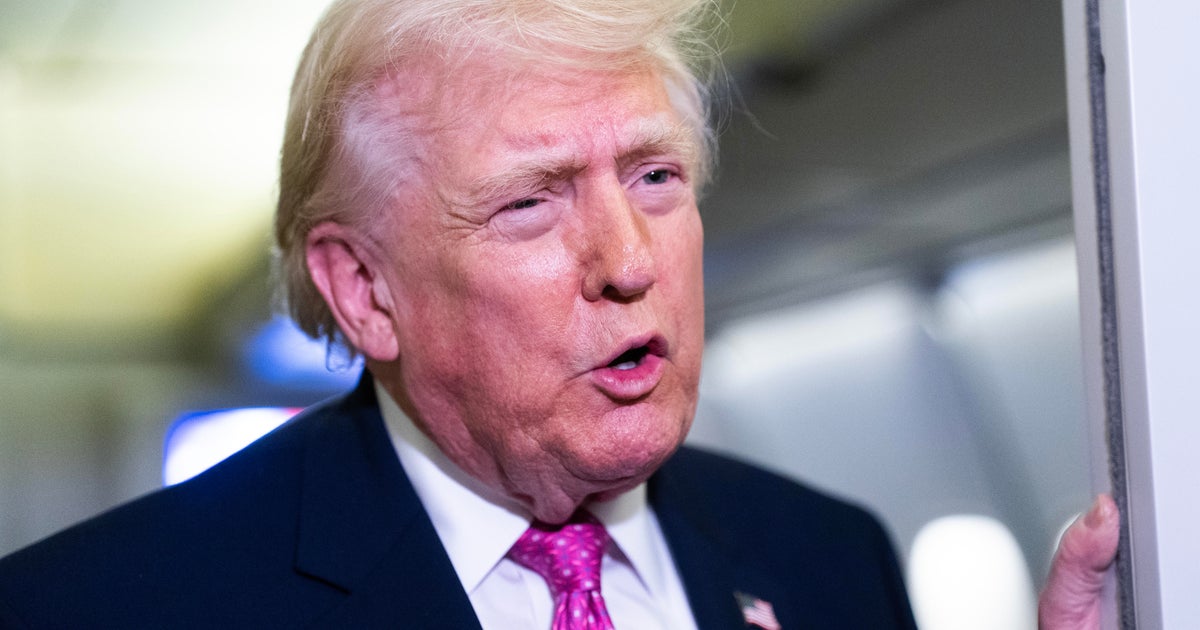
In a detailed conversation with CBS News on Tuesday morning, President Donald Trump discussed the current geopolitical tensions involving Iran, expressing reluctance to immediately withdraw U.S. military assets from the region despite earlier sentiments shared on Truth Social, which hinted at a desire for allies to shoulder more responsibility.
The president communicated his ongoing frustration over the lack of substantial international military support, particularly pointing out the United Kingdom’s inaction in contributing forces to the combined U.S.-Israeli military operations against Iran. Trump emphasized that while the withdrawal of American forces isn’t on the immediate horizon, he expects other nations to eventually take the lead. “At some point I will, not quite yet. But countries have to come in and take care of it. Iran has been decimated, but they’re going to have to come in and do their own work,” he remarked during the interview.
Trump also reiterated his views on the perceived minimal threat that Iran now poses in the Strait of Hormuz, a critical maritime route that facilitates the passage of around 20% of the world’s oil supplies. Despite recent Iranian attacks on shipping and the infrastructure of Persian Gulf nations, Trump dismissed the severity of the threat. “There’s no real threat, there’s no substantial threat because the country [Iran] has been decimated,” he said, adding provocatively, “Let them come up and take it. It’s about time they did something for themselves.”
The president’s comments come against the backdrop of increasing gas prices, which have surged past $4 per gallon for the first time in over three years, according to AAA. When questioned about this economic pain point for many Americans, Trump suggested that the end of military operations would lead to a decline in fuel prices. “When we leave [after the war is over], the prices will drop,” he assured.
White House press secretary Karoline Leavitt echoed this sentiment in a statement to CBS News, asserting, “When Operation Epic Fury is complete, gas prices will plummet back to the multi-year lows American drivers enjoyed before these short-term disruptions.”
Further into the conversation, Trump was asked about the timeline for the conclusion of U.S. military involvement, to which he did not specify an exact endpoint but hinted that it could be sooner rather than later. “I would say we are two weeks ahead of schedule,” he noted. This comes after his initial prediction that the conflict would last “4 to 6 weeks,” and the conversation occurred during week five.
On the topic of Iran’s military capabilities, Trump declared a significant degradation. “They are down on everything they had. They’re a mess. We’ve done our job,” he said. He also claimed that the U.S. efforts led to a total regime change, introducing leadership in Iran that was ostensibly “more reasonable” than its predecessors.
One of Trump’s primary goals at the outset of military actions was to ensure Iran never attained nuclear weapon capabilities. However, when questioned about the possibility of declaring victory without removing Iran’s enriched uranium stockpile, Trump expressed ambivalence, acknowledging the complexity and risk involved in such an operation. He recalled the U.S.-Israeli bombing of Iran’s nuclear facilities last June, describing the impact as “obliteration.”
As these discussions unfurl, international political dynamics continue to shift rapidly, with global economies and strategic military alliances hanging in the balance. Trump’s strategies and the broader U.S. foreign policy objectives will undoubtedly influence future negotiations and potential resolutions in the region.
Contributing to this comprehensive analysis, Sara Cook from CBS News provided insights gleaned from various sources close to the ongoing discussions and military operations. As the situation evolves, understanding the geopolitical intricacies remains crucial for stakeholders at all levels, from government policymakers to the global citizens watching how these decisions affect oil prices, international relations, and regional stability.