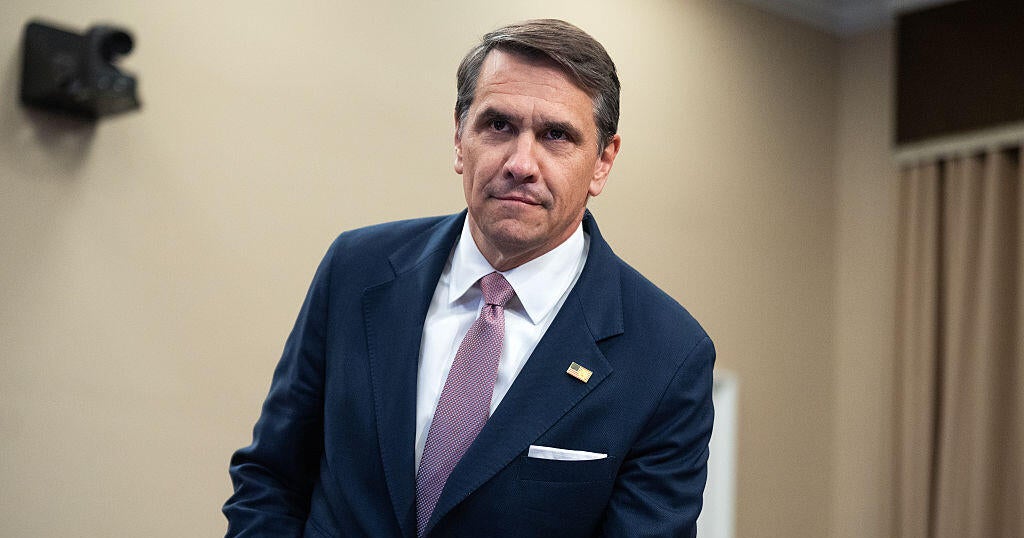
President Trump is expected to nominate Acting Attorney General Todd Blanche to serve in the role permanently, several sources familiar with the matter told CBS News. Blanche has been leading the Justice Department on an acting basis since Mr. Trump fired Attorney General Pam Bondi in April. Prior to that, he served as the deputy attorney general and was one of Mr. Trump’s personal defense attorneys.
During a private event in the White House’s Rose Garden on Wednesday, Mr. Trump announced that he would nominate Blanche “tomorrow,” as seen in a video posted to social media by White House deputy chief of staff Dan Scavino. This move signifies the president’s confidence in Blanche’s abilities to lead the Justice Department.
In an interview with the New York Post’s Miranda Devine, Mr. Trump indicated his intention to nominate Blanche, stating, “I think he will” be the permanent attorney general. The president also mentioned that he did not have any other candidates in mind for the role, emphasizing his satisfaction with Blanche’s performance as the acting attorney general.
The Senate will need to confirm Blanche to the permanent attorney general position. Last year, lawmakers confirmed him as the deputy attorney general in a party-line 52-46 vote, reflecting the political nature of such appointments.
As the Justice Department’s first- and second-in-command, Blanche has been involved in overseeing some of the department’s most sensitive and contentious decisions since Mr. Trump’s return to the White House last year. He has faced intense pressure from both Democratic and Republican lawmakers following the creation of a $1.776 billion “anti-weaponization fund” as part of a settlement between Mr. Trump and the IRS.
Blanche assured members of Congress that the department is “not moving forward” with the fund after a court ruling temporarily blocked its implementation. However, a separate aspect of the settlement, which promised not to audit any of Mr. Trump’s previous tax returns, remains unchanged.
In late April, Blanche announced charges against former FBI Director James Comey, accusing him of threatening the president’s life by posting a photo of seashells arranged to form the numbers “86 47.” Comey had faced separate allegations last year, along with New York Attorney General Letitia James, but those charges were dismissed after a judge ruled that the prosecutor was invalidly appointed.
Despite allegations of political motivation behind the Comey charges, Blanche denied any such influence, stating that the case was initiated by “local prosecutors” and “local agents” in North Carolina.
Blanche’s potential nomination as the permanent attorney general has sparked discussions and debates among political analysts and lawmakers. His track record, decisions, and handling of sensitive matters within the Justice Department have been scrutinized and will likely be further examined during the confirmation process.
The role of the attorney general is crucial in upholding the rule of law, overseeing federal law enforcement agencies, and ensuring justice is served fairly and impartially. Given the current political climate and the heightened scrutiny surrounding the Justice Department, Blanche’s nomination is expected to face significant challenges and questions from both Democrats and Republicans.
The confirmation process in the Senate will provide an opportunity for lawmakers to delve deeper into Blanche’s qualifications, experience, and approach to leading the Justice Department. It will also allow for a thorough examination of his handling of high-profile cases, such as the settlement with the IRS and the charges against James Comey.
Blanche’s tenure as the acting attorney general has been marked by controversy and criticism, but his supporters point to his dedication, legal expertise, and loyalty to President Trump as reasons for his nomination. Critics, on the other hand, raise concerns about his impartiality, political affiliations, and potential conflicts of interest.
The role of the attorney general requires a deep understanding of the law, a commitment to upholding justice, and the ability to navigate complex legal and political challenges. Blanche’s nomination will test his abilities to lead the Justice Department effectively, maintain the public’s trust, and uphold the principles of justice and fairness.
The confirmation hearings in the Senate will provide a platform for Blanche to address these concerns, clarify his positions on key legal and policy issues, and demonstrate his readiness to serve as the permanent attorney general. Lawmakers will have the opportunity to question him on a wide range of topics, including his views on law enforcement, civil rights, and the independence of the Justice Department.
Blanche’s nomination comes at a pivotal moment for the Justice Department and the country as a whole. The role of the attorney general is crucial in upholding the rule of law, protecting the rights of all Americans, and ensuring that justice is served without bias or favoritism. As the head of the Justice Department, Blanche will be responsible for overseeing federal law enforcement agencies, prosecuting criminal cases, and upholding the Constitution.
The confirmation process will shed light on Blanche’s qualifications, character, and vision for the Justice Department. It will also provide an opportunity for lawmakers to evaluate his suitability for the role of attorney general and assess his ability to lead the department effectively.
In conclusion, President Trump’s decision to nominate Todd Blanche as the permanent attorney general is a significant development in the legal and political landscape of the country. Blanche’s nomination will be closely watched and scrutinized by lawmakers, legal experts, and the public as he navigates the confirmation process and prepares to take on the responsibilities of leading the Justice Department.