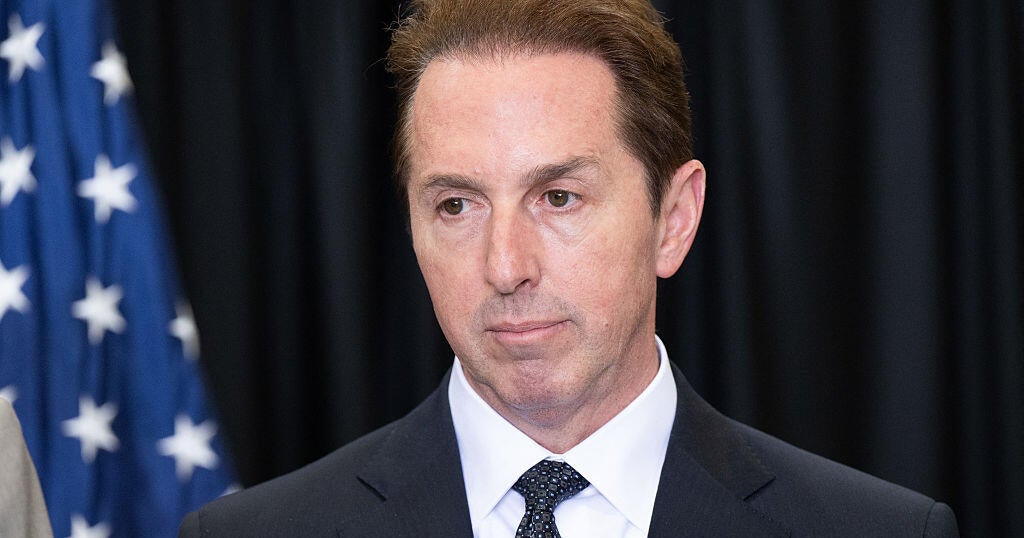
In a significant alteration to the leadership structure of the Department of Homeland Security (DHS), President Donald Trump is poised to nominate Troy Edgar, the current Deputy Secretary of Homeland Security, as the U.S. Ambassador to El Salvador. This nomination, confirmed by multiple sources to CBS News, comes amid ongoing and profound policy implementations concerning border security and immigration under the Trump administration.
Troy Edgar, who was officially confirmed as Deputy Secretary by the U.S. Senate in March, does not require further Senate confirmation for this ambassadorial role. The exact start date for Edgar’s new position has not yet been determined, though insiders suggest the appointment is imminent.
The selection of Edgar for this key diplomatic position is reflective of his robust tenure at DHS, where he has played a pivotal role in financial oversight and policy implementation. During President Trump’s first term, Edgar served as the agency’s chief financial officer and later as an associate deputy undersecretary. In these capacities, he managed a substantial $90 billion budget, which included significant allocations for immigration policies and the construction of the border wall, a cornerstone of Trump’s immigration strategy.
While the Homeland Security Secretary Kristi Noem and Edgar reportedly share a strong working collaboration, official spokespeople from both the White House and DHS have not yet commented on the impending appointment.
This nomination occurs against the backdrop of President Trump’s intensified crackdown on illegal immigration, a policy thrust that has placed El Salvador in a particularly high-profile position due to its strategic significance in the broader Central American context. Recently, President Trump invoked the Alien Enemies Act, a 200-year-old wartime statute, to expedite the deportation of individuals identified as members of Tren de Aragua, a notorious Venezuelan gang. This extraordinary measure involved the transfer of these migrants to a maximum-security prison in El Salvador. Although many of these detainees reportedly lacked criminal convictions, the move underscored the administration’s aggressive approach to immigration enforcement.
A subsequent swap deal, brokered during the summer, saw these individuals repatriated to Venezuela from El Salvador. However, a report released last month by various human rights organizations condemned these actions, labeling them as arbitrary detention, torture, and enforced disappearance, violations all too severe under international law.
The Salvadoran connection was further highlighted in April when President Trump met with Nayib Bukele, the President of El Salvador. President Bukele, a populist figure, has gained a degree of admiration within U.S. conservative circles due to his rigorous anti-gang initiatives, notably his implementation of a ‘state of exception.’ This policy grants Salvadoran police and military forces the authority to arrest individuals suspected of gang affiliations without the normal recourse to due process, a strategy that aligns with Trump’s hardened stance on law and order issues.
In the economic sphere, the Trump administration last month outlined a framework for reciprocal trade agreements with several South and Central American nations, including El Salvador. These developments signify a deepening of diplomatic and economic ties, facilitated in part by shared policy perspectives on security and immigration.
It’s also worth noting that under Edgar’s financial stewardship at DHS, the department has recently initiated enhanced immigration enforcement operations in various U.S. cities. Notably, efforts have increased in Minneapolis-St. Paul and New Orleans, areas with significant populations of immigrants, including a large number of Somali immigrants in the former. These initiatives represent a continuation of the administration’s commitment to stringent immigration control, particularly in Democrat-led municipalities.
The prospective ambassadorial appointment of Troy Edgar marks a crucial juncture in U.S.-El Salvador relations. It encapsulates the Trump administration’s broader regional strategy that intertwines diplomatic outreach with stern immigration policies. As Edgar prepares to transition into his new role, the overarching goals remain clear: to fortify relationships with key Central American nations while steadfastly advancing the administration’s robust agenda on immigration and border security.
As these developments unfold, further details and official confirmations are anticipated. The strategic importance of El Salvador within Central American geopolitics, especially concerning U.S. interests in immigration and security, ensures that this ambassadorial appointment will be closely watched from multiple quarters. What remains to be seen is how this significant change in leadership will influence the operational dynamics at DHS and the broader implications for U.S. foreign policy in the region.