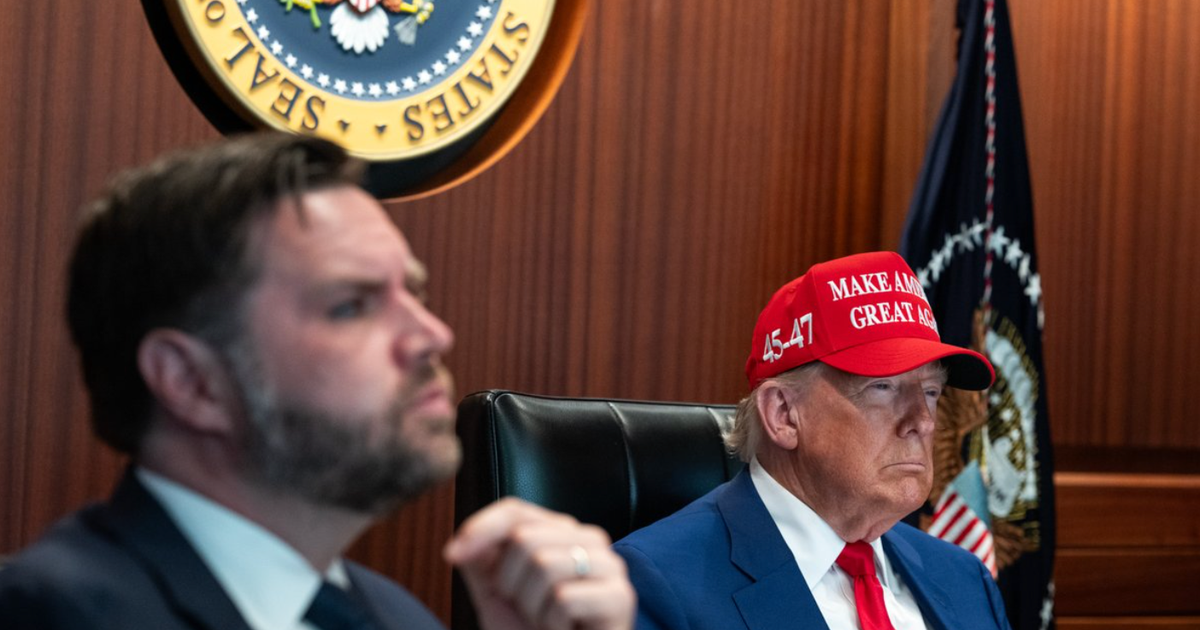
In a recent display of political foresight, President Donald Trump expressed his belief that Vice President JD Vance stands out as a principal contender to eventually succeed him in the Oval Office. This sentiment emerged during an informal exchange with journalists on Tuesday, as the President was engaged in signing a new executive order.
When directly questioned about the likelihood of Vance being the “heir apparent to MAGA” — referring to Trump’s well-known political slogan “Make America Great Again” — the President acknowledged that although it is premature to delve too deeply into succession politics, Vance’s current performance as Vice President indeed positions him favorably among potential successors. “It’s too early, obviously, to talk about it. But certainly, he’s doing a great job, and he would be probably favored at this point,” Trump remarked.
The conversation broadened to include other notable figures within the Republican Party, specifically mentioning Secretary of State Marco Rubio. President Trump suggested that Vance and Rubio could possibly collaborate politically in the near future. “Somebody that maybe would get together with JD in some form,” he hinted, leaving room for various interpretations regarding the structural dynamics of future Republican leadership.
Alongside these speculations, the President was quick to praise the broader pool of talent within the party, noting that the GOP houses several “incredible people,” which provides the party with a robust lineup of leadership candidates going forward.
Trump’s relationship with both Vance and Rubio has been dynamic, evolving significantly over the years. Back in the 2016 GOP primaries, Rubio was a formidable adversary to Trump, often engaging in sharp verbal exchanges. Similarly, Vance had also voiced criticism of Trump in the past. However, both have realigned as allies to the President, progressively cementing their roles as staunch defenders of his policies and ideals.
The political aspirations of both Vance and Rubio have been a topic of intrigue and speculation. In an interview last month on Fox News’ “My View with Lara Trump,” Rubio seemed to downplay any immediate presidential ambitions, suggesting that continuing his career in diplomacy and government might suffice. He lauded Vance, hinting that Vance could make an excellent presidential nominee if he chose to pursue that path.
Meanwhile, Vance, conversing on Fox News’ “Fox and Friends,” maintained that his focus remains on current responsibilities, deferring discussions surrounding the 2028 Presidential election to a later time. “When we get to that point, I’ll talk to the president. We’ll figure out what we want to do,” Vance said, emphasizing a pragmatic approach to future political endeavors.
Intriguingly, President Trump himself has not shied away from teasing the public about his own political future. Despite constitutional limitations that prevent a president from serving more than two terms, Trump has flirted with the idea of pursuing a third term, a move that would undoubtedly ignite vigorous constitutional and legal debates. However, during a conversation on CNBC’s “Squawk Box” earlier Tuesday, he tempered this notion by stating he “probably” wouldn’t seek another term.
These developments come at a time when the Republican Party is continually strategizing for upcoming elections, aiming to maintain its competitiveness and appeal. With Trump’s endorsement potentially pivotal for any candidate in the GOP primaries, the trajectories of figures like Vance and Rubio are exceptionally noteworthy. Their political maneuvers, alignments, and endorsements in the coming years will be crucial in shaping not just their own political futures but also the broader strategy and ideology of the Republican Party.
This ongoing dialogue within the GOP and its implications for the future presidential elections post-Trump era underscore the dynamic and often unpredictable nature of American politics. As stakeholders from within and outside the party weigh in, the stage is set for a fascinating political journey leading up to the 2028 elections, highlighting the strategic calculations and narrative-building that are quintessential to American electoral politics.
Indeed, the emerging landscape of GOP leadership and its potential candidates reflect both the party’s internal diversity and its response to the evolving political environment in the United States. Whether or not Trump’s inclinations regarding potential successors hold in the face of the inevitable political evolutions remains to be seen. What is clear, however, is that the discussions around and endorsements from a figure as influential as Trump will significantly shape the political fortunes of those in the running to be his heir apparent.