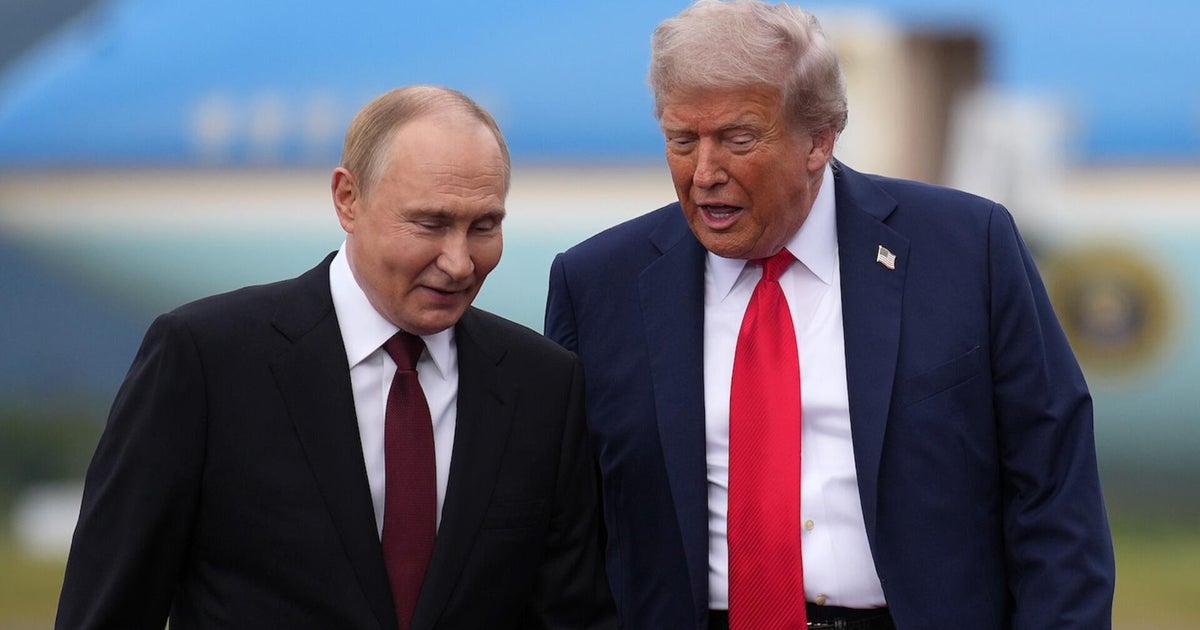
In a significant move aimed at de-escalating tensions, President Donald Trump announced on Friday that Russia and Ukraine would participate in a prisoner swap involving 1,000 detainees from each side. This announcement coincides with a temporary ceasefire that will span three days, incorporating Russia’s Victory Day celebrations.
The ceasefire is slated to last from Saturday through Monday, although prior announcements from Russia and Ukraine presented varied dates, implying some ambiguity in the timeline. According to President Trump, this pause in hostilities will halt all kinetic military activities during these days, offering a brief respite from the prolonged conflict that has now persisted for over four years.
President Trump conveyed his role in brokering this temporary ceasefire via a post on Truth Social, where he expressed his gratitude toward Russian President Vladimir Putin and Ukrainian President Volodymyr Zelenskyy for their cooperation. He highlighted the importance of this agreement by stating, “Hopefully, it is the beginning of the end of a very long, deadly, and hard fought War.” Trump sees this development as a critical step toward resolving what he described as the “Major Conflict” – the most significant since World War II – and noted that negotiations to end the war are progressing daily.
From Ukraine’s side, President Zelenskyy had previously called for a ceasefire on May 5-6, aligning closely with the dates of Russia’s suggested ceasefire on May 8-9. The announcement by the U.S. president seems to have harmonized these proposals, leading to a unified agreement on the ceasefire dates of May 9, 10, and 11.
According to Yuri Ushakov, an aide to the Russian president, Putin endorsed the U.S. President’s proposal following discussions. Ushakov’s statement underscored Russia’s acceptance of Trump’s initiative concerning the ceasefire and the prisoner exchange, signaling a willingness to cooperate on these terms.
President Zelenskyy also confirmed the developments in a translated statement on Telegram, where he noted that Ukraine “received Russia’s agreement to conduct a prisoner exchange in the format of 1,000 for 1,000.” He elaborated on the continuous efforts by Ukraine to repatriate its citizens from Russian captivity and mentioned that preparations for the exchange were being expedited as per his instructions.
This announcement arrives against a backdrop of intensified diplomatic activity, including a recent meeting in Miami where top U.S. officials engaged with Ukrainian representatives. Additionally, a notable phone call between President Trump and President Putin last week appears to have contributed to these developments, suggesting a concerted effort at various levels to push forward towards peace.
The ceasefire and prisoner exchange proposal not only serves as a humanitarian gesture but also as a potential foundation for more comprehensive peace talks. These developments may reduce hostilities and build trust between the conflicting parties, creating a conducive environment for further negotiations.
Internationally, this move has been met with cautious optimism. Many global leaders and international organizations see it as a positive step toward easing human suffering and restoring peace in a region plagued by prolonged conflict. Nevertheless, analysts remain watchful, noting that the true test will be the successful implementation of the ceasefire and the following steps each side takes toward a lasting resolution.
As the world watches, the outcomes of this ceasefire and prisoner exchange will be critical in determining the trajectory of peace efforts in Eastern Europe. The stakes are exceedingly high, not only for those directly involved but also for international stability and security. The unfolding events will, therefore, be closely monitored by all stakeholders hoping for an end to the strife that has affected countless lives in Ukraine and beyond.
This pivotal moment underscores the essential role of diplomatic engagements and the potential impacts of coordinated international efforts to mitigate conflicts. As these developments continue to unfold, they offer a glimmer of hope amidst the turmoil, pointing toward the possibility of peace and reconciliation in a war-torn region.