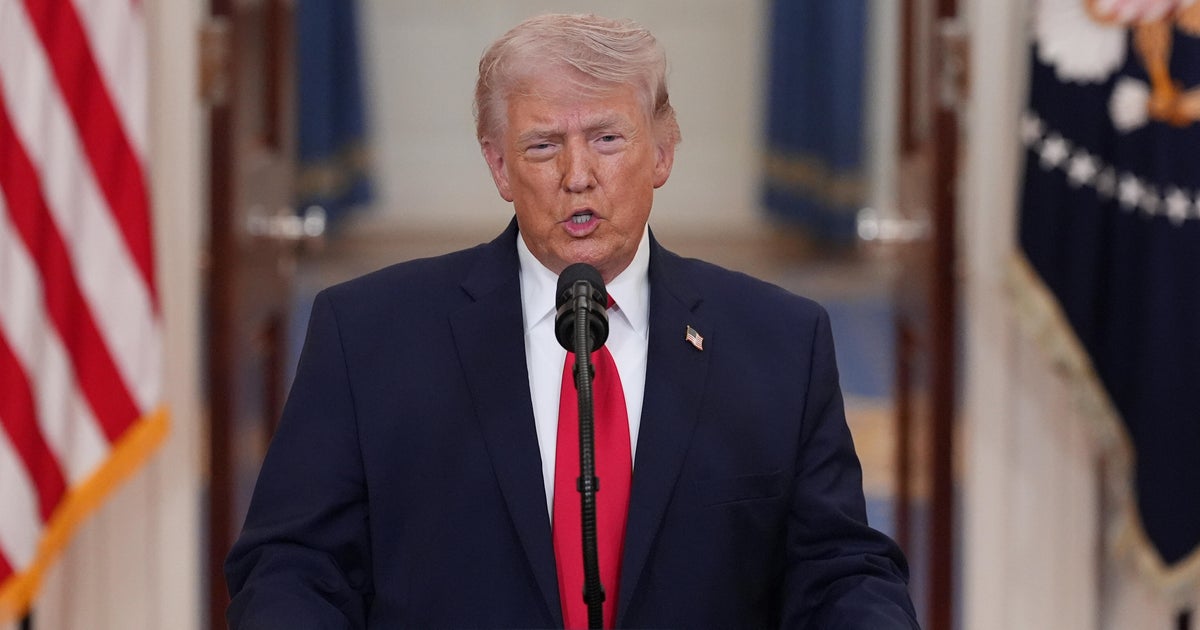
President Trump delivered a prime-time address on Wednesday, predicting that the United States would soon complete its military mission in Iran. During his roughly 19-minute speech from the White House, he emphasized that U.S. forces had achieved “overwhelming victories” in the ongoing conflict. Despite this progress, the president did not provide a definitive timeline for when the war might come to an end, leaving many questions unanswered.
Trump asserted that the U.S. would continue to strike Iran “extremely hard” over the next two to three weeks. He issued a stark warning to Iran’s leaders, threatening to obliterate all of the country’s electric generating plants and target its oil sites if they did not comply with U.S. demands. The president’s rhetoric was forceful, stating, “We’re going to bring them back to the stone ages, where they belong.”
As the midterm election-year war entered its second month, polling data indicated that many Americans were skeptical of the conflict and concerned about rising gas prices. Trump acknowledged these sentiments but remained steadfast in his commitment to achieving America’s military objectives. He suggested that the war could conclude within the next few weeks, provided that Iran came to the negotiating table.
Drawing comparisons to past conflicts such as World War I, World War II, the Korean War, the Vietnam War, and the Iraq War, Trump highlighted the relatively short duration of the current operation. He underscored the impact of the military campaign on Iran, noting that the country had suffered “devastating” losses in the face of U.S. firepower. The president emphasized the success of American forces in decimating Iran’s military capabilities, particularly its navy and missile defense systems.
Despite the ongoing hostilities, Trump made it clear that regime change was not the primary objective of the war. He pointed out that the deaths of Iran’s original leaders had inadvertently led to a less radical and more reasonable government emerging in the country. However, he warned that if no deal was reached, the U.S. was prepared to target key infrastructure assets in Iran, including its electric generating plants and oil industry.
Throughout his address, Trump sought to reassure the American public that the war was being conducted with precision and effectiveness. He described the military campaign as “powerful” and “brilliant,” emphasizing the strategic victories that had been achieved thus far. The president’s tone was one of confidence and determination, as he reiterated his commitment to seeing the mission through to its conclusion.
As the situation in Iran continued to evolve, Trump emphasized the importance of ongoing discussions and negotiations. While the conflict had already caused significant damage to Iran’s military capabilities, the president expressed a willingness to explore diplomatic solutions if they could be reached. However, he made it clear that the U.S. was prepared to take further military action if necessary to protect American interests and ensure the security of the region.
In conclusion, President Trump’s address underscored the gravity of the situation in Iran and the U.S.’s commitment to achieving its military objectives. While the timeline for the war’s conclusion remained uncertain, the president’s message was clear: America would continue to press forward until its goals were achieved. The coming weeks would likely prove crucial in determining the ultimate outcome of the conflict and the future relationship between the United States and Iran.