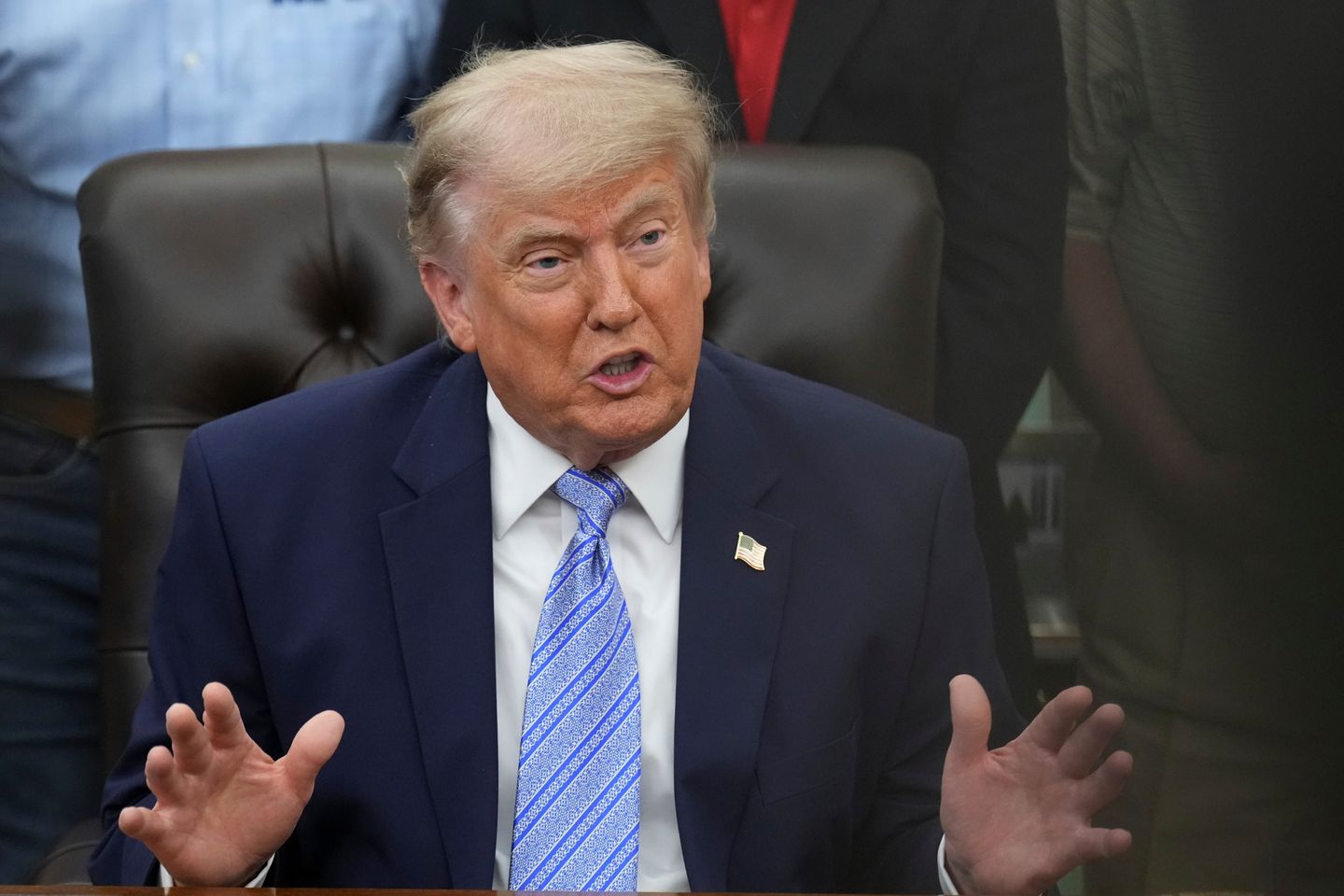
The President of the United States, Donald Trump, has recently shed light on the key role Ayatollah Mojtaba Khamenei, the Supreme Leader of Iran, plays in the decision-making processes of his country, particularly during peace talks. In an unexpected turn of events, President Trump expressed his desire to meet with the Supreme Leader at a suitable time in the future.
President Trump’s statements have drawn attention to the influential role of Ayatollah Khamenei in Iran’s domestic and international politics. As the Supreme Leader, Khamenei holds the highest authority in Iran and has significant influence over all executive, legislative, and judicial branches of government. His position is a testament to the country’s unique theocratic governmental structure, where religious authority is intertwined with political power.
The Ayatollah’s involvement in the decision-making process during peace talks is of particular interest. In the complex world of international diplomacy, peace talks are critical avenues for resolving conflicts and restoring stability. They require careful negotiation, deep understanding of socio-political dynamics, and a willingness to find common ground. It is in these intricate processes that Khamenei’s influence is most strongly felt, guiding Iran’s strategies and decisions.
President Trump’s public recognition of Ayatollah Khamenei’s role in these talks is significant. It signals an understanding of the power dynamics within Iran and a readiness to engage directly with the country’s supreme authority. This is a departure from previous U.S. strategies that have often focused on engaging with Iran’s President and foreign minister, who, while influential, do not hold the same level of authority as the Supreme Leader.
However, President Trump’s statement is not merely an acknowledgement of Khamenei’s role. It is also an invitation. By expressing a desire to meet with the Supreme Leader, Trump is extending a hand of diplomacy towards Iran. This potential meeting could serve as a platform for direct dialogue and negotiation between the two nations, who have long been at odds on a range of issues, from nuclear proliferation to regional security in the Middle East.
Such an encounter would be historic. Direct meetings between U.S. Presidents and Iranian Supreme Leaders are extremely rare. There has been no such meeting since the Islamic Revolution of 1979, which saw the establishment of the Islamic Republic and the beginning of strained relations between Iran and the United States. A meeting between Trump and Khamenei could therefore mark a significant shift in the diplomatic relations between the two nations.
Yet, such a meeting is not without its challenges. Iran’s leadership has consistently maintained a stance of resistance towards the U.S., viewing it as an adversary. The Supreme Leader, in particular, has often expressed skepticism towards U.S. intentions and policies. Convincing Khamenei to engage in direct dialogue with the U.S. President would therefore require significant diplomatic maneuvering.
Furthermore, the potential meeting would need to address a host of contentious issues that have long plagued U.S.-Iran relations. These include Iran’s nuclear program, its role in regional conflicts, and its human rights record. The negotiations would need to strike a delicate balance between addressing these concerns and respecting Iran’s sovereignty and national interests.
Despite these challenges, President Trump’s statement signals a potential shift in U.S.-Iran relations. It suggests a willingness to engage directly with Iran’s highest authority and to explore new avenues for dialogue and negotiation. While the path to a meeting between Trump and Khamenei is fraught with difficulties, the potential benefits of such a dialogue are significant. It could open the door to a greater understanding between the two nations and pave the way for a more stable and peaceful relationship.
In conclusion, President Trump’s acknowledgement of Ayatollah Mojtaba Khamenei’s role in decision-making during peace talks, coupled with his expressed desire to meet the Supreme Leader, is a significant development in U.S.-Iran relations. It highlights a readiness to engage directly with the top echelons of Iran’s leadership and signals a potential shift in the diplomatic dynamics between the two nations. While the road ahead is fraught with challenges, this potential meeting could serve as a stepping stone towards a more peaceful and stable relationship between the United States and Iran.