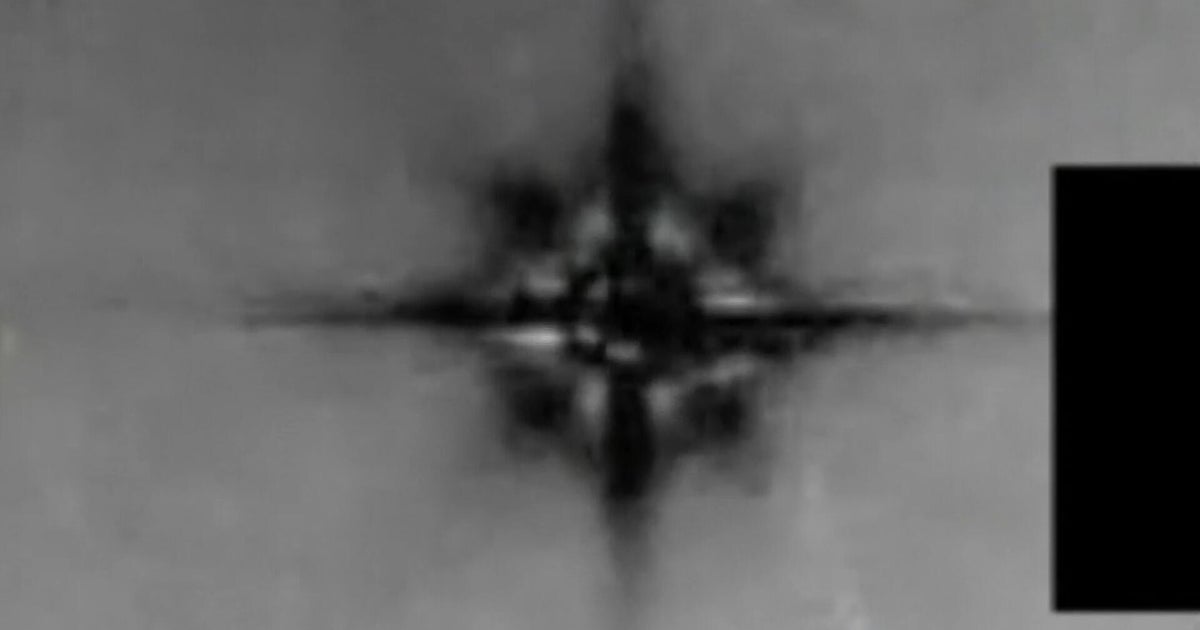
In a significant move that has sparked intense public interest and widespread speculation, the Pentagon has decided to release a series of documents related to Unidentified Flying Objects (UFOs). The disclosure happened on Friday, and the event took a rather informal turn when President Trump addressed the media, encouraging the public to “have fun” as it delves into the contents of these intriguing documents. CBS correspondent Carter Evans covered the story in detail, providing insights and raising questions about what these documents might mean for the general understanding of these mysterious sightings.
The release of these documents marks a turning point in the longstanding narrative surrounding UFOs—a topic that has fascinated not only conspiracy theorists and science fiction fans but also serious scientists and government officials for decades. The implications of the disclosure are potentially far-reaching, impacting national security, technology, and the public’s perception of extraterrestrial life.
Understanding the background of this decision is crucial. For years, various advocacy groups and curious individuals have pushed for greater transparency regarding the government’s knowledge and research pertaining to UFOs, or as they are now officially termed by the government, Unidentified Aerial Phenomena (UAP). This push for transparency has been partly motivated by concerns about national security and airspace safety, subjects that involve not only the U.S. but virtually every government across the globe.
The documents released by the Pentagon include several declassified reports and analyses, detailing encounters and incidents that have been documented over several years. These encounters were primarily reported by military personnel, including pilots who recorded unusual flight behavior and other aerial phenomena that so far had no logical explanation. The declassification of these documents follows a gradual shift in official attitudes towards UFOs, marking a movement from outright dismissal or secretive acknowledgment to a more open engagement with the subject matter.
In his report, Carter Evans dissects the various elements of the released documents. He points out that while many of the reports focus on technical data and radar readings, some include pilot testimonies describing interactions with objects that exhibit capabilities beyond known human technology—such as high-speed maneuvers, instant directional changes, and the ability to both hover and accelerate at incredible speeds.
President Trump’s comments add another layer to the narrative. By inviting the public to “have fun” with the documents, he underscored the sense of mystery and, perhaps, a touch of levity surrounding contemporary discussions about UFOs. This approach might serve as a strategy to mitigate any potential panic or serious security concerns that could arise from the disclosures, while also acknowledging the inherent human curiosity about life beyond Earth and our technological thresholds.
The public and media response to the release has been predictably mixed. Some view it as a long-overdue nod to transparency that could foster more open research and dialogue on the subject, potentially leading to scientific breakthroughs or new insights into aerial technology. Others express skepticism, concerned about possible misinterpretations or the fomenting of baseless conspiracy theories which could detract from more grounded, scientific discussions and explorations.
Moreover, these developments come at a time when the study of space and our capabilities for exploring it are evolving at an unprecedented pace. The role of private companies in space exploration and satellite deployment has expanded possibilities and accessibility to near-earth and outer-space environments. This context underscores the urgency and relevance of understanding phenomena that could potentially impact or intersect with human activity in space.
As a result, this release could serve as a linchpin for more coordinated efforts internationally to address and understand UFOs. It might promote new collaborations between governments, private industries, and the scientific community, working together to explore mutual concerns about aerial phenomena and their implications for security and science.
What remains clear from Carter Evans’ reporting and the contents of the declassified documents is that the subject of UFOs, long relegated to the fringes of serious discourse, has moved into a more prominent position of consideration. The discourse surrounding these phenomena, fueled by the latest release of documents, promises to engage experts and the general public alike in debates and discussions that could reshape our understanding of the unknown.
In conclusion, the Pentagon’s release of UFO documents is more than a mere administrative action. It symbolizes a potentially new era in governmental transparency and public engagement with one of the most enigmatic subjects in human history. Whether this will lead to new scientific insights, increased public awareness, or possibly even global policies concerning aerial phenomena, remains to be seen. What is undeniable is the renewed vigor with which the subject of UFOs is now being approached and examined.