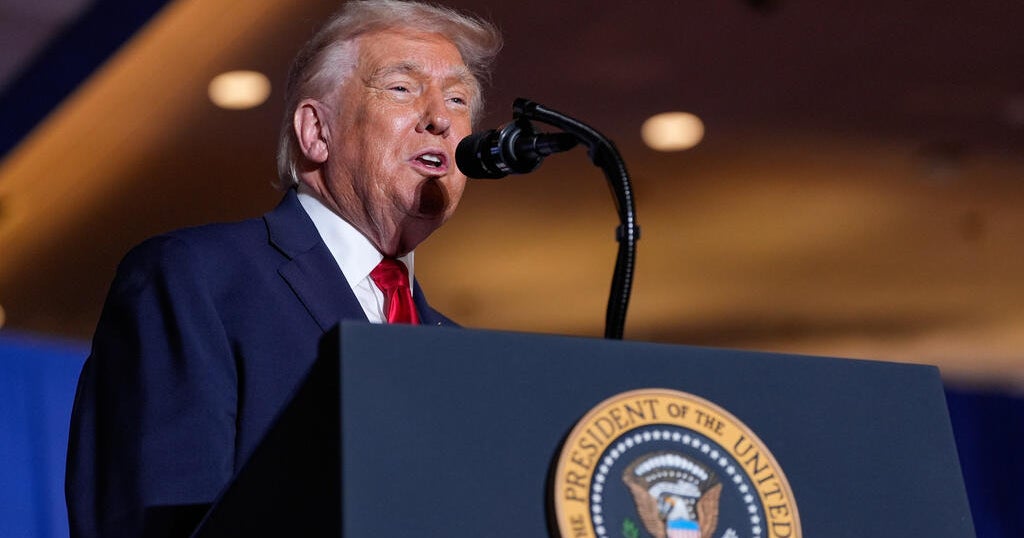
In Washington, amidst escalating political heat from upcoming midterms, President Trump took to Mount Pocono, Pennsylvania, to advocate his economic policies. Having previously dismissed concerns about affordability as a mere “Democratic hoax,” the president shifted gears, acknowledging the issue in an effort to bolster support for congressional Republicans facing a contentious election season.
At a rally that carried the verve of campaign fervor, President Trump proclaimed, “America is winning again,” emphasizing Pennsylvania’s economic vitality under his tenure. He highlighted key economic indicators, including job growth and a decline in unemployment rates presenting Pennsylvania as a success story amidst broader national challenges. Significantly, the president pointed out a dip in gas prices as a testament to his administration’s effectiveness.
One of the pivotal moments in his speech was the recognition of his trade policies, specifically tariffs on foreign goods, which, despite widespread criticism and concern from economists regarding potential slowdowns in economic growth and inflationary pressures, Trump hailed as economically beneficial. He showcased his decision to allow Japan’s Nippon Steel to acquire U.S. Steel, claiming this move “saved” the prominent employer and revitalized it to be “hot as a pistol.”
Trump also addressed the inflation issue, asserting his administration’s role in “crushing” the inflationary spiral and bringing down prices — a stark contrast to hardships faced in prior years, with inflation rates peaking significantly above the Federal Reserve’s target. This convergence toward affordable living standards has been a contentious issue, with Trump assigning blame to Democrats for generating high prices while positioning himself and his administration as the solvers of this crisis.
The president’s exploration of affordability issues marks a strategic pivot following weeks of vocal skepticism about democrats spotlighting this as a mantra for political gain. His public and private venting painted the topic as a scam aimed at misleading the public. Despite this skepticism, recent pressures and a subtle acknowledgment from influencers within his circle seem to have inspired his engagement with the topic at the rally.
Originally denying the legitimacy of affordability concerns, arguing that Democrats manufactured this narrative, Trump’s rhetoric evolved amidst mounting evidence and public sentiment reflecting genuine distress over living costs. He ultimately conceded to discussing the issue spurred by pragmatic political advice ahead of the midterms, recognizing the need to resonate with everyday economic difficulties faced by voters.
Interestingly, Trump’s narrative was interspersed with detours into topics such as immigration and informal polls among attendees about nickname options for Joe Biden, a tactic diverting into entertainment yet reflective of his unconventional approach to rallies.
Data from CBS News/YouGov further reflected public sentiment, where a significant portion of respondents sensed a downplay of economic hardships by Trump, with many attributing inflating grocery prices directly to his policies. This growing belief underscores a crucial challenge for Trump as Pennsylvania gears up for key races that could influence the Republican hold on the House.
While U.S. inflation rates have retracted from previous highs, the persistent costliness in essentials like food, housing, health care, and more continues to burden Americans. Trump’s administration, while sometimes deflecting these concerns, has also taken steps like lifting tariffs on specific imports to ease price pressures, and proposing direct financial aids to alleviate public strain.
Moreover, Trump announced significant aid for farmers affected by tariffs and ongoing trade wars, a nod towards alleviating sector-specific distress. These measures reflect an ongoing balancing act between maintaining rigorous trade policies and mitigating their domestic fallout.
Despite some economic revitalization and a bullish stock market scenario, experts and public opinion highlight a “K-shaped” recovery, indicating a disproportionate impact on different socioeconomic groups — a challenge Trump’s administration continues to navigate as they tout economic wins.
The evolving economic narrative, marked by Trump’s recent pivot to acknowledge and address affordability, illustrates a tactical acknowledgment of public concerns, aiming to consolidate support in critical electoral battlegrounds. Whether this shift will resonate with voters remains pivotal as republicans brace for the midterms amid a complex economic landscape. This strategic move, set against the backdrop of Trump’s controversial remarks and policies, frames an intriguing lead into an electoral period where economic narratives could significantly sway voter sentiment.