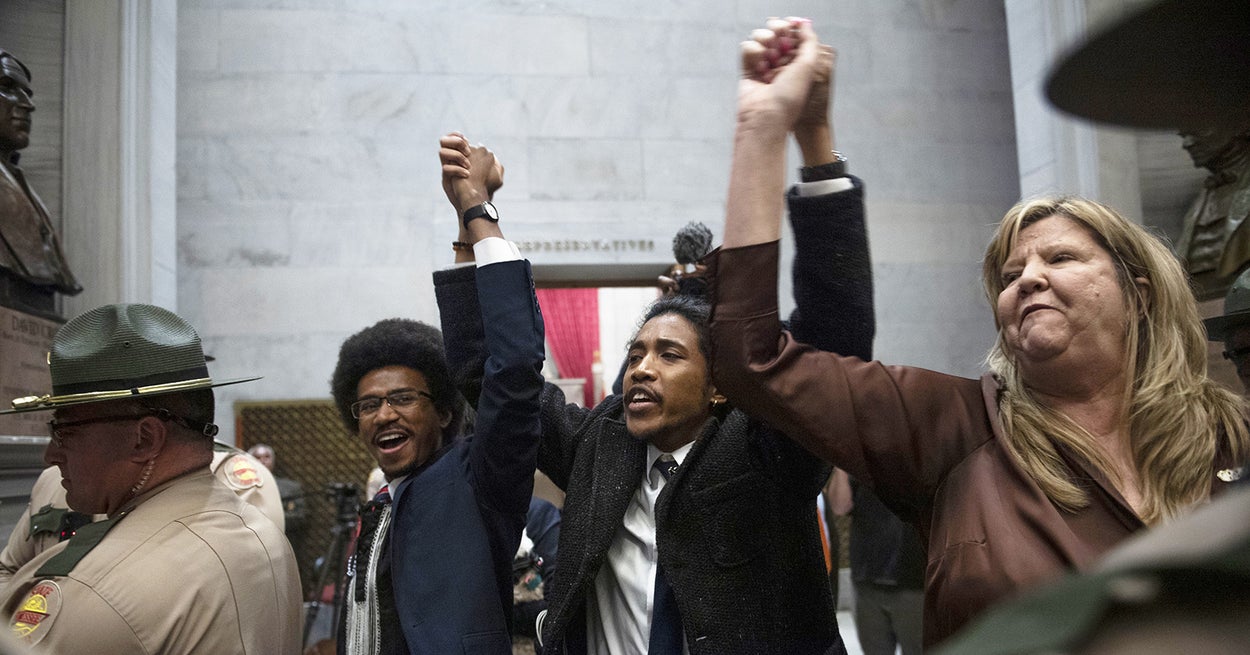
In a recent and remarkable political showdown in Tennessee, the Republican-dominated State Legislature made headlines by expelling two Democratic representatives, Rep. Justin Jones of Nashville and Rep. Justin Pearson of Memphis. The expulsions stemmed from the legislators’ participation in a vocal and dramatic gun control protest inside the statehouse. This protest arose in the aftermath of a tragic school shooting in Nashville, which had reignited debates about gun laws in the state.
Rep. Jones and Rep. Pearson, both 27 years old and African-American, utilized a bullhorn from the House floor on March 30 to lead chants demanding stricter gun legislation. The scene was made more poignant as hundreds of children and their parents had packed the spectator gallery, lending their voices to the call for change.
During the heated session that led to their expulsion, these representatives were accused of violating the procedural rules of the chamber by seizing the podium without authorization. The votes on their expulsions were decisive: Jones was removed by a vote of 72-25, and Pearson by a vote of 69-26. Meanwhile, a third Democrat, Rep. Gloria Johnson of Knoxville, narrowly escaped the same fate, with a motion to expel her failing by just one vote. Rep. Johnson, who is white and 60 years old, had stood with Jones and Pearson but did not actively use the bullhorn.
Reflecting on the racial dynamics possibly at play, Johnson suggested that the skin color of the expelled legislators may have influenced the decision, a sentiment that underscores the tension and divisiveness within the legislative body.
House Speaker Cameron Sexton, a key figure in the Republican majority, controversially likened the protest to the January 6 insurrection at the U.S. Capitol. He argued that the actions of the expelled members were disruptive and compared them to an insurrection, stirring significant backlash and national attention.
However, it’s crucial to note key differences between the events at the state Capitol and the January 6 riots. Most notably, the gun control protest was entirely peaceful with no damage to property or arrests, as protesters had entered the Capitol through standard security screenings.
Despite the stern actions taken by the legislature, the expulsion does not prevent Jones and Pearson from running for their seats again. Should they be re-elected, they cannot be expelled a second time for the same reasons.
As the votes were cast, supporters of the so-called “Tennessee Three” rallied both inside and outside the Capitol. There were chants of solidarity, which turned to chants of “Shame on you!” after Pearson’s expulsion was confirmed. This vocal support was a testament to the strong public feeling surrounding the issues of gun control and legislative freedom.
Before the crucial vote, the targeted Democrats addressed their colleagues in what can only be described as stirring and defiant speeches. Jones emphasized his actions were in defense of his constituents and decried the procedure as a “lynch mob” not against him personally, but against the democratic process. Pearson echoed this sentiment, highlighting the undying spirit of the movement for justice.
This legislative drama drew attention from the highest levels of government, with President Joe Biden commenting on the situation via a tweet, expressing shock at the expulsions and labeling them as “undemocratic, and unprecedented.”
The events in Tennessee illuminate the challenges and complexities of political life in America today. They reveal how deeply divisive and multifaceted issues like gun control can escalate, influencing not just policy but the very foundations of governmental procedure and democratic expression in legislative chambers. The responses from both local and national figures showcase the broader implications of such actions, highlighting the ongoing debates surrounding the balance between maintaining order in legislative processes and respecting the rights to democratic expression and protest.
The situation in Tennessee is not just about gun laws or a legislative spat. It touches on fundamental questions about racial dynamics, the role of protest in a democratic society, and how legislators represent their constituents in moments of outcry and tragedy. As this story continues to unfold, it will undoubtedly serve as a significant case study in the power dynamics and procedural controversies that can emerge in state legislatures across the country.