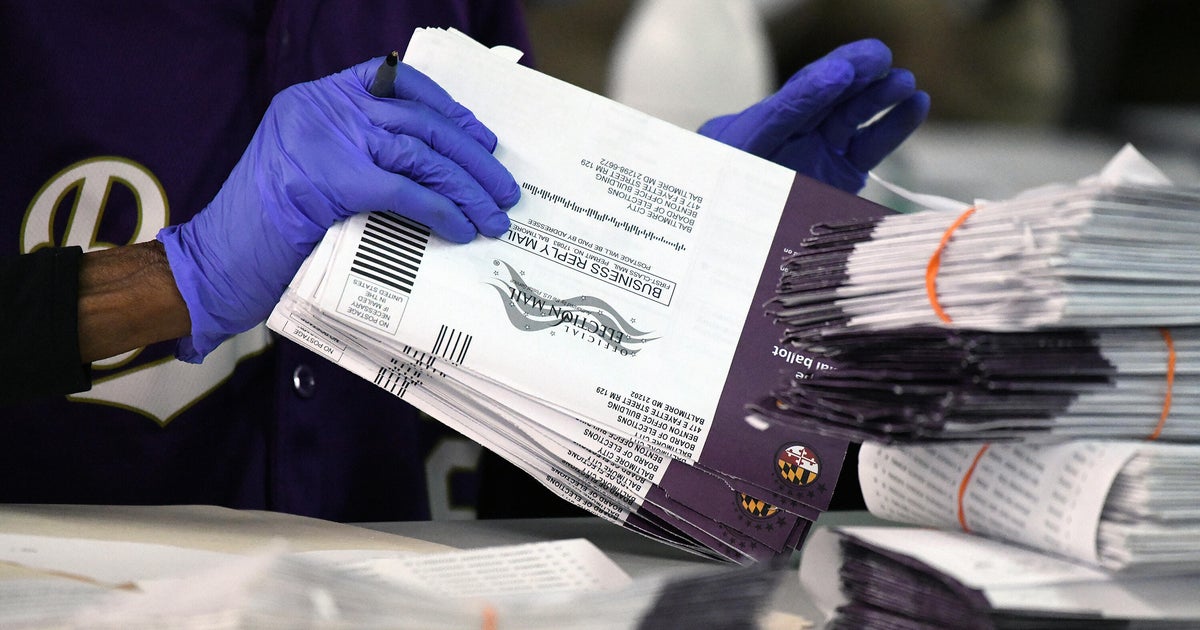
In an evolving political landscape shaped by varying voting practices, the United States Supreme Court is poised to address a contentious issue that could impact the future of mail-in voting across the nation. The debate centers on whether states can count mail-in ballots that are postmarked by, but arrive after, Election Day. This legal showdown, set against the backdrop of the upcoming midterm elections where control of both the House and Senate hangs in the balance, could reshape how elections are conducted in the U.S.
The case before the Supreme Court, Watson v. Republican National Committee, emanates from Mississippi, where current law allows mail-in ballots received up to five days after the election to be counted, provided they were postmarked by Election Day. This provision mirrors laws in 13 other states but contradicts federal statutes established in the 1800s, which mandate that the election for president and Congress occur on a single day—defined as the Tuesday following the first Monday in November.
Amidst this legal backdrop, President Trump has amplified his critique of mail-in voting, labeling the process as inherently corrupt and advocating for significant restrictions. Since his return to the White House, Trump has made concerted efforts to reshape U.S. electoral policies, notably through an executive order intended to overhaul election procedures. Nevertheless, key elements of this order were halted by judicial intervention.
This legal battle not only concerns Mississippi’s voting regulations but also sets a precedent for national election laws. At the heart of the debate is the distinction between the act of voting and the administrative process of counting votes. Proponents of the existing Mississippi law argue that the grace period allows all timely cast votes to be counted, ensuring that the voting process remains inclusive, irrespective of logistical delays that may disadvantage voters from specific demographics or political affiliations.
Opponents, including the Republican National Committee and Mississippi’s Libertarian Party, however, contend that the federal law supersedes state regulations, demanding that all ballots be received by Election Day. They argue that extending the deadline undermines the uniformity intended by federal election statutes and opens the door to potential fraud and administrative complications, potentially skewing election outcomes.
The controversy reached the U.S. Court of Appeals for the 5th Circuit, which sided with the opponents, prompting Mississippi to appeal to the Supreme Court. The High Court’s decision to hear the case underscores the significant constitutional questions involved, particularly concerning states’ rights to set their own electoral rules under the Constitution’s Elections Clause versus the overarching authority of Congress to dictate national election protocols.
Complicating matters are the nearly 4 million Americans residing overseas, including military personnel, who depend on mail-in ballots to participate in federal elections. Advocates warn that an adverse ruling from the Supreme Court could disenfranchise these voters, raising stark constitutional and ethical questions about access to the voting process.
Within this heated debate, various narratives converge on the integrity and practicality of mail-in voting. Proponents argue that mail voting is secure, pointing to the rarity of fraud in this voting method, which they believe is bolstered by stringent verification processes and the creation of comprehensive paper trails. Detractors, bolstered by President Trump’s vehement opposition to mail-in voting, perceive these measures as inadequate, arguing that they jeopardize election integrity and efficiency.
As the case unfolds, the Supreme Court’s ruling could force a rapid reconfiguration of voting procedures in states that currently allow grace periods for receiving mail-in ballots. This potential upheaval could impose significant burdens on electoral administrators and confuse voters, particularly if changes occur between primary and general elections.
Election officials like Kristin Connelly, clerk-recorder and registrar of voters for Contra Costa County, California, emphasize the logistical challenges and voter education burdens that could arise. Connelly’s experience underscores the complexity of managing elections that accommodate late-arriving ballots—a practice that California supports by allowing a seven-day grace period after elections.
The broader implications of this Supreme Court case extend beyond the specifics of mail-in ballot deadlines. This decision could set a critical precedent for federal control over electoral processes, challenging long-standing practices that have supported the electoral participation of diverse voter groups, including those serving the country overseas. As the justices deliberate, the fundamental question remains: Should electoral inclusivity yield to stringent administrative deadlines, or is there room for flexibility to accommodate all voters effectively? The forthcoming rulings will likely have profound implications for the future of democratic participation in the United States.