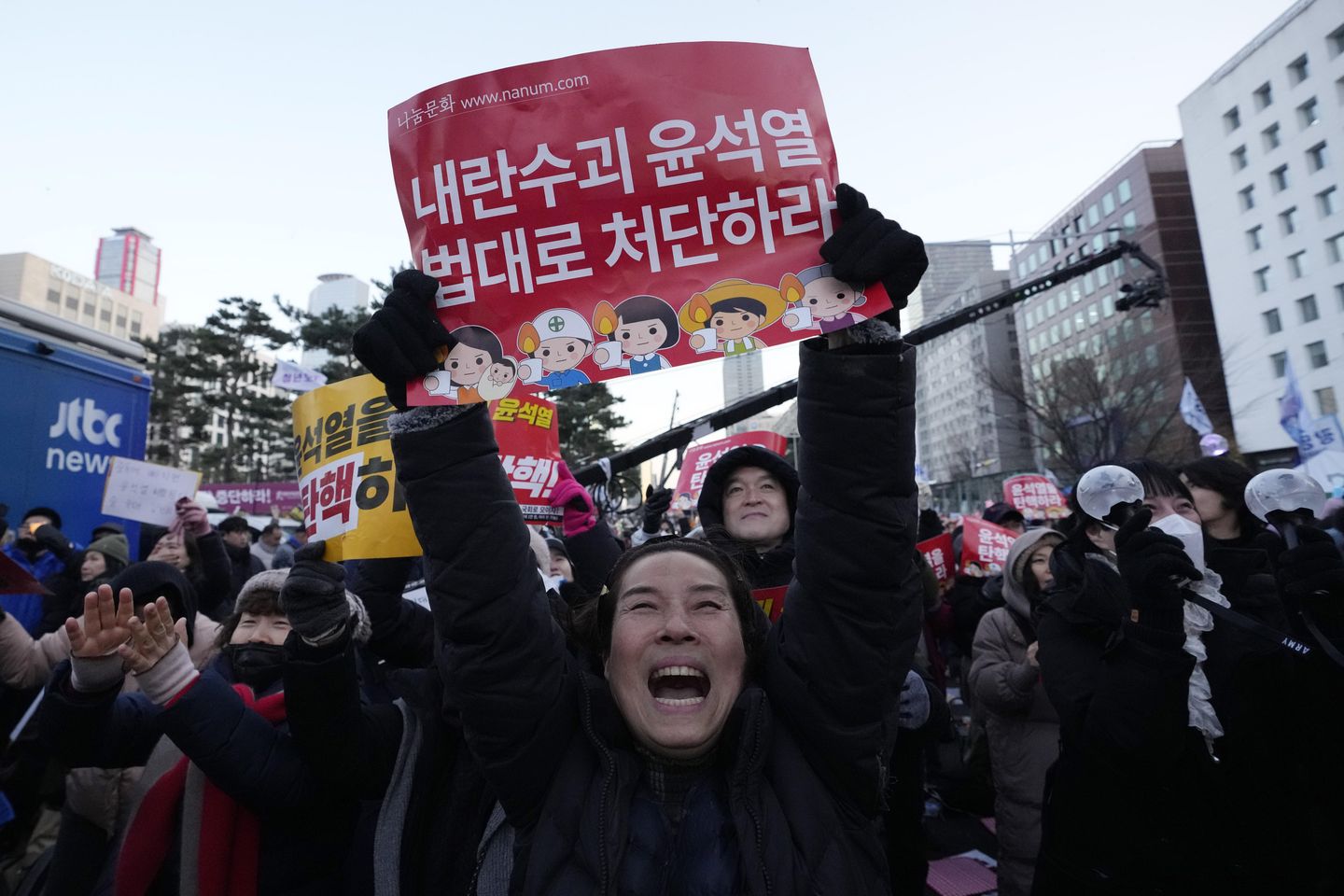
South Korea’s parliament made history on Saturday when it voted to impeach President Yoon Suk Yeol following his controversial martial law decree. The decision brought an end to days of political turmoil and deadlock, but also sparked a heated debate over Yoon’s future as the leader of the country. The impeachment vote was met with jubilant celebrations from citizens who viewed it as a victory for democracy and a clear message that their voices were being heard.
The impeachment of President Yoon marked a significant turning point in South Korea’s political landscape. Yoon had shocked the nation with his sudden declaration of martial law, which had been met with widespread condemnation and protests. The move had plunged the country into a state of uncertainty and fear, as citizens feared a return to the oppressive military rule of the past.
The impeachment process itself was a dramatic and emotional affair. Members of parliament debated for hours on end, weighing the evidence against Yoon and discussing the implications of removing a sitting president from office. In the end, the vote was decisive, with a majority of lawmakers choosing to impeach Yoon and hold him accountable for his actions.
The decision to impeach Yoon was not taken lightly. It was a clear sign that the people of South Korea were unwilling to tolerate any attempts to undermine their hard-won democracy. The impeachment vote was a powerful statement of the country’s commitment to upholding the rule of law and holding its leaders accountable for their actions.
As news of Yoon’s impeachment spread, crowds of citizens took to the streets to celebrate. The atmosphere was electric, with people cheering, waving flags, and chanting slogans in support of the impeachment decision. It was a moment of unity and solidarity, as South Koreans from all walks of life came together to celebrate a victory for democracy.
But while the impeachment of President Yoon was cause for celebration, it also raised questions about the future of the country. With Yoon now removed from office, South Korea faced a period of uncertainty and transition as it prepared for new leadership. The coming days and weeks would be critical as the country navigated the aftermath of the impeachment and worked to restore stability and trust in its government.
The impeachment of President Yoon was a reminder of the fragility of democracy and the need for constant vigilance. It was a wake-up call for the people of South Korea, who had grown complacent in their belief that democracy was secure and unassailable. The events of the past few days had shown that even in a country with a strong tradition of democracy, the threat of authoritarianism and abuse of power was ever-present.
As South Korea moved forward from the impeachment of President Yoon, it faced a number of challenges. The country would need to come together to heal the divisions caused by the political crisis and rebuild trust in its institutions. It would also need to address the underlying issues that had led to Yoon’s impeachment, including corruption, abuse of power, and lack of transparency in government.
The road ahead would not be easy, but the people of South Korea were determined to overcome the challenges and build a better future for themselves and their children. The impeachment of President Yoon was a turning point in the country’s history, a moment that would be remembered for generations to come as a triumph of democracy over tyranny.
As the sun set on a historic day in South Korea, citizens gathered in the streets to celebrate their victory. The air was filled with hope and optimism, as people looked to the future with renewed confidence and determination. The impeachment of President Yoon had been a hard-fought battle, but it was a battle that the people had won. Democracy had prevailed, and the country was ready to begin a new chapter in its history.