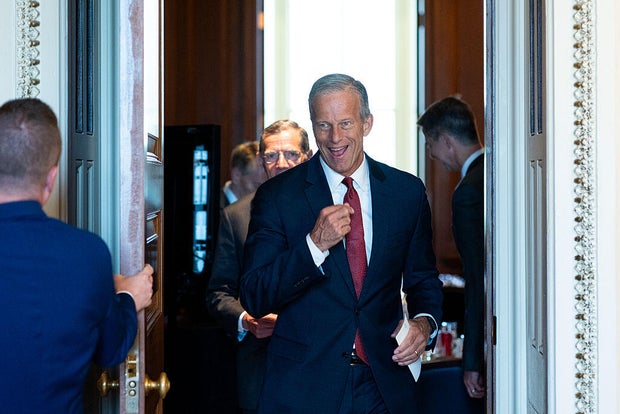
In an unfolding scenario in Washington, Congressional Republicans are pushing against time as they aim to meet a Fourth of July deadline to pass a significant tax and domestic policy bill, receiving increased pressure from President Trump. The president, who was en route to The Hague, emphasized the urgency of the situation by urging legislators via a post on Truth Social to stay in Washington until they resolve outstanding issues and finalize the bill, which is intended to extend his 2017 tax cuts and encapsulate much of his agenda for a second term. He underscored his message with a stern directive: “NO ONE GOES ON VACATION UNTIL IT’S DONE.”
With only until Friday before both chambers of Congress adjourn for the holiday, the pressure is intensifying to finalize the bill, tentatively named the “One Big Beautiful Bill Act.” The crunch for time is now more critical than ever with unresolved major disputes still on the table.
The persistence of Treasury Secretary Scott Bessent, who recently reassured after a meeting with Senate Republicans that they are “on track” for a Friday vote, reflects an optimistic stance within the administration. Bessent projects confidence that the bill will reach the president’s desk by the stipulated July 4 deadline.
Despite the positive spin from the Treasury, the road to agreement is far from smooth. Senate Majority Leader John Thune, a prominent Republican from South Dakota, hasn’t ruled out the possibility of extending the Senate session over the recess, a potential delay caused by skepticism among some Republicans about the completeness and readiness of the bill.
The legislative journey of the bill saw it narrowly passing the House last month, but not without forced amendments by Senate Republicans aimed at catering to the party’s slim 53-47 majority in the upper chamber. Changes are primarily focused on securing a balance between fiscal conservatism and legislative imperatives that correspond with Republican agendas.
House Speaker Mike Johnson has been central in advising House Republicans to maintain flexible schedules as adjustments from the Senate are anticipated. He stressed the importance of the legislative success of this bill, reflecting its significance in achieving key party goals during his weekly news conference.
Procedurally, the Senate’s final version of the bill is still in flux. This is primarily due to the diligent scrutiny by the Senate parliamentarian, who plays a crucial role in ensuring the bill’s provisions adhere to strict legislative rules. Notably, the controversial Byrd Rule, which mandates that legislation under reconciliation directly impacts federal spending. The Parliamentarian’s recent advice suggests the removal of several provisions, including those limiting judicial oversight on government policies, certain restrictions on SNAP benefits for non-citizens, and a proposed sale of public lands.
The state and local tax (SALT) deduction remains a contentious issue amongst legislators. The proposal varies significantly between the chambers; the House seeks to raise the deduction cap, while the Senate wishes to maintain the current level. The Senate Finance Committee’s conservative stance on this issue has caused considerable pushback from House Republicans representing states with higher tax burdens.
Another key contention points are proposed changes to Medicaid funding. The Senate’s proposition for more drastic cuts by reducing provider taxes has not been well received, evidenced by a coalition of House Republicans who are advocating for a more moderate approach that they believe aligns better with both fiscal responsibility and compassion.
Amid these strategic and ideological tug-of-wars, fiscal hawks continue to raise concerns over the bill’s potential impact on the federal deficit, casting further uncertainty on the bill’s prospects. Despite these hurdles, Senator Rick Scott of Florida remains hopeful, reflecting a cautiously optimistic view that a resolution can be achieved.
As the deadline looms and negotiations continue, the effectiveness of this legislative push will significantly depend on the ability of Congressional Republicans to unify their ranks and address the diverse concerns within their party. The coming days are crucial, not just for the party’s legislative agenda but possibly for setting the tone for how effectively the party can govern amid internal divisions.