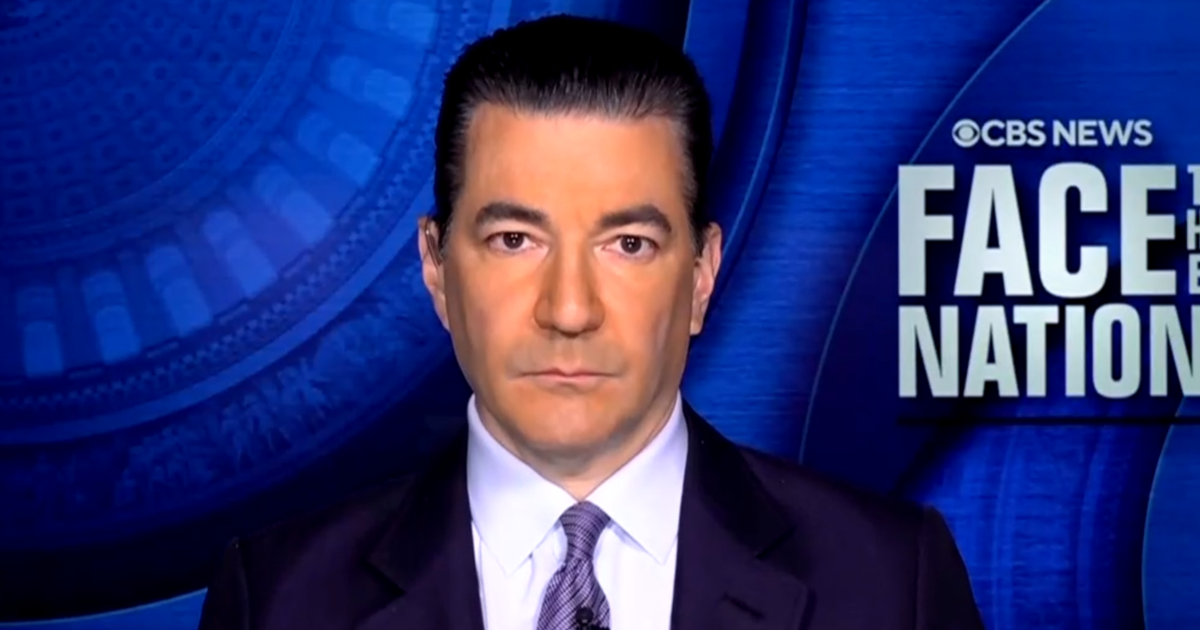
In a recent episode of “Face the Nation with Margaret Brennan” that aired on December 7, 2025, former FDA commissioner Dr. Scott Gottlieb discussed recent changes in U.S. public health policy. Gottlieb, who now serves on the boards of Pfizer and United Healthcare, highlighted the controversial decisions of the CDC’s vaccine advisory panel, ACIP, and the potential implications of policy changes for vaccines in the future.
Margaret Brennan began the interview by referring to a significant policy change that occurred on the preceding Friday. The American Academy of Pediatrics had expressed deep alarm at the decision of the ACIP to change a policy that had been in place for 30 years regarding the administration of the Hepatitis B vaccine to newborns. The panel had voted 8-3 to recommend delaying the first dose of the vaccine until a child is two months old, instead of administering it within 24 hours of birth as has been the norm.
In response to Brennan’s query on what this decision means for families of newborns, Gottlieb explained the rationale behind the birth dose of the vaccine. He acknowledged that the idea of giving a vaccine to a newborn may sound discomforting to many parents.
Gottlieb explained that the Hepatitis B infection is much more severe for children than it is for adults. For a child over the age of five, if they develop a Hepatitis B infection, they have a 95% chance of clearing it, and they’ll go on to develop lifelong immunity. However, for children between the ages of one and five, they only have about a 25 to 50% chance of clearing the infection, so about 25 to 50% of kids will develop a chronic infection, and about a quarter of them will go on to die from Hepatitis B.
The situation is even more dire for newborns. 90% of newborns who become infected, typically during delivery, will go on to develop chronic infection, they won’t be able to clear the Hepatitis B, and about 25% of them will die from sequelae of that infection, either from liver disease, cirrhosis or from liver cancer. The birth dose of the vaccine, therefore, along with subsequent inoculations, virtually eliminates the chance that a newborn can contract Hepatitis B and go on to develop a chronic infection. It’s almost 99% effective at preventing that chronic infection.
The interview moved on to discuss the decision to delay the first dose of the Hepatitis B vaccine until the child is two months old. This decision had been endorsed by the President of the United States, who asserted that Hepatitis B is only transmitted sexually or through dirty needles.
Gottlieb countered this assertion, explaining that this was not true. He argued that many mothers do not get tested for hepatitis B during pregnancy, and even when they do, the tests themselves have a false negative rate of about 2%. While this may not sound like a lot, that 2% translates into at least 1000 babies being born and getting infected with hepatitis B. He cited a modeling estimate suggesting that in the first year of this new guidance, there could be 1,400 infants contracting Hepatitis B, with 25% of them eventually dying from the infection.
The interview then shifted to discuss the broader scrutiny of vaccines by the Trump administration. It was noted that the ACIP board was handpicked by RFK Jr, a known vaccine skeptic. Some members who voted against the decision to delay the first dose of the Hepatitis B vaccine said the CDC is doing harm and that there was no rational science presented to justify this decision.
Gottlieb expressed concern that the ACIP, with the exception of a few members, comprises anti-vax activists who were appointed to implement a specific agenda. He pointed out that the Secretary, who had been a prominent anti-vaxer prior to this position, had stated his goal to eliminate many childhood immunizations. He expressed concern that this move represented a methodical approach to slowly chip away at childhood immunizations.
The interview also discussed the impact of these decisions on the credibility of the ACIP. Gottlieb expressed concern that the ACIP, which once held a position of esteem and was a reference point for many states in their decision-making, was being degraded. He suggested that around 600 state laws tied to decisions made by the ACIP and that about 17 states had already passed new legislation stating they would no longer respect the decisions of ACIP.
The discussion then turned to the recent sell-off in biotech stocks following reports that the FDA, which Gottlieb used to run in the first part of the Trump administration, was going to require one study to clinch approval of vaccines. Gottlieb, along with other former commissioners, had published an editorial in the New England Journal of Medicine, arguing that the FDA and top vaccine regulator, Dr. Vinay Prasad, were changing policies in a way that’s going to slow down the development of new and better vaccines.
Gottlieb explained that Prasad, who holds multiple positions within the FDA, had released a memo stating that they’re planning to move away from immuno bridging studies. These are studies that allow for well-validated vaccines, like the flu or pneumococcal vaccines, to be updated each year as the circulating viral or bacterial strains change. Gottlieb expressed concern that if they moved away from this approach, we wouldn’t be able to update vaccines each season as we’ve done historically.
Finally, the interview touched on a memo obtained by CBS from Dr. Prasad, which claimed that at least 10 children have died after receiving the Covid vaccine, referred to as a profound revelation. Gottlieb challenged this claim, stating that it doesn’t necessarily follow that policy changes should be made based on these cases. He called for the analysis supporting these claims to be made public, and for every suspected case that could be linked to a vaccine to be carefully adjudicated.
Overall, the interview with Dr. Scott Gottlieb raised critical questions about recent changes in U.S. public health policy, the credibility of the ACIP, and the future of vaccine development and administration. It highlighted the potential implications of policy changes for the health and wellbeing of newborns and children, and called for greater transparency and scrutiny in the decision-making process related to vaccines.