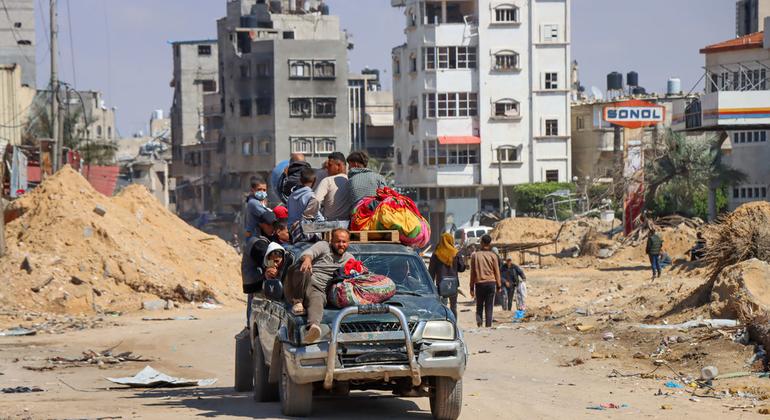
Experts have reported that six months into the current military offensive in Gaza, more housing and civilian infrastructure has been destroyed as a percentage compared to any conflict in recent memory. Approximately 60 to 70 percent of all homes in Gaza and up to 84 percent of homes in northern Gaza have been either fully destroyed or partly damaged. The experts, including Francesca Albanese, Special Rapporteur on the situation of human rights in the Palestinian Territory occupied since 1967, have labeled this systematic and widespread destruction as a crime against humanity. They also allege numerous war crimes and acts of genocide in their report to the Human Rights Council.
The damage to Gaza is estimated at $18.5 billion, which represents 97 percent of the total economy of Gaza and the West Bank. The majority of this estimate, more than 70 percent, is to replace housing, while another 19 percent is attributed to the cost of civilian infrastructure such as water and sanitation, power, and roads. The destruction of homes has not only taken away physical structures but also the memories, hopes, and aspirations of Palestinians, impacting their ability to realize other rights including land, food, water, sanitation, health, security, education, and self-determination.
There are concerns about Israel’s intentions in Gaza as public officials have been calling for Palestinians to leave Gaza to build settlements again. There have also been expressions of enthusiasm from prominent former US government officials for “Gaza beachfront” properties, indicating a broader purpose beyond military defeat of Hamas. Thousands of people in Gaza have attempted to return to their homes in the north of the enclave, facing obstacles such as Israeli tanks blocking the road. The continued bombardment in Gaza has resulted in casualties, with more than 33,200 people reportedly killed in the enclave since October.
In response to the ongoing crisis, the UN World Food Programme (WFP) has helped restart bread production in Gaza City by providing fuel and repairs to a bakery’s bread-making machines. This initiative aims to provide a lifeline to residents who rely on bread as a staple food. The situation in Gaza remains dire, with the destruction of homes and infrastructure severely impacting the lives of Palestinians and posing challenges to their basic needs and rights.
The conflict in Gaza has resulted in a humanitarian crisis, with widespread destruction of homes and civilian infrastructure. The continuous bombardment and violence have led to significant loss of life and displacement of thousands of people. The international community has expressed concern over the situation and called for an end to the violence to prevent further suffering and loss of life. Efforts are being made to provide assistance and support to those affected by the conflict, but the road to recovery and rebuilding in Gaza will be long and challenging.