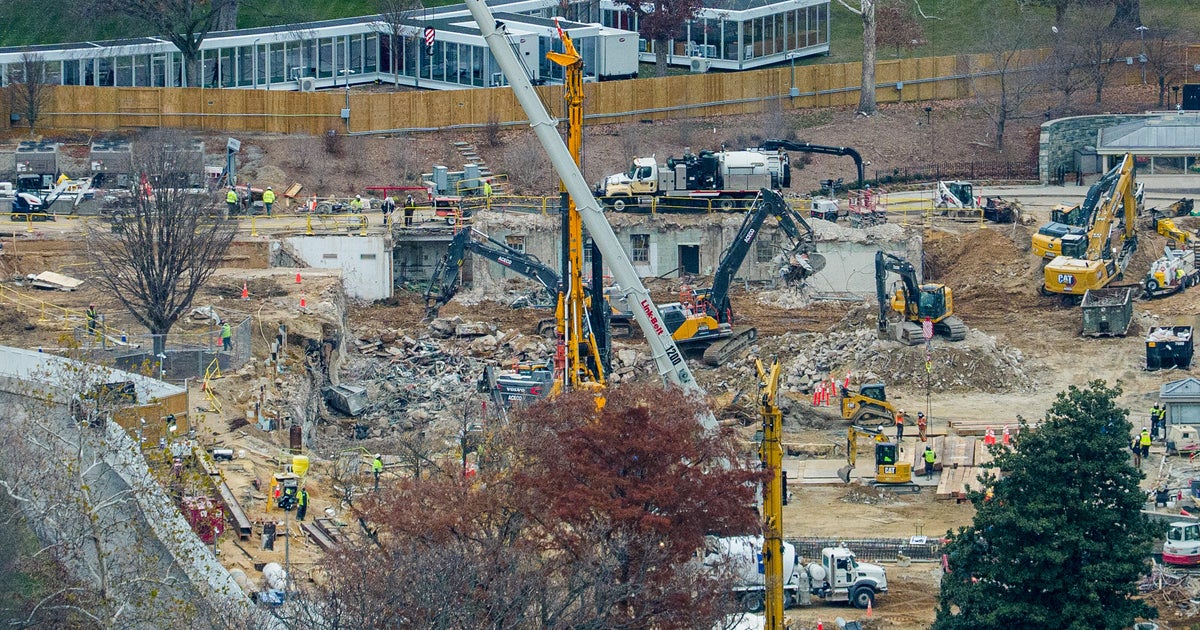
Democratic Rep. Jamie Raskin of Maryland has put forward a new bill that would bring White House renovations under the same scrutiny as other federal projects. The proposed legislation, known as the “People’s White House Historic Preservation Act,” aims to subject White House renovations to a Section 106 review, which is a pre-groundbreaking assessment that evaluates the impact of renovations on historic buildings and allows for public input.
This initiative comes in response to the construction of a privately-funded 90,000-square-foot ballroom addition at the White House, which is estimated to cost around $300 million. The project began three months ago, with the demolition of the East Wing to make way for the new construction. President Trump had initially stated that the new construction would not touch the existing building, but the demolition proceeded despite this assurance.
President Trump has expressed his enthusiasm for the rapid progress of the project, claiming that as the President of the United States, he has the authority to do as he pleases with the White House. However, Raskin argues that the White House is not the private property of the President but belongs to the public, and any renovations or expansions should undergo a transparent public process.
The White House maintains that President Trump has the legal authority to modernize and enhance the White House as he sees fit. While renderings of the ballroom project have been shared at various events, there has been limited formal scrutiny of the schematics. However, the administration recently indicated that consultations with the National Capital Planning Commission and the Commission of Fine Arts, two advisory boards overseeing federal projects in Washington, would soon commence.
Raskin’s bill would require mandatory consultations with both commissions before any ground is broken on White House renovations. This would ensure greater oversight and input from independent experts in the field of historic preservation and architecture. The bill seeks to promote transparency and accountability in the renovation process, particularly for a project as significant as the White House ballroom addition.
During a meeting in early December, NCPC chairman Will Scharf, who also serves as a White House staffer, clarified that the commission’s jurisdiction pertains to new construction rather than demolition or site preparation work. He emphasized the importance of focusing on above-ground architecture and indicated that NCPC would play a constructive role in the project when the time comes.
The image of a construction crane looming over the site where the East Wing once stood serves as a visual reminder of the changes underway at the White House. The proposed legislation by Rep. Raskin seeks to ensure that such renovations are conducted with proper oversight and consideration for the historical significance of the building. By subjecting White House projects to the same reviews as other federal endeavors, the bill aims to uphold the integrity of a national landmark that holds symbolic importance for the American people.
In light of the ongoing construction and proposed legislation, the debate over the White House ballroom project raises broader questions about the balance between preservation and modernization. While it is essential to maintain and protect historic buildings, it is also crucial to adapt them to meet the needs of the present day. Finding this balance requires careful consideration of the historical, architectural, and cultural significance of the White House, as well as the practical requirements of a functioning presidential residence.
As discussions continue around the future of the White House renovations, it is clear that there are differing perspectives on how best to approach this issue. President Trump’s eagerness to fast-track the project clashes with concerns about preserving the historical integrity of the White House. Rep. Raskin’s bill represents an attempt to address these concerns by ensuring that White House renovations are conducted in a transparent and accountable manner.
The involvement of independent advisory boards such as the National Capital Planning Commission and the Commission of Fine Arts in the review process underscores the importance of expertise and oversight in preserving historic landmarks. These boards bring valuable insights and perspectives to the table, helping to safeguard the architectural legacy of the White House for future generations.
In the midst of these debates and developments, it is crucial to remember the symbolic importance of the White House as a national symbol and a reflection of American history. The preservation of this iconic building is not just a matter of architectural interest but a statement about the values and legacy of the United States. By subjecting White House renovations to rigorous reviews and consultations, lawmakers and experts can work together to ensure that the White House remains a beacon of democracy and history for years to come.