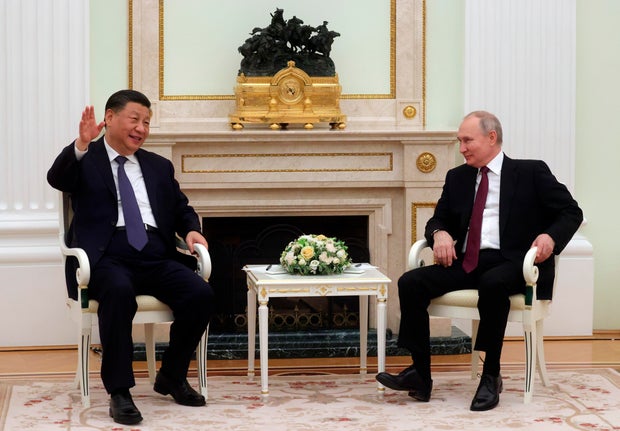
In an upcoming high-profile diplomatic engagement, Russian President Vladimir Putin is set to meet with Chinese leader Xi Jinping for a two-day visit in Beijing. This meeting, scheduled for May 19-20, was announced by the Kremlin and is poised to cover a spectrum of critical agendas including bilateral relations and key international and regional issues.
This visit coincides with the 25th anniversary of the 2001 Sino-Russian Treaty of Friendship, emphasizing the long-term strategic partnership between the two nations. In light of this milestone, both countries are expected to reaffirm their commitment through the signing of several important intergovernmental and interdepartmental documents, escalating their alliance to new heights.
The engagement comes at a significant time, less than 24 hours following U.S. President Donald Trump’s state visit to China. During his visit, President Trump and Xi Jinping discussed several vital topics including trade dynamics and the ongoing conflicts such as the war in Iran. Despite the warm exchanges, concrete outcomes from these discussions appear elusive, with experts noting a lack of substantial trade agreements which calls into question the effectiveness of the talks. Wendy Cutler, a former negotiator in the Office of the U.S. Trade Representative, expressed concerns regarding the tangible results of Trump’s visit.
Additionally, domestic political pressures in the U.S.A regarding international military support were highlighted during Trump’s visit. Deliberations over a pending $14 billion arms sale to Taiwan, approved by Congress yet still undetermined by President Trump, has sparked bipartisan calls for decisive action in support of the island.
On a social note, President Trump took to Truth Social to commemorate his meeting with Xi, describing it as a great honor and sharing photographs of their engagements that projected a cordial relationship.
The circumstances under which Putin arrives in Beijing are also fraught with global geopolitical tensions, especially considering Russia’s strained relations with much of the Western world following its full-scale invasion of Ukraine in early 2022. This conflict has significantly isolated Moscow on the international stage, making Russia heavily dependent on Beijing not just for moral support but crucially for economic and trade relations, especially amidst heavy Western sanctions.
Historically, Putin and Xi have demonstrated a robust partnership, regularly addressing each other as “old friends” which underscores a deep-seated rapport between the leaders and by extension, the nations they represent. China’s unwavering support for Russia during these turbulent times has only served to deepen the bonds between the two countries.
In addition to this bilateral meeting, Putin is also scheduled to visit China later in the year for the Asia-Pacific Economic Cooperation summit in Shenzhen in November. This indicates a continuous engagement strategy with China amidst the evolving international scenario.
Russian and Chinese relations have become a central element of contemporary geopolitical discourse. The strengthening alliance between these two powerful nations serves as a strategic counterbalance to Western influence and is pivotal in shaping regional dynamics in Asia and beyond.
This upcoming meeting in Beijing between Putin and Xi Jinping is not just a routine diplomatic engagement but a testament to shifting global alliances. As the world watches closely, the outcomes of this high-level interaction could very well dictate the future course of international relations and regional stability. The comprehensive agenda, covering economic cooperation and critical regional issues, is poised to set the tone for Sino-Russian relations in the coming years.
Moreover, in broader terms, the evolving dynamics between the United States, China, and Russia continue to shape global political, economic, and security landscapes. Each interaction, every agreement, and mutual understanding between these nations plays a critical role in shaping the future of international diplomacy and the global balance of power.
As observers and analysts watch these developments, the world anticipates the statements and documents that will emerge from Putin’s visit. The implications of these discussions will likely resonate beyond the borders of China and Russia, influencing global economic strategies, security policies, and diplomatic relationships.
In summary, as leaders from two of the world’s foremost powers prepare to convene in Beijing, the international community remains eager to understand how this partnership will evolve and what it will portend for the future of global geopolitics. The outcomes of this meeting could potentially redefine international alignments and influence global policy directions for years to come.