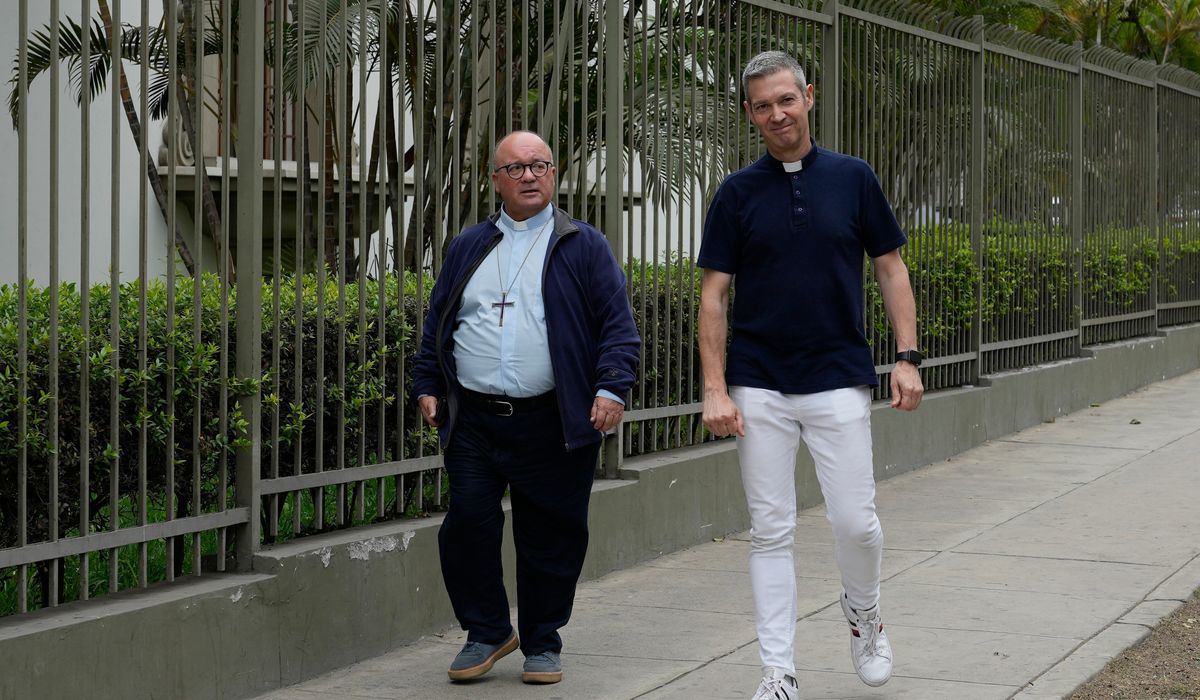
In Lima, Peru, the highest ecclesiastical authorities of the Andean nation, conducted a symbolic reparation ceremony on Saturday to apologize to the Indigenous Tallán people whose land was allegedly dispossessed by the now-dissolved Catholic group, Sodalitium Christianae Vitae. This long-awaited event was a significant step towards reconciliation and justice for the Indigenous communities that suffered from the land dispossession.
The Sodalitium Christianae Vitae, a Peru-based Catholic group that once held significant influence in the country and beyond, was dissolved in 2025 by the late Pope Francis. This dissolution followed years of attempted reforms and a comprehensive Vatican investigation that revealed a series of abuses perpetrated by the group. The investigation unveiled several instances of sexual abuses committed by its founder, financial mismanagement by its leaders, and spiritual abuses by its senior members. These revelations shocked the Catholic community and prompted the necessity for accountability and reparations.
The reparation ceremony took place in the northern community of Catacaos, home to the Indigenous Tallán people. It was a profound moment of acknowledgment and apology from the Church, represented by Monsignor Jordi Bertomeu, the apostolic commissioner who oversaw the dissolution process of the Sodalitium.
“We are here to ask for your forgiveness in the name of the Church,” Monsignor Bertomeu declared in a crowded church, his voice echoing solemnly through the hallowed space. “We are late. We should have come 20 years ago, and we are truly sorry.”
The Sodalitium was founded in 1971 as one of the several Catholic societies that emerged as a conservative response to the left-leaning liberation theology movement that swept across Latin America in the 1960s. At its peak, the group boasted about 20,000 members spread across South America and the United States and held considerable sway in Peru.
However, in 2011, the group’s reputation began to tarnish when former members lodged complaints with the archdiocese in Peru’s capital, Lima, regarding abuses by the group’s founder, Luis Figari. Despite these complaints, neither the local church nor the Holy See took decisive action until 2015 when one of the victims and a journalist published a book chronicling the abuses.
In response to mounting allegations, Pope Francis dispatched his two most trusted investigators, Bertomeu and Archbishop Charles Scicluna, to probe into the Sodalitium abuse allegations. Their investigation painted a disturbing picture of the Sodalitium, revealing “sadistic” sect-like abuses of power and spirituality, financial improprieties involving church funds, and even instances of harassment of critics.
During the reparation ceremony, Bertomeu revisited a message that Pope Francis had sent to the community in 2024, in which the Pope urged them to “Fight for your lands, I am with you.” This message now resonated with even more profound significance in light of the ceremony.
The land disputes can be traced back at least a decade when Sodalitium-linked companies initiated legal action to evict people from thousands of hectares in Catacaos, following property transfers that were not recognized by the farmers. The eviction attempts led to violent confrontations, resulting in dozens of farmers being prosecuted for alleged “usurpation,” while two community leaders were tragically shot and killed.
The reparation ceremony came a few months after the Peruvian Episcopal Conference announced the possible visit of Pope Leo XIV to the South American nation towards the end of the year, fueling speculations of a broader Church initiative to address past injustices.
Asking for forgiveness once more, Bertomeu looked upon the community of Catacaos, describing them as “fearful and broken.” He implored, “Forgive us, offer us your forgiveness, because we too need it.”
The ceremony was recognized as a “historic gesture” by Tania Pariona, secretary of Peru’s National Human Rights Commission. She commended the Church for “taking the lead over the state, which has failed to protect rural communities.” This moment of apology and recognition marked a significant step towards healing and justice for the Indigenous communities affected by the group’s actions. However, it also highlighted the urgent need for increased attention and protection for rural communities from the state.
As the world watched this historic moment unfold, it served as a stark reminder of the critical role of accountability in religious and state institutions. The path to reconciliation may be long and fraught, but this ceremony marked a significant stride in the right direction, offering a glimmer of hope to those affected by past injustices.
The challenge now lies in ensuring that this gesture of apology and reparation translates into real, substantial changes that would prevent such abuses from happening again in the future. The eyes of the world now rest on the Catholic Church and the government of Peru, watching and waiting to see what further actions they will take to protect and uphold the rights of their Indigenous communities. Only time will tell if this ceremony will indeed be the catalyst for meaningful change.