In a move that has caused significant concern across journalistic communities, the Pentagon has introduced stringent new guidelines that will deeply impact the ways in which reporters cover U.S. military activities. The notification came through a memo circulated among defense correspondents on a Friday, delineating the exacerbated restrictions, which could potentially lead to reporters losing access to one of the world’s most significant military headquarters if violated.
Under the directives laid out in this memo, issued by the Department of Defense — recently renamed to the Department of War by the Trump administration — media personnel will now have to adhere to stricter policies about the dissemination of information. They will be required to sign an agreement acknowledging that they must not disclose classified or controlled unclassified information which isn’t formally cleared for publication. This includes any information that, while unclassified, is still subject to dissemination controls.
One crucial aspect of these tighter restrictions is the prohibition of unauthorized access to, or disclosure of, classified and certain unclassified information. The memo specifies “controlled unclassified information” as a category warranting caution, indicating that even non-classified data can now fall under stringent oversight if not approved for public release. This is poised to reshape the landscape of military reporting, as journalists will find themselves unable to mention information from U.S. military sources who choose to remain anonymous, without risking their Pentagon access.
Adding another layer to these restrictions, the directive extends to the physical movement of reporters within the Pentagon premises. Going forward, journalists will need an official escort to access significant areas of the building — a requirement that solidifies the control over what information they can potentially gather and from whom. This mandate builds on measures hinted at in May, which were initially aimed at curbing unauthorized disclosures and have now culminated in this formal set of rules.
Supporting these operational changes, a Pentagon map has been released, highlighting specific zones where reporters are either barred entirely or require an escort. This step furthers the notion that the Pentagon is tightening its leash around the flow of information from its corridors to the public.
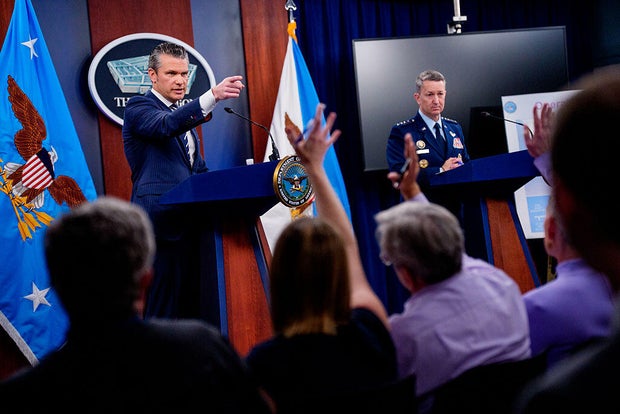
A visible example of the impact these changes might enforce was evident when U.S. Defense Secretary Pete Hegseth and Chairman of the Joint Chiefs of Staff Air Force Gen. Dan Caine held a news conference at the Pentagon. The restrictions reverberated through the dynamics of the interaction, hinting at the evolving framework within which military officials and journalists are expected to operate.
Compounding the scenario was a post by Secretary Hegseth on the social media platform X, where he stated, “The ‘press’ does not run the Pentagon — the people do,” directly addressing the new regulations while emphasizing a stringent compliance to access and reporting protocols within the Pentagon.
But these sweeping changes haven’t gone without criticism. The Pentagon Press Association Board expressed its awareness and ongoing review of these modifications, reflecting a broader sentiment in the media landscape. Moreover, the president of the National Press Club, Mike Balsomo, characterized these new rules as a “direct assault on independent journalism.” He argued that if military reporting needed governmental approval, it ceased to serve its crucial function as independent oversight, leaving the public with a potentially sanitized view shaped by official narratives.
Reinforcing the DoW’s stance, Chief Pentagon spokesman Sean Parnell communicated to The New York Times that these guidelines align with security practices across military bases in the nation. He described them as “basic, common-sense guidelines to protect sensitive information,” underscoring an intent to safeguard national security matters effectively.
This transition signifies a pivotal recalibration in the relationship between the military and the media. While the intention behind these directives may be to secure sensitive information, the tactics employed suggest a broader attempt to manage the optics of military operations more stringently. This development brings with it profound implications for transparency and the role of journalism in holding powerful institutions accountable. The effectiveness and fairness of these measures will likely continue to be subjects of significant discussion and debate, as stakeholders across the spectrum weigh the benefits against the potential drawbacks in democratic society.