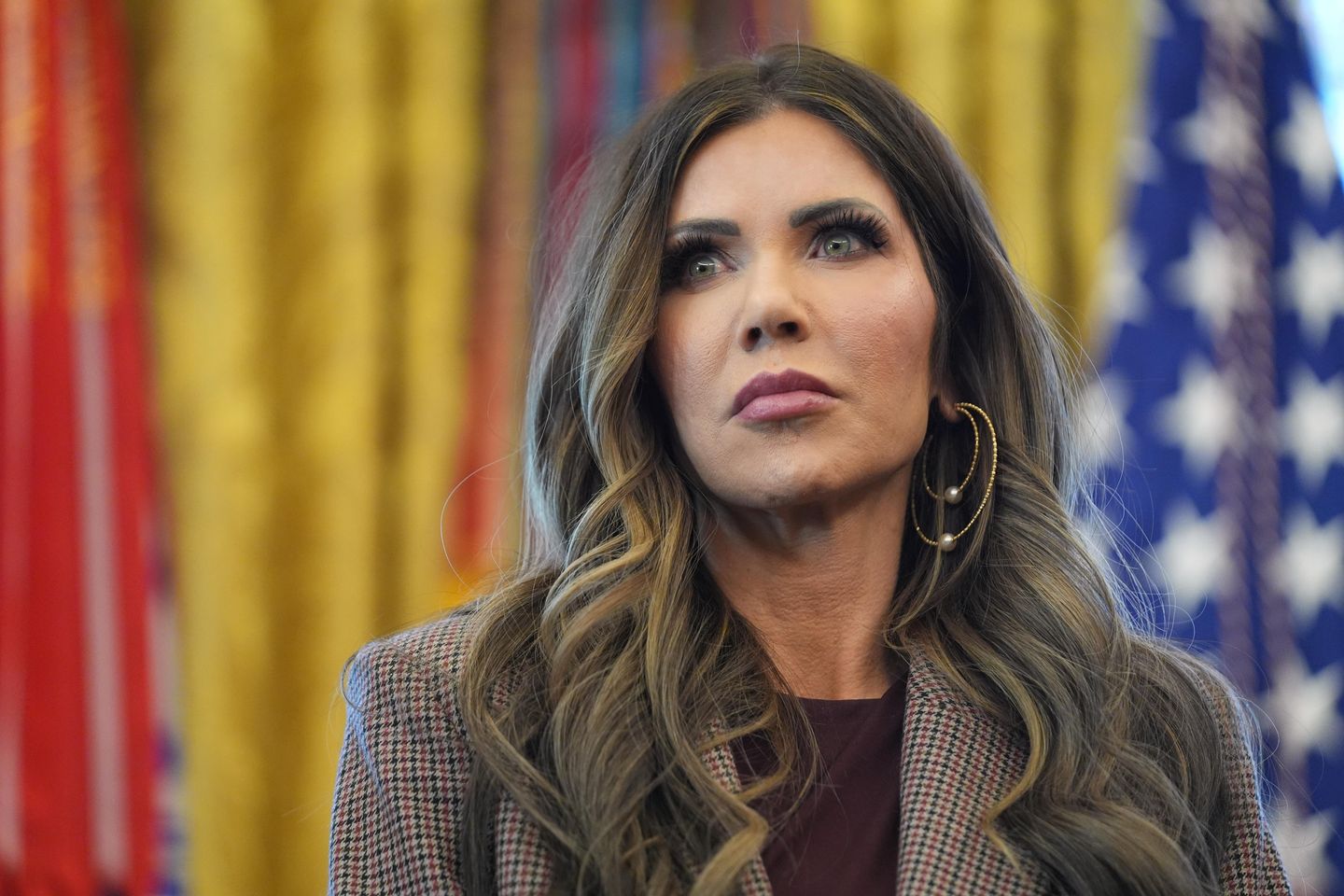
Homeland Security Secretary Kristi Noem made the contentious decision to deport a group of Venezuelan gang suspects to El Salvador in March. This move was made despite a judicial order that explicitly instructed the government to recall the airplanes involved in the deportation process. The news of Secretary Noem’s decision was revealed by the Justice Department on Tuesday.
The decision by Secretary Noem has raised questions about her discretionary powers and the extent of her authority. Despite a ruling from a judge that had ordered the government to recall the planes, Secretary Noem decided to go ahead with the deportations. The incident has brought to light the need for a more nuanced discussion on the power dynamics between the judiciary and the executive branches of the government.
The Venezuelan gang suspects were initially apprehended by authorities on a variety of charges, including drug trafficking and other violent crimes. The decision to deport them to El Salvador was seen as a strategic move to dismantle the gang’s operations within the United States and to send a strong message to other similar organizations.
When the judge’s order to recall the airplanes came through, the flights were already in progress. The Justice Department’s revelation that the order was disregarded has indeed stirred a controversy. Critics argue that such a defiance of a judicial order undermines the balance of power and respect for the rule of law, which are essential pillars of the American democratic system.
The case of the Venezuelan gang suspects is not an isolated incident. It is a part of a broader narrative concerning immigration enforcement and its intersection with the criminal justice system. The issue of how to deal with foreign nationals involved in criminal activity on American soil is a complex one. It involves a balance between ensuring public safety, upholding human rights, and maintaining diplomatic relations with foreign nations.
Secretary Noem, a well-known figure in the Trump administration, has been an advocate for stringent immigration policies. Her decision to proceed with the deportation despite the judge’s order aligns with her past stance on immigration enforcement. However, it does raise questions about the potential overreach of executive powers and the necessity for checks and balances within the government.
The Justice Department’s revelation, while shedding light on this specific case, also highlights broader issues within the American judicial and political systems. The interplay between these two branches is crucial for maintaining a balance of power, ensuring accountability, and preserving the integrity of the democratic process.
The decision to deport the Venezuelan gang suspects brings to the fore the complexities of dealing with foreign nationals involved in criminal activities. It underscores the need for an inclusive and comprehensive approach to immigration enforcement that respects human rights, upholds the rule of law, and ensures public safety.
It’s evident that the incident has sparked a significant discussion about the powers of the executive branch vis-a-vis the judiciary. The executive branch, represented by Secretary Noem in this case, appears to have exercised its authority despite a clear directive from the judicial branch to the contrary.
This incident raises crucial questions about the balance of power in the U.S. government. It brings to the fore the intricate dynamics between different branches of government, their individual and collective roles, and the checks and balances that are necessary to maintain the sanctity of the democratic process.
As the debate continues, the broader implications of Secretary Noem’s decision, and similar actions in the future, will likely continue to be scrutinized. The incident serves as a stark reminder of the challenges that come with enforcing immigration law and the delicate balance that must be struck between respect for judicial decisions and the need for decisive executive action.
The deportation of the Venezuelan gang suspects, therefore, not only tells the story of a single event but also brings up larger questions about the relationship between the executive and judicial branches of the U.S. government. As well as questions about the balance of power, the necessity for checks and balances, and how these dynamics play out in real-world situations.
In conclusion, the decision by Homeland Security Secretary Kristi Noem to deport Venezuelan gang suspects to El Salvador in March, despite a judge’s order to recall the airplanes, has sparked a lively debate. The incident has highlighted the complexities of balancing the need for decisive action in matters of national security with respect for the rule of law. As the Justice Department continues to shed light on the incident, the country will undoubtedly continue to grapple with these weighty issues.